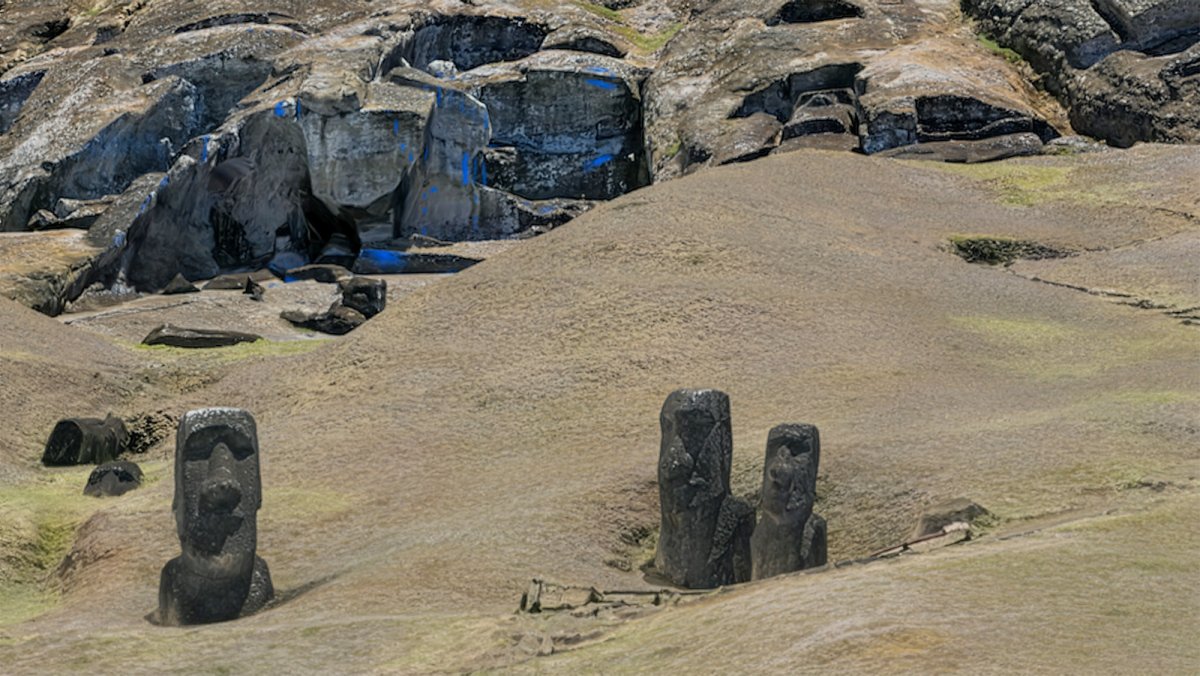
Nestled in the South Pacific Ocean, some 6,000 people live on the most isolated, inhabited island in the world: Rapa Nui. Known to many as Easter Island, a name Dutch explorer Jacob Roggeveen coined after landing on the island on Easter Sunday 1722, Rapa Nui is roughly double the size of Disney World, or 63.2 square miles. And every year, some 100,000 people visit the remote island to see the famed 13-foot-tall moai statues or Easter Island heads.
As you might expect, visiting the remote island isn’t easy. To combat overtourism to the small island, only a limited number of flights travel to Rapa Nui each week. That means flights can book up quickly, especially during the busy season between December and March. But now, thanks to the work of an intrepid team of geographers and researchers, you can view the impressive moai statues from the comfort of home.
The team, which included faculty from Binghamton University and the State University of New York, just launched the first-ever high-resolution 3D model of Rano Raraku, one of the major quarries on Rapa Nui. The model includes nearly 1,000 carefully rendered moai statues. It also lets viewers explore the Rano Raraku quarry, which is located in a steep volcanic crater that visitors to the island can’t explore due to safety concerns.
“You can see things that you couldn’t actually see on the ground. You can see tops and sides and all kinds of areas that [you] just would never be able to walk to,” said team member and Binghamton University anthropologist Carl Lipo in a statement. Lipo is also the lead author of a new paper on the model and statues published in PLOS One in November 2025.
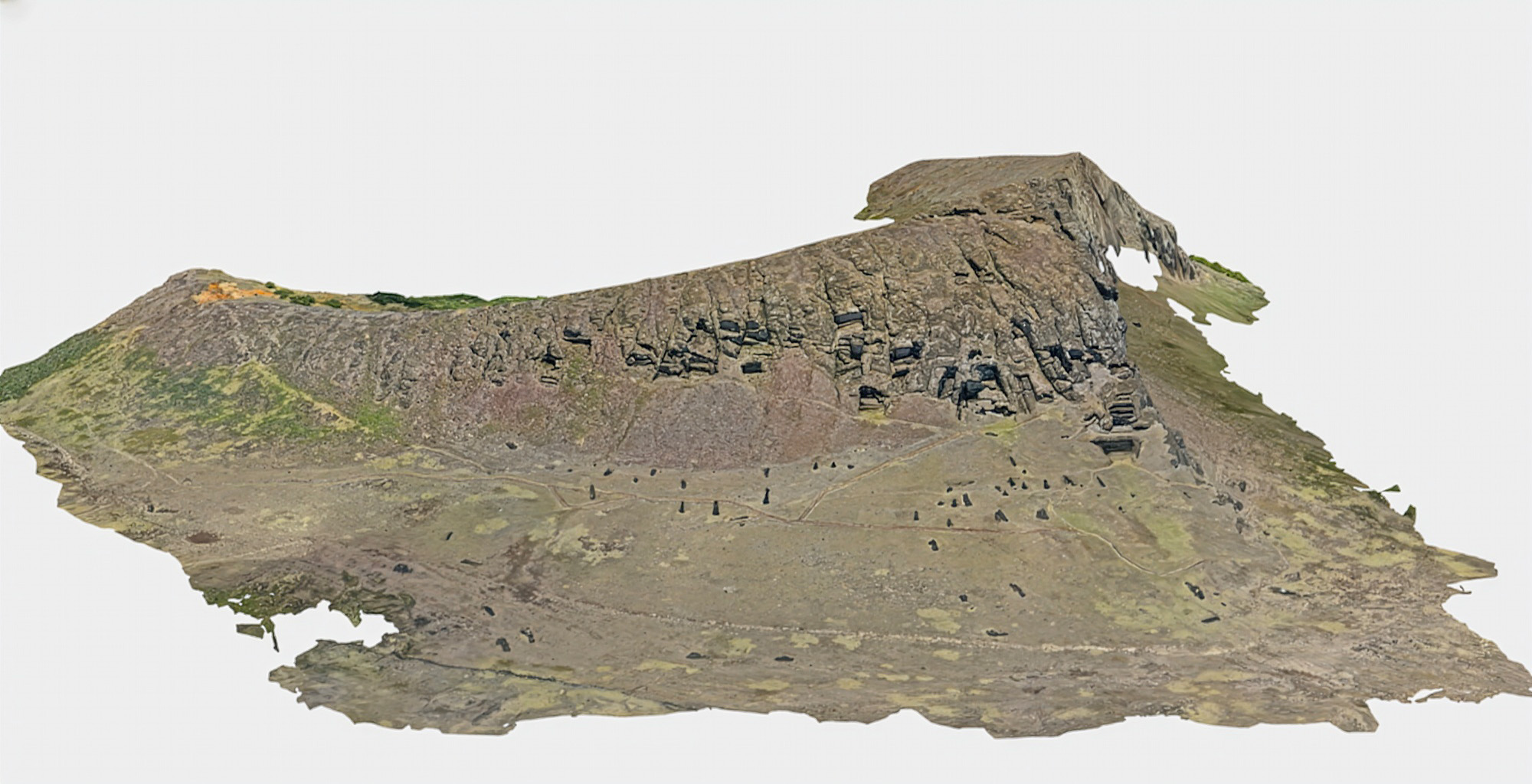
In addition to providing researchers with a detailed 3D replica of Rano Raraku quarry, Lipo also hopes the model will help more people experience the island.
“We’re documenting something that really has needed to be documented, but in a way that’s really comprehensive and shareable.” So go get busy exploring Rano Raraku! As Lipo said, “the quarry is like the archeological Disneyland.” But one you can now visit from the comforts of home.

2025 PopSci Outdoor Gift Guide
Science,Archaeologyhistory,maps,News,public lands#map #Easter #Island #takes #places #visitors #arent #allowed1768162437