The comet 3I/ATLAS is well on its way back into deep space, but the famous cosmic visitor continues to fascinate astronomers. Since its discovery in July 2025, researchers have spent months observing and analyzing the icy rock to better understand its composition and behavior. 3I/ATLAS is only the third known interstellar object to journey through our neighborhood, meaning it contains a wealth of information on other regions of the galaxy.
“Observing 3I/ATLAS is like taking a fingerprint from another solar system,” explained Nathan Roth, an astronomer at American University.
After examining readings collected in late 2025 with the Atacama Large Millimeter/submillimeter Array (ALMA) in Chile, Roth and his colleagues have new information to share on the comet. Everyone’s favorite interstellar space rock is chock full of alcohol and cyanide. More specifically, 3I/ATLAS contains a surprising combination of methanol and hydrogen cyanide (HCN). While the latter nitrogen-containing molecule is often seen in comets, the methanol took astronomers by surprise. In two observation sessions, Roth’s team measured methanol-to-HCN ratios of around 70 and 120, making 3I/ATLAS one of the most methanol-rich comets ever seen.
“It’s bursting with methanol in a way we just don’t usually see in comets in our own solar system,” said Roth.
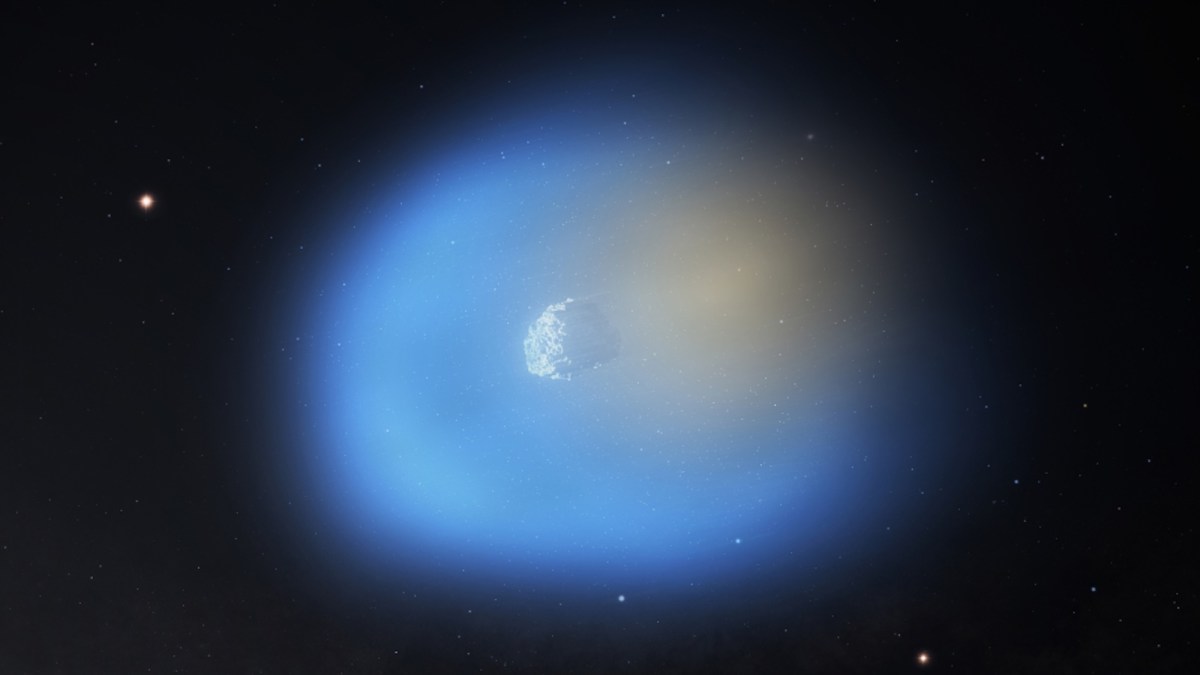
The data suggests the icy rock was born in a very different environment than standard comet models. Before it neared our sun, the glowing halo of dust and debris surrounding 3I/ATLAS called the coma was mostly carbon dioxide. As our sun began to heat it, 3I/ATLAS began releasing large amounts of both methanol and HCN. Based on how the molecules move away from the comet, astronomers determined that while HCN comes largely from the core, methanol is dispersing from the core as well as ice particles in the coma. Although some solar system comets have shown similar behavior, this is the first time scientists have seen the reactions in this much detail in an interstellar visitor.
While 3I/ATLAS’ exact birthplace will likely never be known,each new piece of information from the comet fills in the blanks for a distant area of space that we may never have seen.

2025 PopSci Best of What’s New
Science,Deep Space,Solar System,Space,Space Telescope,TechnologyNews#3IATLAS #comet #bursting #alcohol #surprising #astronomers1773074243