Most of us try to be responsible global citizens while we’re alive. We sort recyclables. We avoid fast fashion. We try to be good sports as we sip from soggy paper straws. After a lifetime of trying to put things in the right bin, we eventually arrive at the ultimate recycling dilemma: what to do with our bodies after we die. And with several new “eco-friendly” body disposition methods now available, it’s almost enough to cause decision fatigue.
So what is the most environmentally friendly option for handling human remains? Despite all the new technology, experts say there’s one clear answer, and it’s surprisingly old-school.
“If what you’re looking for is to leave the planet as responsibly as you can, natural burial is your only option,” says Lee Webster, a speaker, author, educator, and former president of Green Burial Council International. “Everybody wants something shiny, new and exciting, but the simplest solution is usually the best.”
Breaking down the most common funeral options
In the United States, there are currently five main options for handling remains, and each has distinct environmental and legal implications.
1. Conventional burial
The most familiar is still conventional burial, which relies on embalming chemicals, hardwood or metal caskets, and concrete or fiberglass vaults. According to Webster, the environmental costs add up quickly due to energy and materials for manufacturing, mined metals and concrete, land disruption, and ongoing grounds maintenance. She also cites what she calls the “warehousing of funeral furniture”—the permanent underground storage of vaults, metal caskets, and polyester bedding—as a surreal-sounding yet very real burden.
“It’s just all of it,” says Webster. “Natural resources squandered, carbon-intensive production, and chemical preservatives that don’t return anything to the ecosystem.”
Related ‘Ask Us Anything’ Stories
2. Cremation
Cremation, currently the most popular choice in the U.S., is often considered simpler or “cleaner.” But the process requires extreme heat, typically 1,400 to 1,900 degrees Fahrenheit, fueled by natural gas or oil. Cremation also releases carbon dioxide and mercury vapor from dental fillings. (Webster notes that about 14 percent of mercury in U.S. waterways is attributable to flame cremation.)
“The question we all have to answer is whether the convenience and price of flame cremation outweigh the environmental ramifications of mercury and carbon emissions, fossil fuel use, and wildcat scattering [spreading cremated remains around the world] in fields and streams worldwide,” Webster says.
Even in cultures where cremation is a central religious rite, such as in Hindu practice, researchers have identified a need for more eco-friendly options. According to a study conducted at Nirma University in Ahmedabad, India, traditional Hindu cremation practices, which occur on open-air funeral pyres, consume roughly 880 to 1100 pounds (400 to 500 kilograms) of wood per body, causing deforestation and releasing 500 to 600 kilograms of carbon dioxide into the air.
“Traditional rituals need not be abandoned or ignored, but they can be thoughtfully adapted with innovations of green burials,” the researchers note. “These alternatives are not only technologically convenient, but also, they are cultural responses to the urgent ethical call of our time.”
3. Aquamation
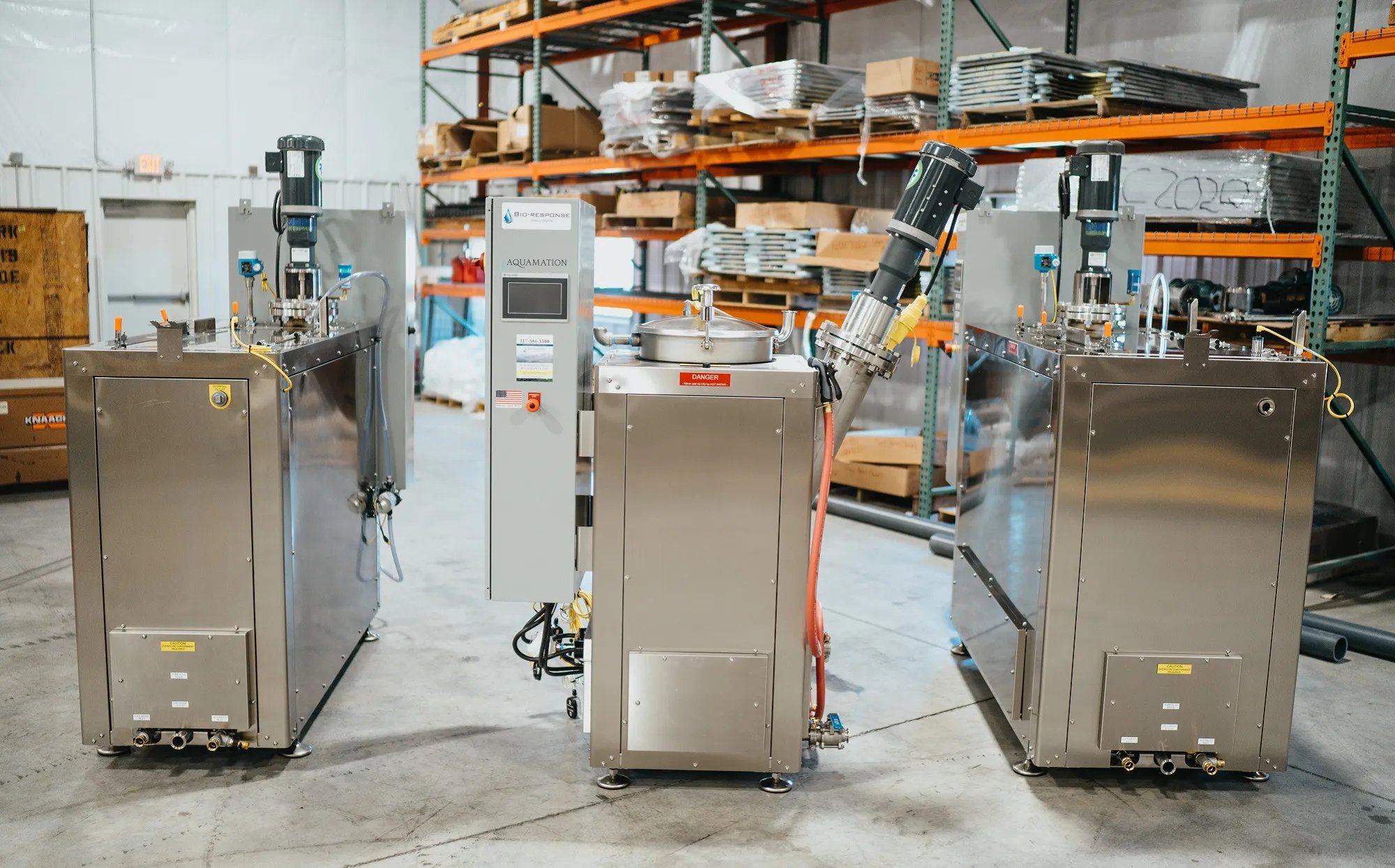
Aquamation, or alkaline hydrolysis (AH), is legally defined as a type of cremation because it breaks down the body’s soft tissue, leaving bones behind. It is currently legal in 30 states and available in 19.
Unlike flame cremation, AH uses heated water and alkali to break down soft tissue over the course of 12 hours.
“Alkaline hydrolysis components are either potassium or sodium hydroxide, essentially lye,” Webster says. “It’s mined as potash [a key component of fertilizer], then heavily processed chemically.”
The carbon emissions appear to be about 20 percent lower than those resulting from flame cremation, but the environmental story doesn’t end there.
The process produces 100 to 300 gallons of liquid waste that’s routed into municipal wastewater systems or septic tanks, raising infrastructure concerns. And because AH relies on an industrial chemical process rather than soil-based decomposition, it may be less appealing to those seeking an “earthy” or nature-focused approach.
“AH is lukewarm for many,” Webster says. “People are looking for authentic, organic solutions that further environmental goals like land conservation, not industrial and chemical processes that contribute to climate issues,” like aquamation.
4. Human composting
Human composting, or natural organic reduction (NOR), has generated quite a bit of recent buzz as it has become legal in more states. Webster says NOR is often mistaken for green burial, but it doesn’t involve burial at all. It’s an above-ground process that relies on natural decomposition inside a controlled environment. Webster considers NOR “industrial reduction technology,” closer to cremation than direct-to-earth burial. (State statutes do not define NOR as cremation.)
During the NOR process, a body is placed in a vessel with a mixture of organic materials such as straw, wood chips and alfalfa, and microbial activity breaks down soft tissue over approximately 60 days. Because the biological processes do not fully reduce skeletal remains during that time, the NOR process involves briefly removing and refining bone fragments before adding them back to the mix to ensure a uniform consistency.

“What this method has in common with cremation and AH,” she says, “is that there is a secondary disposal process that is necessary.”
The NOR process produces roughly a cubic yard to a yard and a half of material per person. Webster notes that the material that results from the NOR process more closely resembles wood chips than soil, and must be managed after the process is complete.
“Specifically, there is a cubic yard to cubic yard and a half of leftover unfinished wood chips that get trucked over an hour out of the city and spread over the ground,” she says. “That’s about three quarters of a ton per person.”
Webster adds that the materials used in NOR have their own environmental costs: much of the alfalfa used for NOR is grown in the water-stressed Four Corners region—where the borders of Arizona, Colorado, New Mexico and Utah meet—and is often transported over long distances.
Webster encourages eco-friendly consumers to do their homework when searching for the greenest final resting place.
“When making an environmentally conscious decision about body disposition, people need to know the details around these options,” she says. “It’s like the food at your grocery store. It’s not enough to just say, ‘Oh, it says organic on the package.’”
5. Green burial
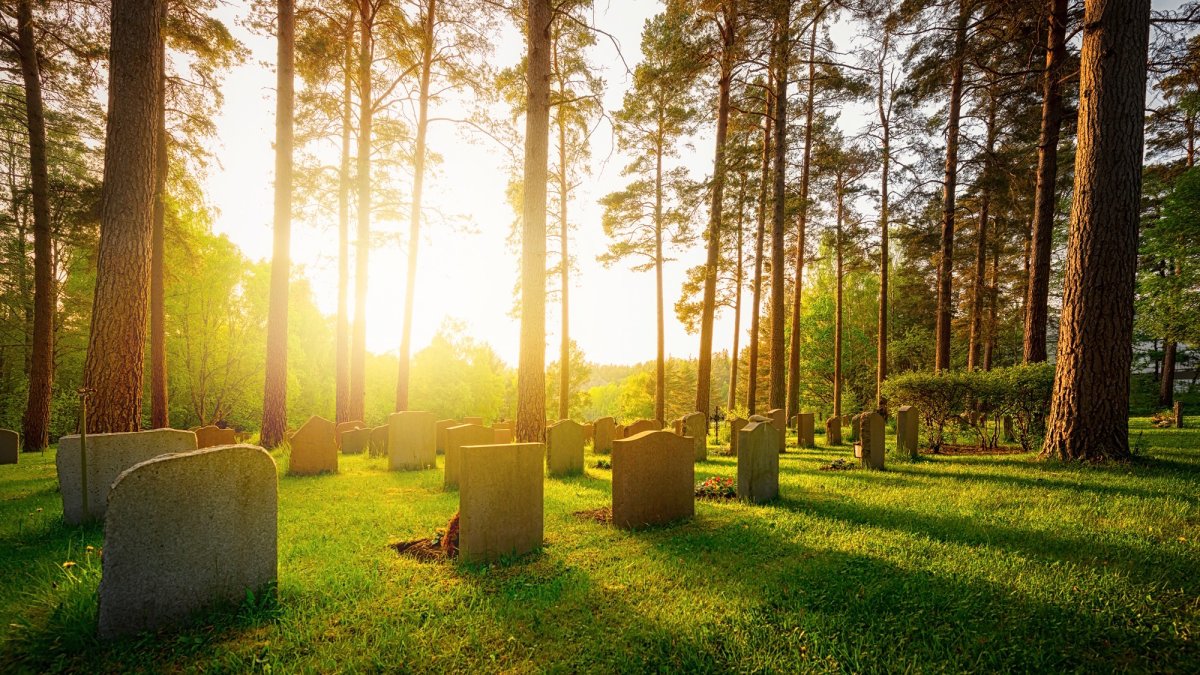
Green burial is an eco-friendly method where the body is placed directly into the earth, allowing it to naturally decompose. Unlike traditional burial, green burial avoids embalming and non-biodegradable materials, such as metal caskets and concrete vaults. Instead, biodegradable materials like plain wooden boxes or shrouds are used. The body is allowed to decompose naturally, enriching the soil and providing nutrients back into the ecosystem.
Webster says this approach is aligned with Jewish, Muslim, and Quaker burial practices, adding that before the advent of embalming, this was the method used by “everyone in the entire world since we began burying in caves.”
“The simplest description of it is body-to-earth burial, with no impediments to decomposition,” she says.
In natural burial, “there are no vaults, no chemicals,” and the body goes directly into the soil at about 3.5 to 4 feet, where microbial communities and “little coffin beetles” do their work, Webster says. Natural burial also leaves no leftover materials, no chemical effluent, and no machinery-driven emissions.
This high level of ecological efficiency is corroborated by a 2017 life cycle assessment (LCA), which is a study that calculates the total “environmental price tag” of a process. It found that natural burial consistently has the lowest “environmental shadow price” because it avoids the high energy demands of cremation and the manufacturing of industrial funeral materials.
The cautionary tale of mushroom burial suits
As the green funeral industry continues to grow, the challenge will lie in separating true ecological innovation from viral trends. The rise and fall of “mushroom burial suits,” which captured social media attention but, according to Webster, lacked “scientific legs,” serves as a cautionary tale.
“The company is now defunct, and the only academic study was abandoned halfway through,” she says.
While Webster views the mushroom “suit” as a failed experiment, she notes that mushroom coffins are a “different animal,” functioning more as a simple, carbon-neutral alternative to traditional wood or metal coffins.
“The purpose with those is to use organic material to make the container,” she says. “There is no expectation that any fungal growth will occur.”
The transition to a greener afterlife doesn’t necessarily require a brand-new, dedicated facility. Instead, the funeral industry has adapted to provide “hybrid” cemetery models. The Green Burial Council now certifies these hybrid facilities, which are essentially conventional cemeteries with a designated area for eco-friendly funerals.
Looking ahead at how we handle human remains
So, will future generations face even more choices on how to make an eco-friendly exit? It seems likely, guesses Webster.
She cites one promising new approach, which is designed to break down both soft tissue and bone into nutrient-rich material. Developed by innovator Bob Jenkins, the method uses a proprietary mixture to transform remains to nutrient-rich material in an “accelerated” manner.
“This isn’t out there yet, but it could be a game-changer,” she says.
In the meantime, Webster says natural burial is legal in all states, relatively inexpensive, and, in her opinion, the most straightforward path for those looking to minimize their final footprint.
Additionally, many natural burial grounds operate on conserved land, Webster says, making this method a potential means of long-term preservation rather than resource depletion.
“What that means in the long term is that grave space, in deep time, could be reused,” she says. “This has been done for centuries and centuries, all over the world. This is true sustainability.”
In Ask Us Anything, Popular Science answers your most outlandish, mind-burning questions, from the everyday things you’ve always wondered to the bizarre things you never thought to ask. Have something you’ve always wanted to know? Ask us.

2025 PopSci Outdoor Gift Guide
Technology,Ask Us Anything,Scienceevergreen,Features,News#Cremation #casket #Heres #ecofriendly #burial #option1767423147