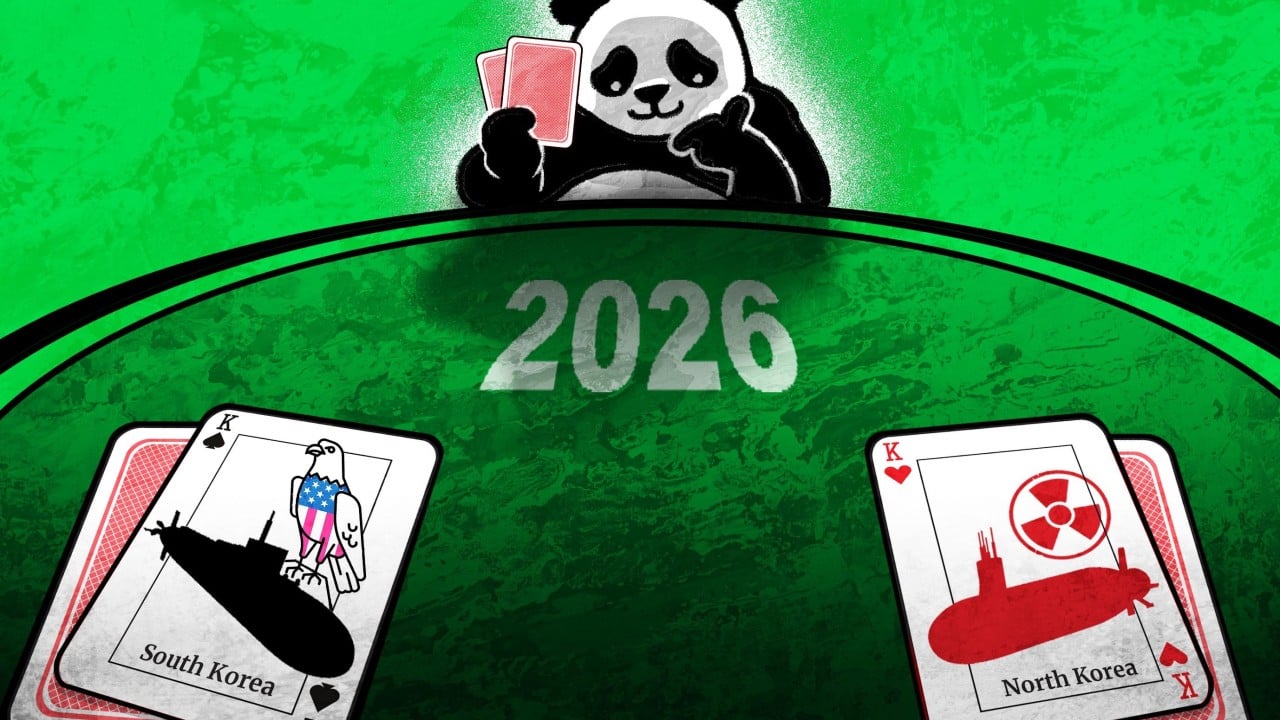
As the new year unfolds, China finds itself grappling with strategic pressures fuelled by two US treaty allies at its doorstep – Japan and South Korea. In the second of a two-part series, Seong Hyeon Choi looks at how competing pressures in the Korean peninsula may complicate China’s security calculus. Read the first part here.
In 2025, there was a major shift in China’s security environment relating to the Korean peninsula, as the North grew more open in its push for nuclear weapons and the South leaned closer to the United States.
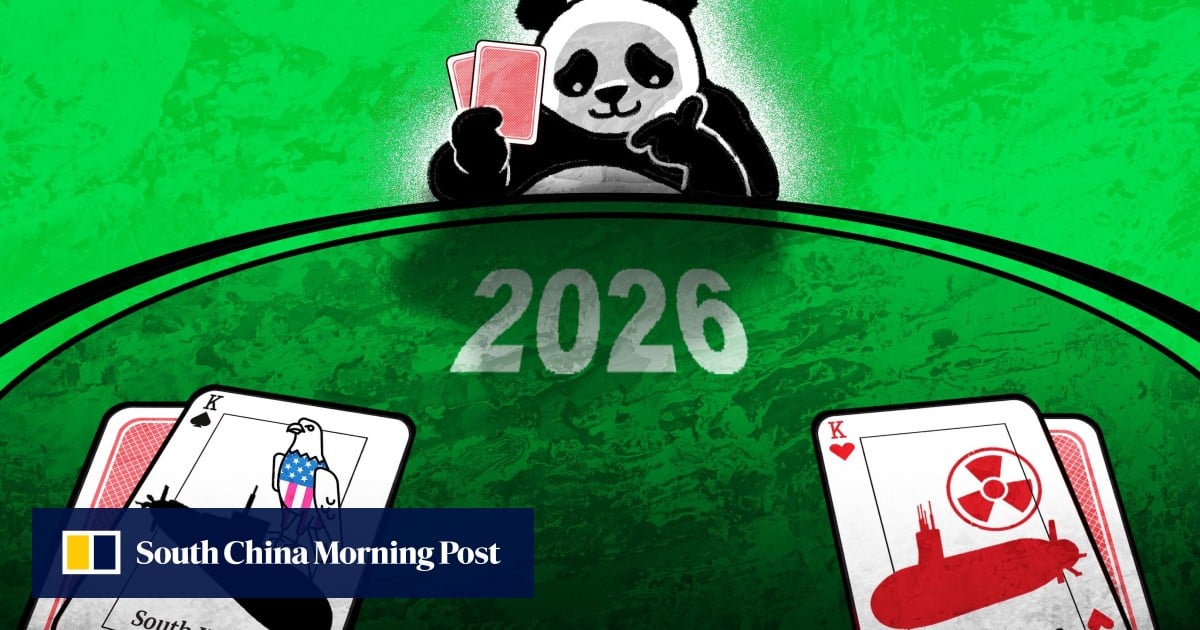
South Korean President Lee Jae Myung, who took office last June, has sought to follow treaty ally Washington’s new national security strategy, which urges Indo-Pacific allies to increase their input into collective defence within the first island chain.
It has led to South Korea ramping up its advanced capabilities, including gaining US President Donald Trump’s approval to build nuclear-powered submarines and attempting to “modernise” the alliance with the US, which would see more investment flowing into the country for conventional defences against the North.
Meanwhile, ties between Beijing and Pyongyang have thawed, highlighted by North Korean leader Kim Jong-un’s first visit to China in six years for the military parade in Tiananmen Square in September.
Relations had been strained by Pyongyang’s nuclear and missile tests, which Beijing viewed as destabilising, as well as Kim’s growing military ties with Russia, challenging traditional Chinese influence.
But Pyongyang has grown more open about its progress in developing nuclear weapons, while Beijing has rolled back its stance opposing nuclear weapons on the peninsula.
Chinese military parade, Jonathan Fritz, Liselotte Odgaard, Korean peninsula, Indo-Pacific region, Lee Jae-myung, Kim Jong-un, China, Hwasong-20 intercontinental-range ballistic missiles (ICBMs), Admiral Daryl Caudle, Donald Trump, North Korea, Asia-Pacific Economic Cooperation (Apec) summit, Beijing, South Korea#Korean #peninsula #arms #race #heating #China #react1767826534

Admiral Daryl Caudle
arms
Asia-Pacific Economic Cooperation (Apec) summit
Beijing
China
Chinese military parade
Donald Trump
heating
Hwasong-20 intercontinental-range ballistic missiles (ICBMs)
Indo-Pacific region
Jonathan Fritz
Kim Jong-un
Korean
Korean peninsula
Lee Jae-myung
Liselotte Odgaard
North Korea
peninsula
race
react
South Korea