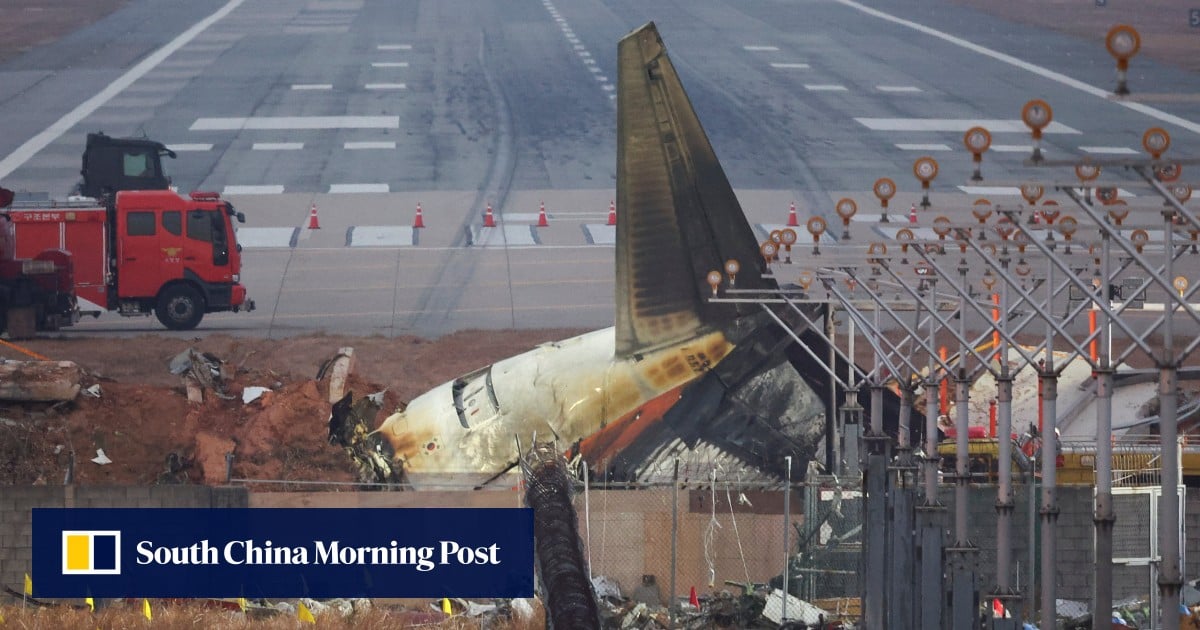
South Korea has belatedly acknowledged that a concrete structure built beyond a runway turned a routine emergency landing into the deadliest-ever domestic aviation disaster, in a reversal that has unleashed a furious debate over safety oversight and accountability.
Newly disclosed findings based on computer simulations show the structure – originally constructed to support navigation equipment at Muan International Airport – acted as a deadly barrier. Without it, investigators concluded that all 181 passengers and crew would likely have survived the crash on December 29, 2024.
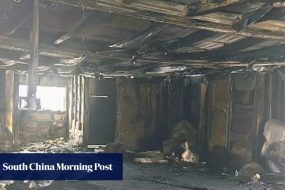
Instead, Jeju Air Flight 2216 slammed into the solid concrete base about 250 metres (820 feet) beyond the runway’s end, erupting into flames and killing 179 of the people on board. The aircraft had attempted a wheels-up landing after a suspected bird strike damaged its undercarriage, investigators found.
The transport ministry’s Aviation and Railway Accident Investigation Board concluded that without the embankment, which contained 19 buried concrete columns installed in 2007 to prop up a guidance antenna, the aircraft would likely have slid a few hundred metres before grinding to a halt.
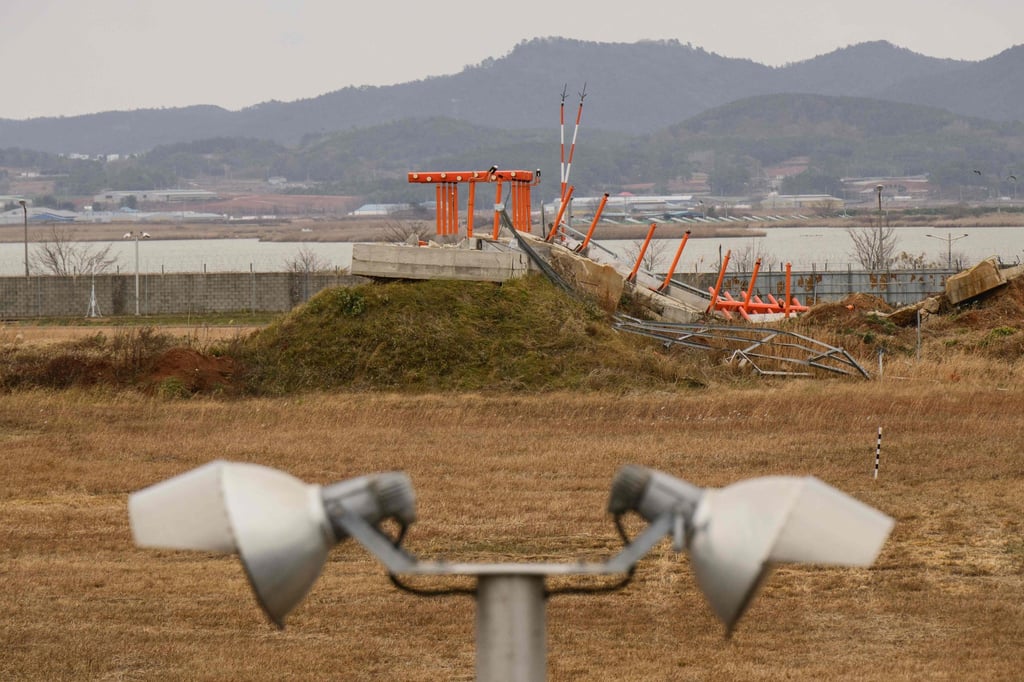
Officials had covered the structure with soil and turf to meet rules requiring soft terrain, but the hardened base breached international standards that since 2010 have required such facilities to use “frangible” – or breakable – materials designed to yield on impact.
December 29, 2024, Aviation and Railway Accident Investigation Board, Accident Investigation Board, Muan International Airport, South Korea, Jeju Airport, JTBC news, Kim Eun-hye, People Power Party, Korea National University of Transportation, Silla University, Kim Kwang-il, Lee Gun-young, Jeju Air Flight 2216, Muan Airport#South #Koreas #worst #air #disaster #fury #erupts #mound #death1768279141

2024
Accident Investigation Board
air
Aviation and Railway Accident Investigation Board
death
December 29
disaster
erupts
fury
Jeju Air Flight 2216
Jeju Airport
JTBC news
Kim Eun-hye
Kim Kwang-il
Korea National University of Transportation
Koreas
Lee Gun-young
mound
Muan Airport
Muan International Airport
People Power Party
Silla University
South
South Korea
worst