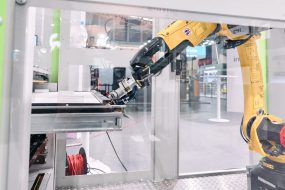
Navigating workforce anxiety remains a primary challenge for leaders as AI integration defines modern enterprise success.
For enterprise leaders, deploying AI is less a technical hurdle than a complex exercise in change management. The reality for many organisations is that, while algorithms offer efficiency, the human element dictates the speed of adoption.
Data from the TUC indicates that 51 percent of UK adults are concerned about the impact of AI and new technologies on their job. This anxiety creates a tangible risk to ROI; resistance halts the innovation leaders seek to foster.
Allister Frost, a former Microsoft leader and expert on business transformation, argues this friction stems from a misunderstanding of the technology’s capability.
Address the misconception of true intelligence
A common error in corporate strategy treats generative AI and Large Language Models (LLMs) as autonomous agents rather than data processors. This anthropomorphism drives the fear that machines will make human cognition obsolete.

“The greatest misconception is that AI is as intelligent as its name suggests and can perform human-like tasks,” Frost notes. He clarifies the reality: “AI is primarily pattern-matching at scale, offering opportunities to help people work smarter, innovate faster, and explore new pathways to growth.”
Communicating this distinction is essential. When employees view these tools as pattern-matchers rather than sentient replacements, the narrative changes from competition to utility. Frost emphasises that “AI doesn’t have the ability to replicate human intelligence, it exists to augment it.”
Some finance and operations leaders view AI integration primarily as a mechanism to reduce salary overheads. Yet stripping away experienced staff for automation often degrades institutional memory.
Frost warns against this tactic: “Too often, businesses see AI as a shortcut to headcount reduction, putting experienced workers at risk for short-term savings. This approach overlooks the enormous economic and societal cost of losing skilled staff.”
Data confirms the workforce is on edge regarding this scenario. Acas reports that 26 percent of British workers cite job losses as their biggest concern regarding AI at work. History suggests, however, that technological integration expands rather than contracts the labour market.
“The reality is that AI is not poised to eliminate jobs indiscriminately, but rather to evolve the nature of work,” states Frost.
Operationalising augmentation
Successful integration requires changing how AI use cases are identified. Rather than looking for roles to remove, enterprise leaders should identify high-volume, low-value tasks that bottleneck productivity.
“AI tools have the potential to automate mundane tasks and free up human labour to focus on creative and strategic aspects,” explains Frost.
This allows leaders to move staff toward high-touch areas where algorithms struggle.
“As AI handles repetitive tasks, it frees up time to allow staff to upskill and transition into more complex roles that require a higher level of critical thinking and emotional intelligence.”
These competencies – empathy, ethical decision-making, and complex strategy – remain outside the grasp of current computational models.
Resistance to AI is often a symptom of “change fatigue,” a common response to the pace of digital updates. With 14 percent of UK workers explicitly worried about AI’s impact on their current job, transparent governance is required.
Leaders must recognise that “resisting AI’s integration can hinder progress and limit opportunities for innovation.” Active engagement is the solution. “Engaging employees in discussions about AI’s role within the organisation can help demystify its functions and build trust,” Frost advises.
This requires moving beyond top-down mandates. It involves creating a culture where staff feel safe to experiment with new tools without the immediate fear of displacing their own roles.
“Once leaders have cultivated an environment of transparency and inclusion, businesses can alleviate anxieties, ensuring all team members are aligned and prepared to harness AI’s benefits.”
Adapting the workforce for successful AI integration
Enterprise technology advancements have always demanded adaptation, and AI – while a larger transformation than many technologies in recent decades – is no different.
“Throughout history people have been resistant to new technological advancements, yet history shows us humans have repeatedly risen to the challenge of integrating new technologies.”
For enterprise leaders, success involves investing in resilience and continuous learning. By framing AI as a transformative tool rather than a threat, organisations can protect their talent pipeline while modernising operations.
A summary of advice to ensure successful AI integration:
- Reframe the narrative: Explicitly communicate AI as a “pattern-matching” tool for augmentation, not a sentient replacement, to lower cultural resistance.
- Audit for augmentation: Identify the mundane and high-volume process bottlenecks for automation, specifically to free up staff for more rewarding creative work.
- Invest in “human” skills: Allocate learning and development budgets toward critical thinking, empathy, and ethical decision-making, as these are the non-replicable assets in an AI-driven market.
- Combat change fatigue: Ensure transparent and two-way dialogue regarding AI integration roadmaps and governance to build trust and mitigate the fear factor regarding job losses.
“My mission is to save one million working lives by showing that AI works best when it empowers humans, rather than replaces them,” Frost concludes.
See also: How Shopify is bringing agentic AI to enterprise commerce

Want to learn more about AI and big data from industry leaders? Check out AI & Big Data Expo taking place in Amsterdam, California, and London. The comprehensive event is part of TechEx and is co-located with other leading technology events. Click here for more information.
AI News is powered by TechForge Media. Explore other upcoming enterprise technology events and webinars here.
AI and Us,AI Business Strategy,Features,Governance, Regulation & Policy,Human-AI Relationships,Inside AI,Interviews,Opinion,Trust, Bias & Fairness,World of Work,adoption,ai,culture,enterprise,ethics,governance,integration,society,workforceadoption,ai,culture,enterprise,ethics,governance,integration,society,workforce#Tackling #workforce #anxiety #integration #success1768312394

adoption
ai
Anxiety
culture
enterprise
ethics
governance
integration
society
success
Tackling
workforce