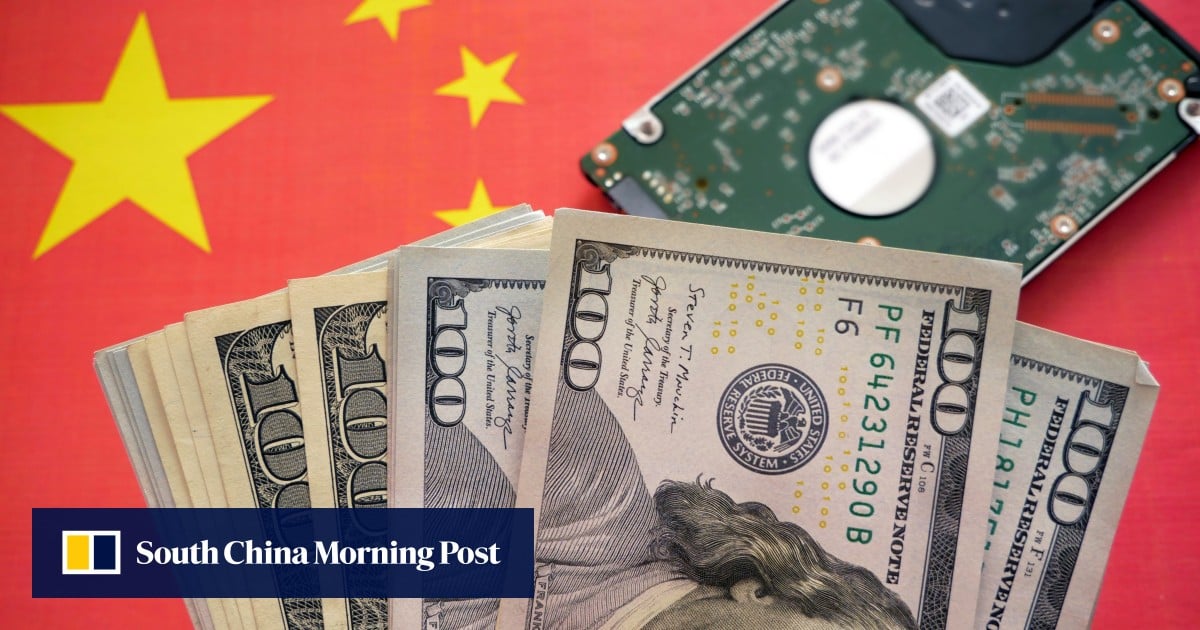

China is likely to accept Nvidia’s H200 artificial intelligence (AI) chips following US clearance, driven by immediate demand in the country’s vast tech sector, according to analysts – though they said Beijing would push to replace them over time.
The American chip giant’s second-most-advanced AI processor can be exported to China from Thursday, as long as shipments total no more than half the amount sold in the US, according to the Department of Commerce’s Bureau of Industry and Security.
Washington restricted H200 exports to China about a year ago, at the end of the Biden administration, to prevent other countries from accessing advanced American technology.
Those curbs were eased under US President Donald Trump, whose government has sought to strike a balance between concerns over China’s AI progress and maintaining the global market share of US firms.
Chinese developers of AI-powered gadgets are likely to welcome the reversal, especially those already using compatible Nvidia chips, as the country currently lacks equally sophisticated alternatives, analysts said. The chips could also support production in sectors such as advanced vehicles and high-performance computers.
“China is behind, so the market is going to want these chips,” said Charles Chang, a finance professor at Fudan University in Shanghai. “I don’t think there’s going to be a whole lot of questions. It’s an easier move for people to say ‘hey, let’s go buy these chips and they already work with the ones we have’.”
Charles Chang, American, Remote Access Security Act, Beijing, Chinese Communist Party, China, Fudan University, Centre for China and Globalisation, Jayant Menon, Victor Gao, John Moolenaar, Nvidia, Biden administration, Shanghai, Donald Trump, AI, Department of Commerce, ISEAS – Yusof Ishak Institute, Alfredo Montufar-Helu, Washington, H200, TrendForce, Bureau of Industry and Security, Ankura Consulting, Singapore, US#China #buy #Nvidias #H200 #chips #Trump #eases #curbs #replace1768392838

ai
Alfredo Montufar-Helu
American
Ankura Consulting
Beijing
Biden administration
Bureau of Industry and Security
buy
Centre for China and Globalisation
Charles Chang
China
Chinese Communist Party
chips
curbs
Department of Commerce
Donald Trump
eases
Fudan University
h200
ISEAS-Yusof Ishak Institute
Jayant Menon
John Moolenaar
nvidia
Nvidias
Remote Access Security Act
replace
Shanghai
Singapore
TrendForce
Trump
US
Victor Gao
Washington
Recent Post


Gallery






Featured Videos