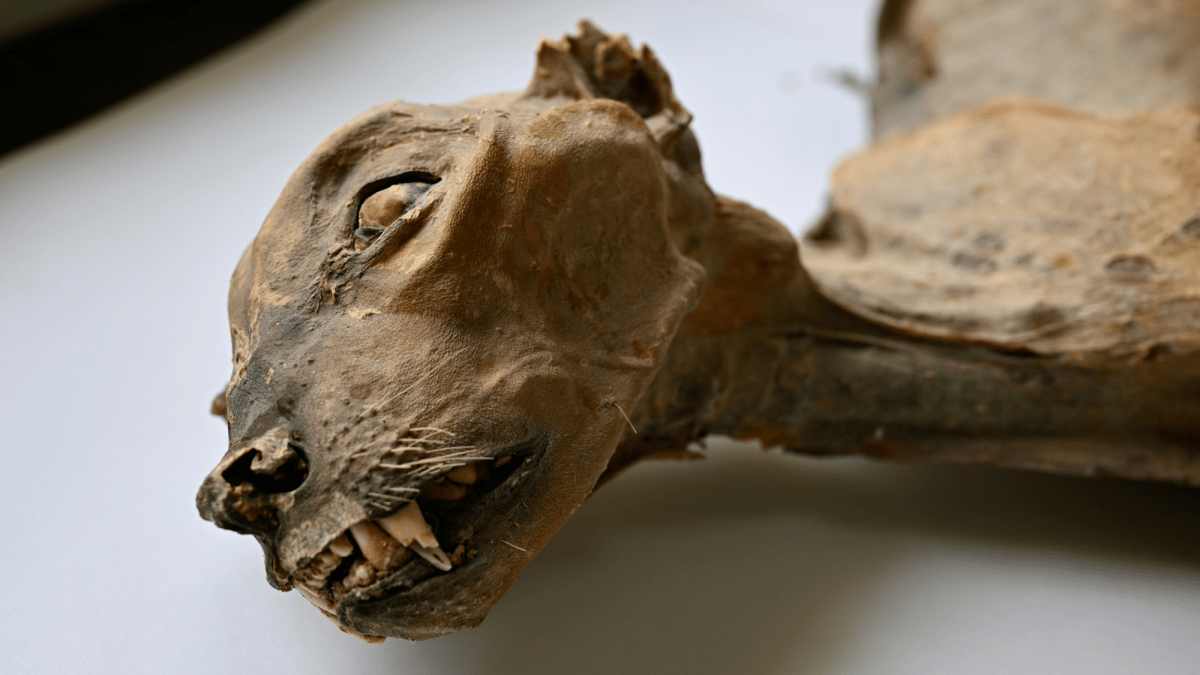
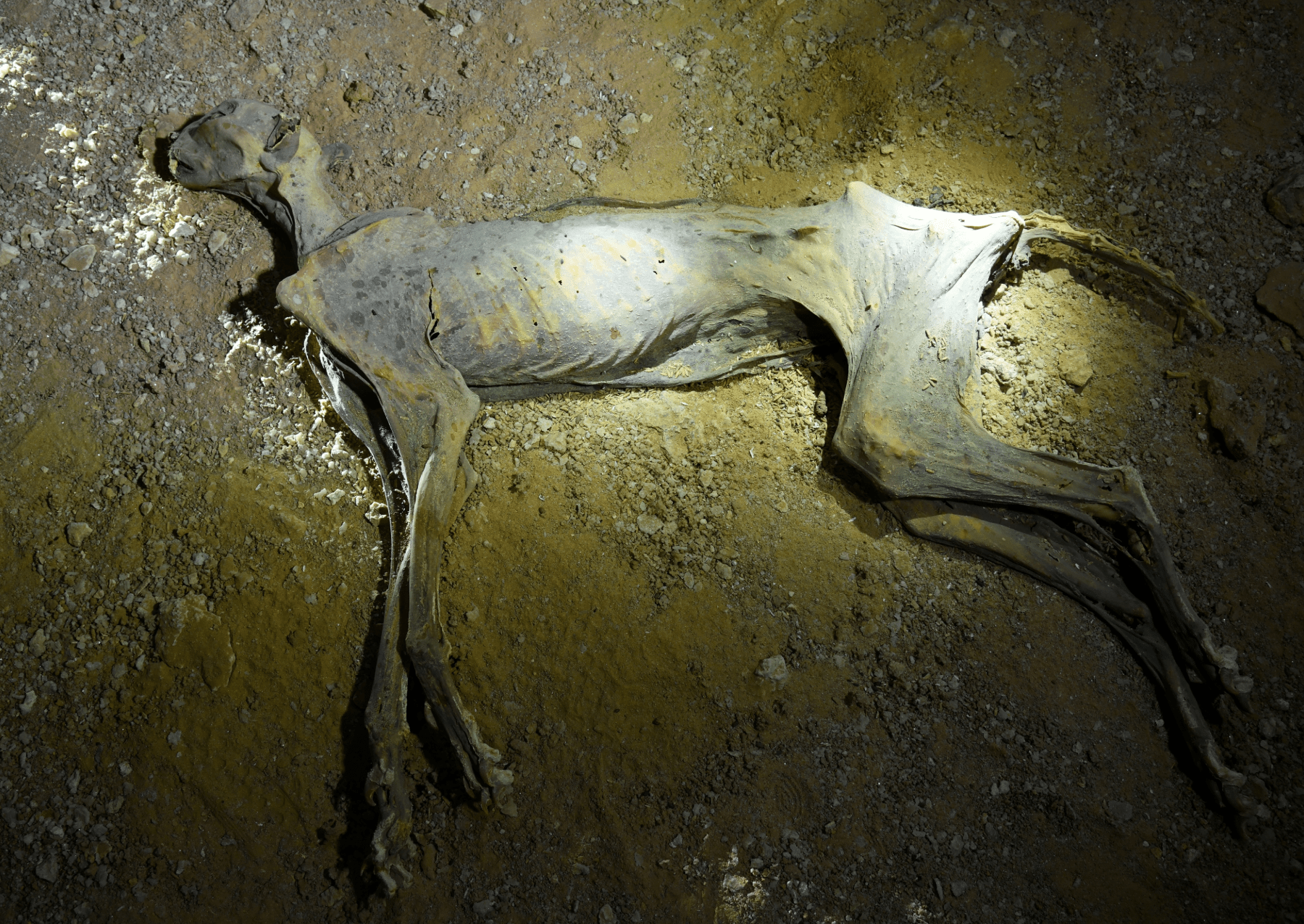
Seven naturally-mummified cheetahs are more than just an exciting paleontological find. The specimens discovered in five caves near the city of Arar in northern Saudi Arabia offer a glimpse of hope for reintroducing the species to the Arabian Peninsula. The findings are described in a study published today in the journal Communications Earth & Environment.
Cheetahs once lived in much of Africa, and Western and Southern Asia, but their range in Asia has decreased by 98 percent over the past several thousand years. As a whole, cheetahs only occupy nine percent of the territory they used to. On the Arabian Peninsula (Saudi Arabia, Yemen, Oman, United Arab Emirates, Qatar, Bahrain, and Kuwait) cheetahs were found as recently as 1977, when a hunter in Oman killed an adult female cheetah. However, the animals are now considered locally extinct in the region. There are five cheetah subspecies, and the Asiatic cheetah (Acinonyx jubatus venaticus) is believed to have been the only subspecies that lived in present-day Saudi Arabia. The Asiatic cheetah is currently considered critically endangered, with only one small wild population remaining in Iran. Whether or not cheetahs could be reintroduced in the area is debated, largely due to continued habitat destruction.
During digs in five caves in 2022 and 2023, field biologist Ahmed Boug from Saudi Arabia’s National Center for Wildlife and his team uncovered skeletal remains of 54 other cats and seven naturally-mummified cheetahs. In desert regions, natural mummification is common due to the dry conditions where fungi and bacteria can’t thrive on a decomposing corpse. Deserts also have the right mineral content in the sand for preservation.

Video – “Ecology: Mummified cheetahs discovery gives hope for species’ Arabic reintroduction”
The oldest of the cat skeletal remains date back about 4,000 years ago. The mummified cheetah remains were much younger—ranging from only 130 to 1,870 years ago.
They also extracted complete genome sequences from three of the seven mummified cheetahs. According to the team, this is the first time that this kind of genetic material extraction has been done on naturally-mummified big cats. While the most recent specimen is genetically closest to the Asiatic cheetah, the two older specimens are more similar to the Northwest African cheetah (Acinonyx jubatus hecki). This critically endangered species is found in the Sahara and several countries in northwestern Africa.
The authors say that their results indicate that cheetah subspecies could support the re-establishment of cheetahs in Saudi Arabia. An increased available genetic pool from other subspecies would make rewilding efforts more feasible, as subspecies can generally interbreed and create fertile offspring that further the population. The team also suggests that their method shows that ancient DNA records from similar specimens can inform future reintroduction plans for other endangered species.

2025 PopSci Outdoor Gift Guide
Environment,Animals,Biology,Endangered Species,Science,WildlifeNews#Mummified #cheetahs #save #critically #endangered #big #cats1768496351

Recent Post



Gallery






Featured Videos