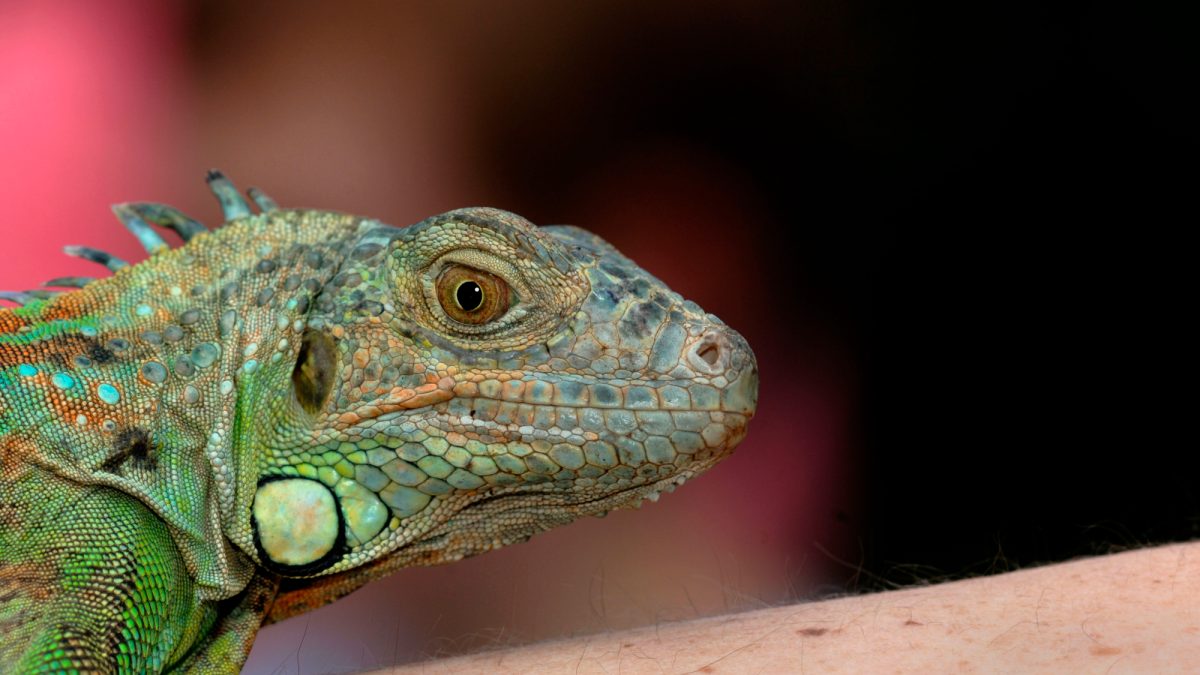
In Florida, giant invasive pythons, the state’s signature alligators, and bears that sometimes roam around theme parks are typically among the most upfront wildlife in the news. But when the temperatures drop, one reptile stands ready to take the limelight and also drop—iguanas.
When air temperatures get cold enough, the reptiles will get stunned (or freeze) and fall from trees. Today, morning temperatures in Jacksonville and Tallahassee dipped as low as 20 degrees Fahrenheit overnight, while Orlando hit the mid-30s, and Miami fell to the upper 40s. All temperatures that are cold enough to temporarily freeze an iguana.
Reptiles like iguanas are cold-blooded—or ectothermic—reptiles that rely on external environmental conditions to regulate their body temperature. By comparison, warm-blooded or endothermic animals like humans and other mammals have a more consistent body temperature. Since the outside temperature has such a drastic effect on their bodies, cold-blooded animals often adapt their behavior as a response. They may bask in the sun to warm up or find shade to cool down and achieve a more balanced body temperature.

Watching Iguanas fall off trees in Florida 🦎
CREDIT: Florida Lad.
When it gets cold, iguanas may also enter a dormant state called cold-stunning or freezing since they are not adapted to life in colder temperatures. Iguanas can start to slow down if the temperature gets below 50 degrees, and stun once they hit the 40s or 30s.
“When that happens, they may lose their grip and fall from the trees,” said AccuWeather Meteorologist Brandon Buckingham. “It’s a unique cold-weather hazard in Florida.”
After they fall from a tree, they may appear to be dead. However, their critical body functions will all still be working and they will continue to breathe. Once temperatures rise, they can jump back into action as if nothing happened.
Iguanas can grow up to seven feet long and weigh upwards of 30 pounds, so it is best to be cautious when walking under palm trees in colder weather. Getting hit by a reptile of that size could be dangerous.
If you see a frozen iguana on the ground, do not rush in to warm them up. Joe Gonzalez from the Iguana Police told WPTV in West Palm Beach that relocating or interfering with an iguana can lead to more problems.
“If you capture an iguana in your own yard and don’t move it anywhere else, that’s fine,” Gonzalez said. “But if you relocate it, you’re essentially taking your problem and dumping it somewhere else. This can have legal consequences, including fines.”
Instead, it’s best to just leave the iguana alone. It will usually be fine once it gets over 50 degrees again.

2025 PopSci Outdoor Gift Guide
Environment,Animals,Biology,Science,Weather,WildlifeNews#Dont #pick #frozen #iguanas1768573452

Recent Post



Gallery






Featured Videos