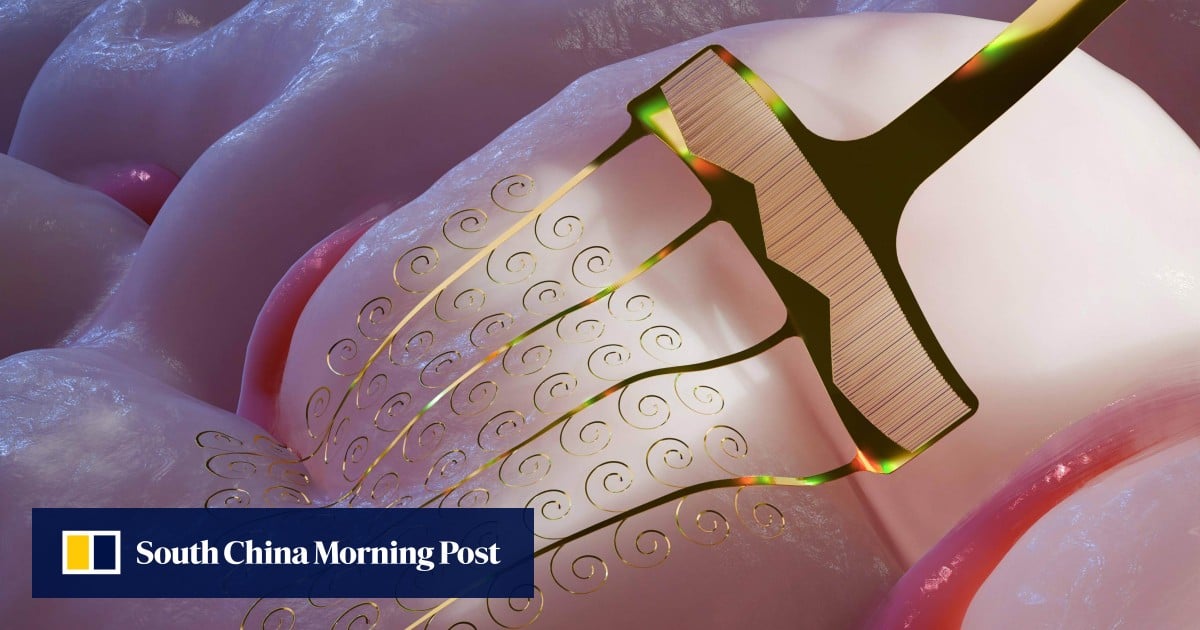
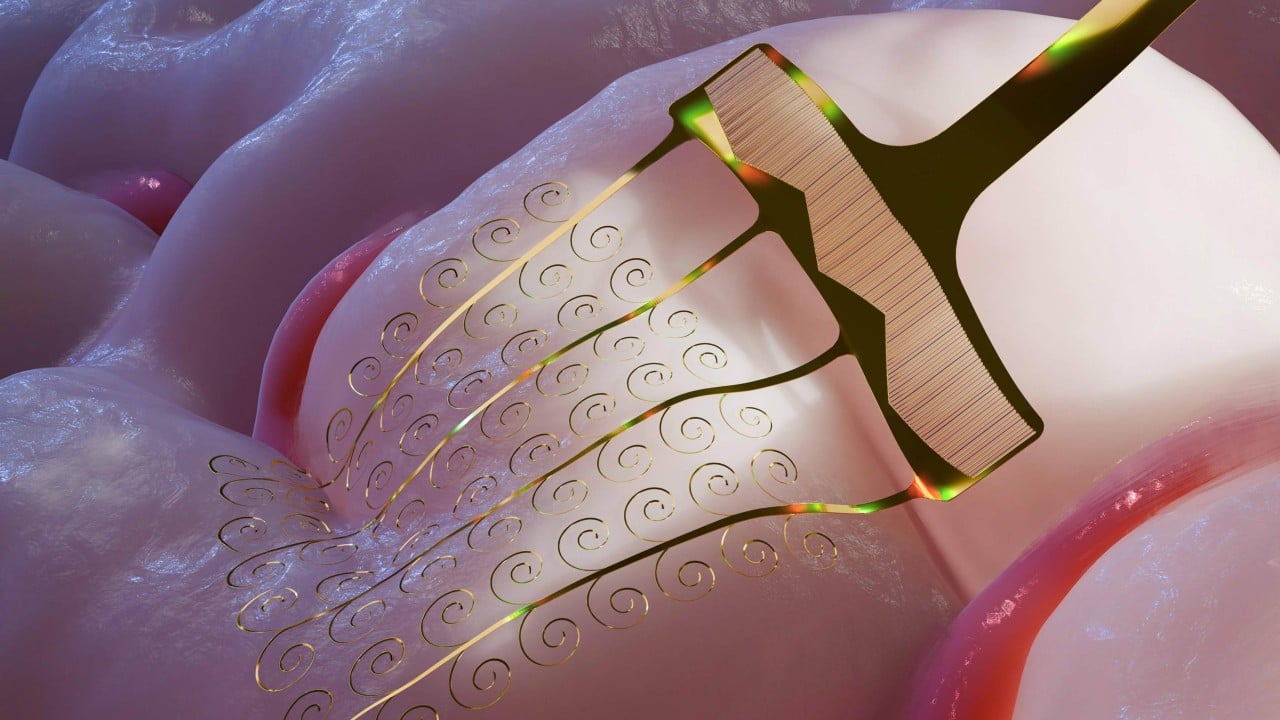
Chinese scientists have developed microelectrodes that can flex and move with the brain, potentially paving the way for more advanced and adaptable brain-computer interfaces, according to a study published by the peer-reviewed Nature Electronics.
The researchers from the Chinese Academy of Sciences said the design of the neuronal activity recorders was inspired by the Japanese art of kirigami, with its intricate 3D designs achieved by cutting and folding paper.
The scientists said their design set out to address the challenge of electrode displacement that has affected other brain-computer interface research, notably at Elon Musk’s Neuralink.
The resulting soft microelectrode arrays were implanted into macaque monkeys, where they were able to move or flex with brain tissue to allow for the recording of hundreds of neurons simultaneously, according to the paper which appeared in the February 5 issue.
“The development of brain-computer interfaces requires implantable microelectrode arrays that can interface with numerous neurons across large spatial and temporal scales,” the researchers wrote.
Brain-computer interfaces provide a direct link between brain activity and a computer, using electrodes to record neural signals that are then analysed to perform actions such as controlling robotic arms.
microelectrodes, Scientific American, Chinese Academy of Sciences, macaca monkey, Japanese art of kirigami, Chinese scientists, primate brain, Brain-computer interfaces, Elon Musk, Nature Electronics, neuronal activity recorders, thread retraction, Neuralink#Japanese #papercutting #art #inspires #flexible #brain #implants #China1771020881

Art
Brain
brain-computer interfaces
China
Chinese Academy of Sciences
Chinese scientists
elon musk
Flexible
implants
inspires
Japanese
Japanese art of kirigami
macaca monkey
microelectrodes
Nature Electronics
Neuralink
neuronal activity recorders
papercutting
primate brain
Scientific American
thread retraction