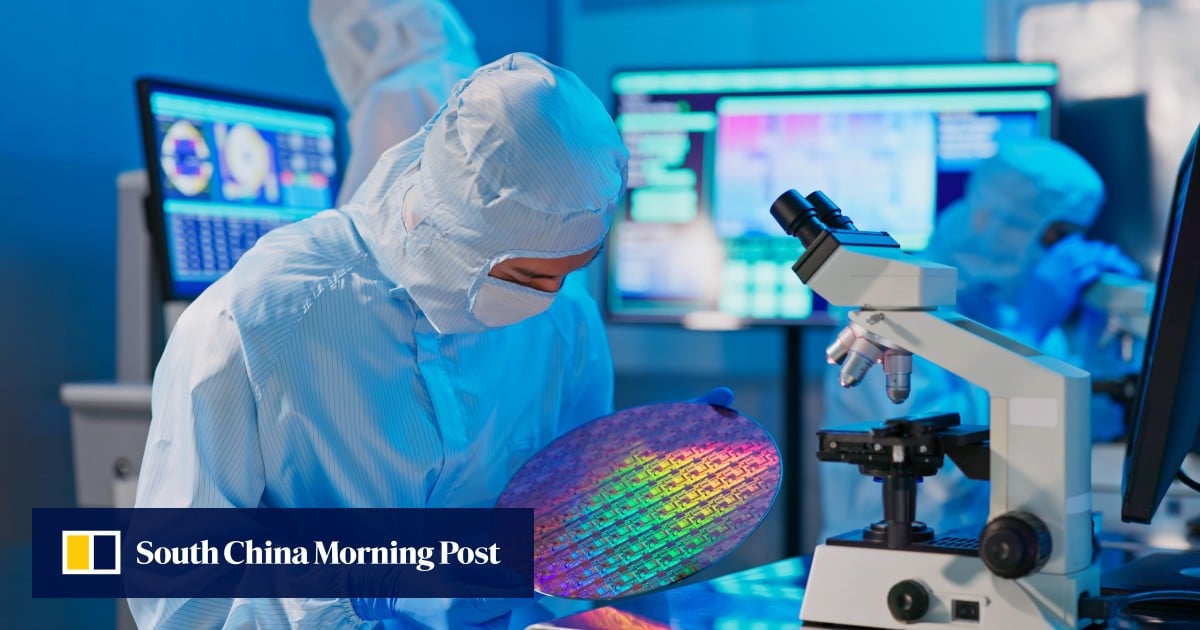
Chinese researchers have announced a new technique to mass produce 2D material wafers, paving the way for high-performance electronics using a successor to silicon.
As semiconductor chips continue to evolve, transistor sizes are approaching the physical limits of silicon-based technology. The search for next-generation semiconductor materials that can deliver superior performance has become a global priority.
Among the candidates, two-dimensional (2D) materials such as molybdenum disulfide (MoS₂) with their atomically thin structure are regarded as promising successors for the post-Moore’s Law era because of their high carrier mobility and low power consumption.
However, one of the core obstacles to commercialisation has been the difficulty of producing them uniformly over large areas and at a high quality.
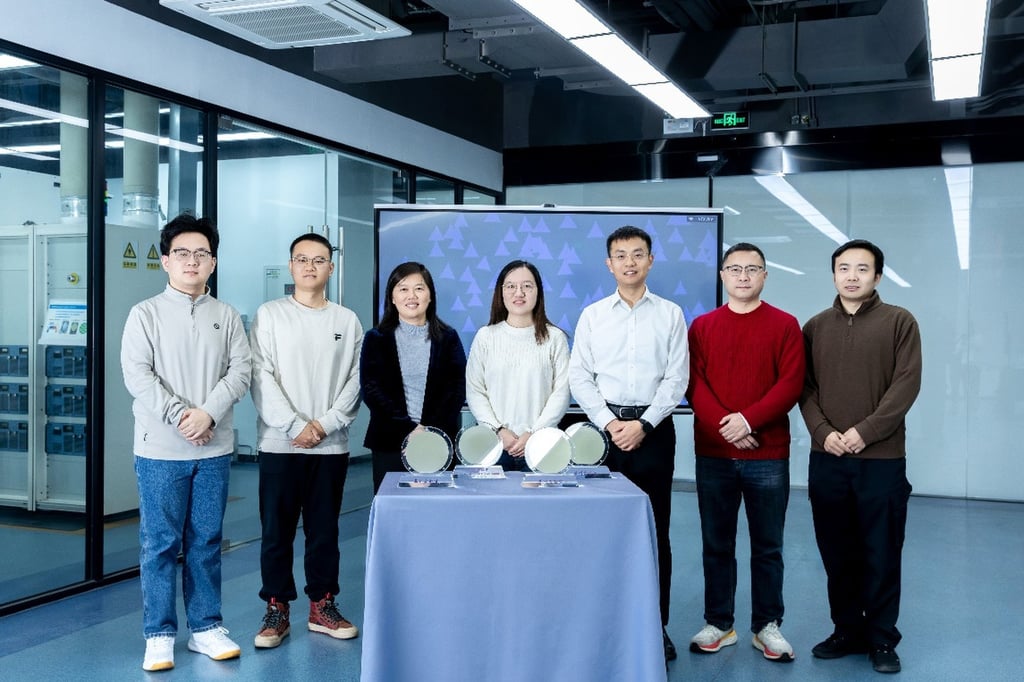
A team led by Wang Jinlan from Southeast University in Nanjing, working with Wang Xinran and Li Taotao from Nanjing University, announced a critical breakthrough last month.
silicon, Wang Jinlan, Wuji, molybdenum disulfide, Southeast University, Chinese, oxy-MOCVD, RISC-V, Fudan University, 2D material wafers, Liu Kaihui, University of Science and Technology of Beijing, MoS₂, Peking University, Science#Chinese #scientists #hit #breakthrough #semiconductor #wafers1771332005

2D material wafers
Breakthrough
Chinese
Fudan University
hit
Liu Kaihui
molybdenum disulfide
MoS₂
oxy-MOCVD
Peking University
RISC-V
Science
Scientists
semiconductor
Silicon
Southeast University
University of Science and Technology of Beijing
wafers
Wang Jinlan
Wuji