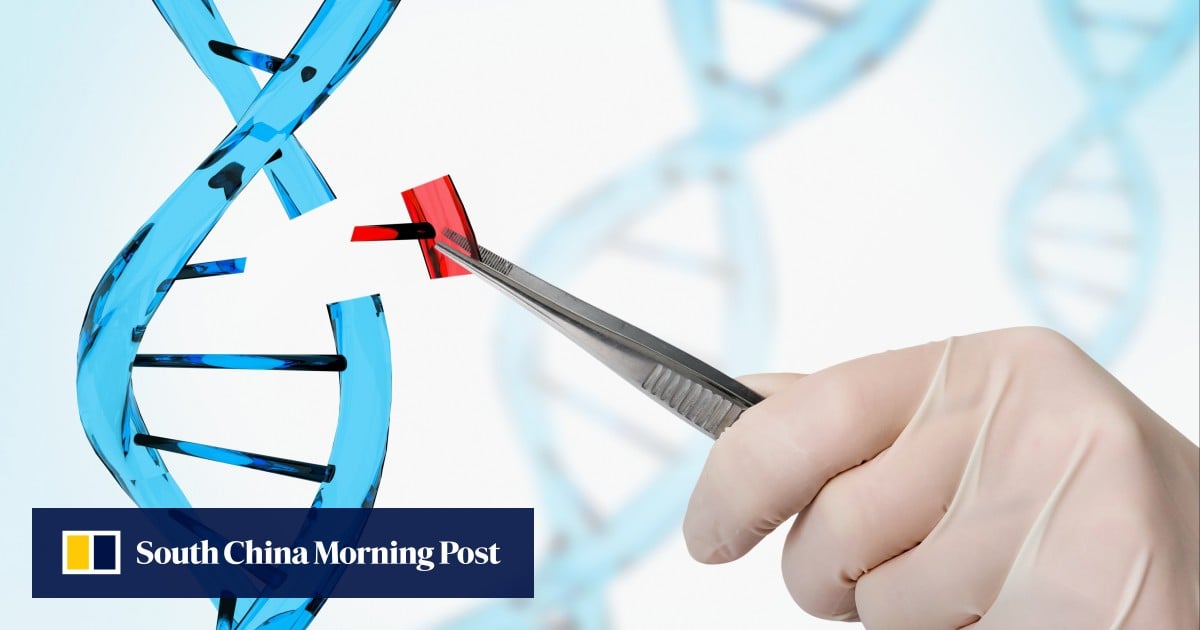
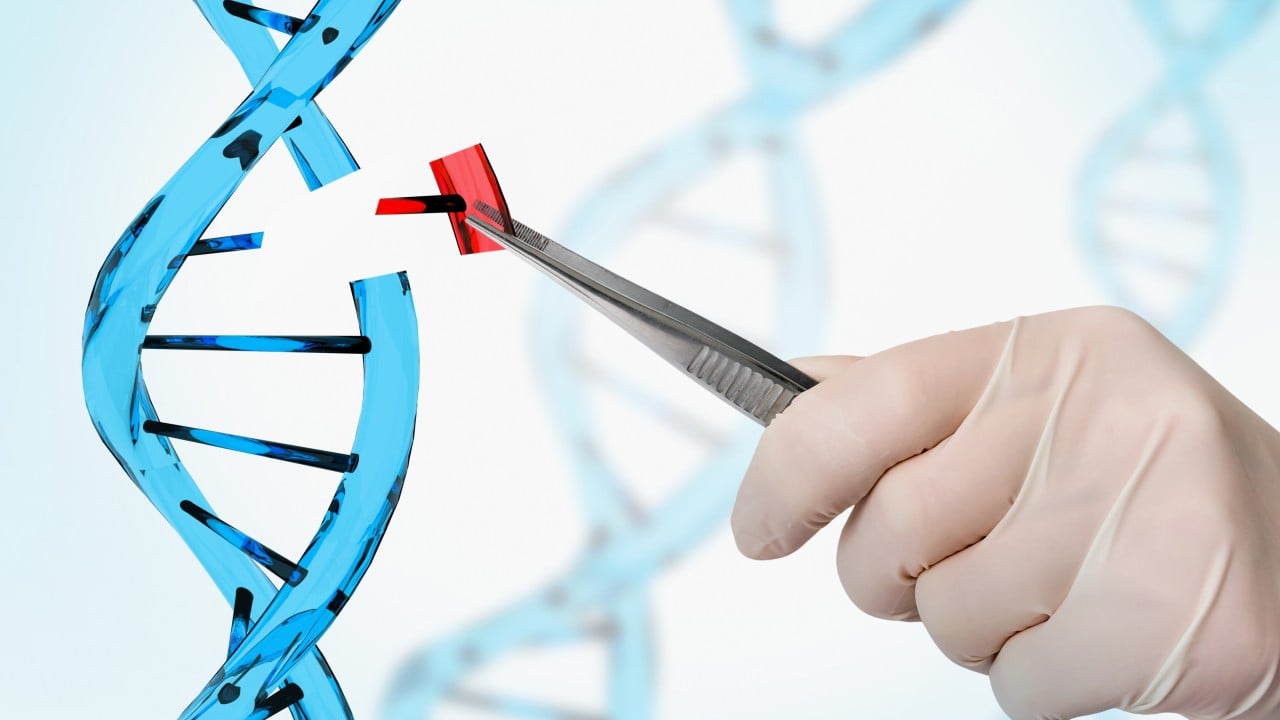
Chinese scientists have used a cutting-edge gene-editing tool to correct a DNA mutation responsible for cognitive and behavioural problems – a move that could eventually lead to the development of new autism therapies.
In lab tests, mice that had been engineered to have the mutation showed a striking change in their behaviour, such as the way they interacted with other mice, after being given an injection to introduce the edited genes.
The Shanghai-based research team is looking for ways to treat Snijders Blok‑Campeau syndrome, a rare neurodevelopmental condition.
The syndrome was first described in 2018 by Lot Snijders Blok, a scientist at Radboud University in the Netherlands, and Philippe Campeau, from the Baylor College of Medicine in Texas.
It is characterised by a range of symptoms, including developmental and speech problems, intellectual disability, distinctive facial features and structural brain abnormalities. It is also frequently accompanied by autism spectrum disorder.
Because of its complex origins and the difficulty of targeting the underlying mechanisms, there are no effective treatments, placing a heavy burden on affected children and their families.
CRISPR gene-editing, autism spectrum disorder, Snijders Blok‑Campeau syndrome, CHD3, Fudan University, DNA, Shanghai Jiao Tong University School of Medicine, CRISPR, Xinhua Hospital, Nature#Cuttingedge #Chinese #geneediting #technique #raises #prospect #autism #treatments1772251604

Autism
autism spectrum disorder
CHD3
Chinese
crispr
CRISPR gene-editing
cuttingedge
DNA
Fudan University
GeneEditing
Nature
prospect
raises
Shanghai Jiao Tong University School of Medicine
Snijders Blok‑Campeau syndrome
technique
Treatments
Xinhua Hospital