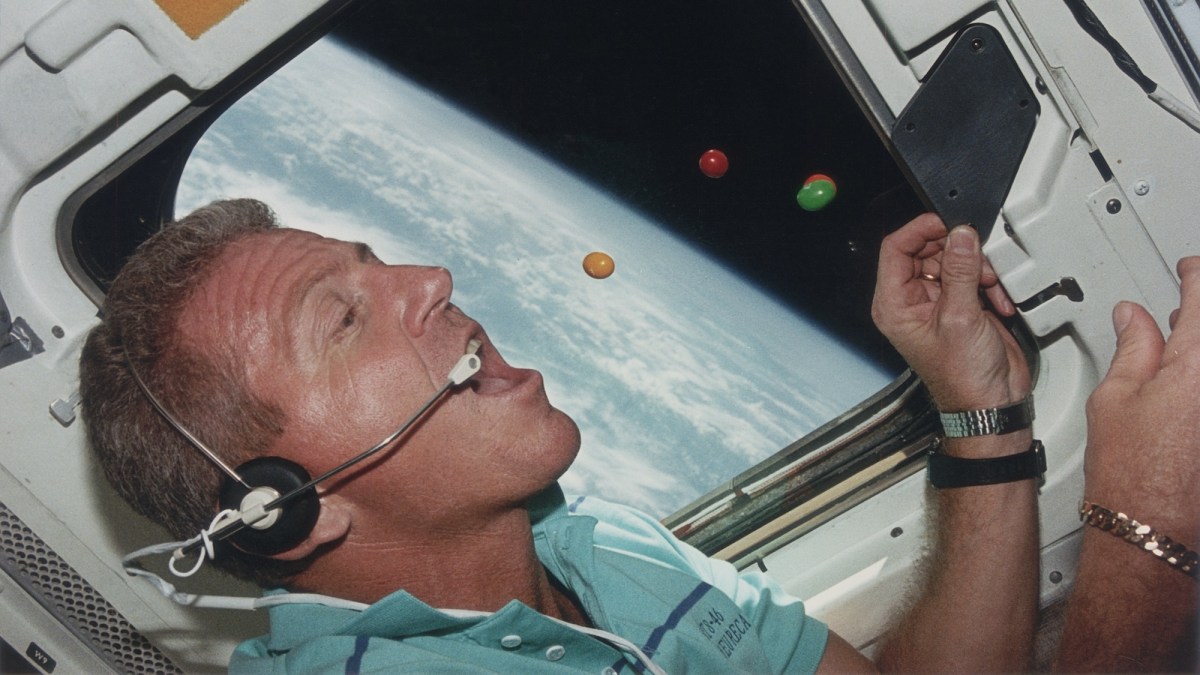
Food is a famously fickle thing in space. Astronaut menus are carefully constructed to maximize nutrition and calories while minimizing storage requirements, preparation needs, and the possibility of contamination. And then there are the crumbs. As annoying as they are in your lap on Earth, a single rogue cookie chunk could literally jeopardize an entire mission.
Astronaut meals may still not be go-to choices on a regular day in standard gravity, but they’ve certainly come a long way since the grim looking packets of freeze-dried chicken and rice that accompanied Apollo 11 in 1969. NASA recently offered a rundown of the entire menu aboard its upcoming, 10-day Artemis II lunar mission. The long and short of it? Lots of smoothies, tortillas, and coffee.
“On a typical mission day—excluding launch and reentry—astronauts have scheduled time for breakfast, lunch, and dinner. Each astronaut is allotted two flavored beverages per day, which may include coffee,” NASA explained. “Beverage options are limited due to upmass constraints, which restrict how much food and drink can be carried onboard.”
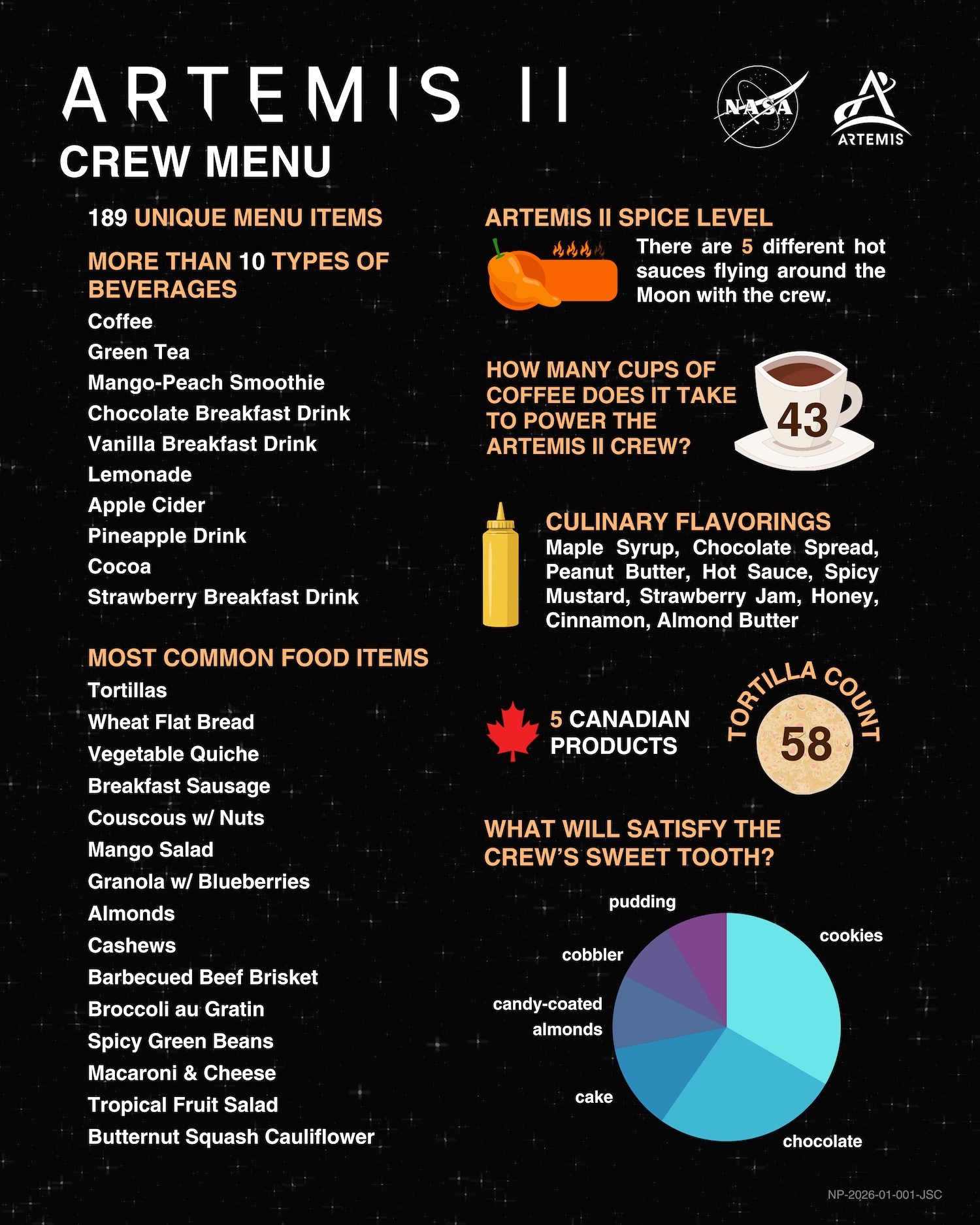
Luckily, the astronauts provided plenty of input for these food choices. The four-person crew have already sampled and rated various options during preflight tests, with considerations given to both nutritional requirements and the Orion spacecraft’s storage restrictions. Final selections include mango salad, barbecued beef brisket, spicy green beans, as well as macaroni and cheese. A total of 43 cups of coffee will help caffeinate astronauts on their trip to the moon, while five different hot sauces will satisfy any spice needs. Spreadables to boost any given meal’s flavor include maple syrup, peanut butter, mustard, jam, and honey.
Astronauts will not be able to do any additional food prep during Artemis II’s launch and landing phases, which means only ready-to-eat offerings during those times. Otherwise, the crew will rely on Orion’s potable water dispenser to rehydrate freeze-dried foods, while a “briefcase-style food warmer” will heat up other dishes. Approximately 2 to 3 days’ worth of meals are also packaged together in small boxes.

How To Eat In Space
“Preparation is intentionally simple, using ready-to-eat, rehydratable, thermostabilized, or irradiated foods that can be safely prepared without interfering with crew operations or spacecraft systems,” added NASA.
It’s a surprisingly diverse range of meals and snacks—and certainly a step up from the Apollo era dining experience. However, there is one notable absence from Artemis II’s kitchen. When it launches—currently no earlier than April 1, 2026—there doesn’t appear to be any astronaut ice cream on the menu.

2025 PopSci Best of What’s New
Science,Food Safety,Health,NASA,Nutrition,Spacefood,Moon,News#Artemis #astronauts #eat #lot #tortillas #trip #moon1772642501