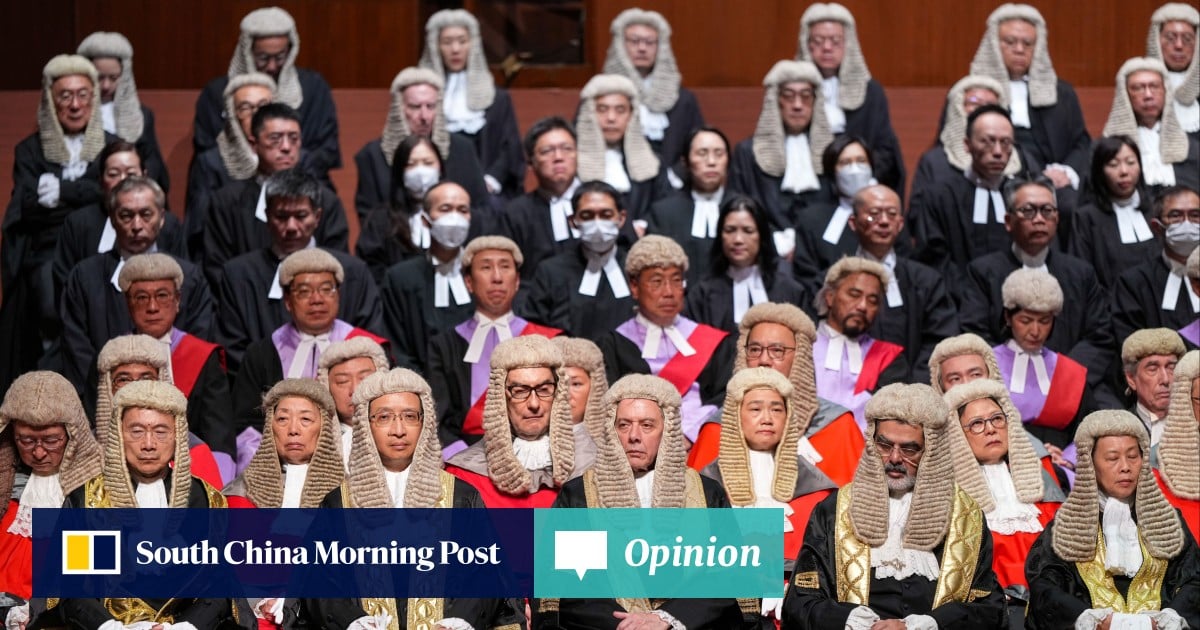

Every few months, another headline announces that artificial intelligence (AI) is poised to “disrupt” the legal profession. Lawyers, we are told, will soon be replaced by algorithms.
Judges, apparently, are next, with some recent research suggesting that machines are more “accurate” in following established legal principles than human judges.
While disruption will surely come, suggesting total replacement is imminent misconstrues what AI systems do and what our legal system and courts exist to achieve.
The starting point is this: insofar as we humans who designed AI can understand them, the large language models behind tools like ChatGPT are, at heart, pattern-completion machines. They ingest vast quantities of internet text and learn to predict, statistically, what word comes next.
Much has already been said about “hallucination”: the tendency of these models to fabricate cases and conjure things out of thin air – a product of the predictive, pattern-completing nature of AI reasoning.
That problem is by now well documented and need not be rehashed at length here. It suffices to say that the issue remains unsolved. But the deeper difficulties are structural, and these deserve closer attention.
artificial intelligence, human judges, legal system, technology, common law, ChatGPT, Legal Tales, sentencing, AI, Alexander Tang, legal profession, Hong Kong Bar Association#Legal #Tales #replace #human #judges1772674726

ai
Alexander Tang
artificial intelligence
ChatGPT
Common law
Hong Kong Bar Association
Human
human judges
judges
legal
legal profession
legal system
Legal Tales
replace
sentencing
Tales
Technology