[The content of this article has been produced by our advertising partner.]
Hong Kong takes decisive initiative amid a shifting global higher education landscape as student mobility diversifies beyond traditional destinations and universities forge practice-oriented partnerships and programmes that build cross-border competencies for a fluid global talent market. The city has amplified the “Study in Hong Kong” brand, expanded institutional collaboration, and aligned policy with institutional strategy to attract a broader mix of students, exchanges, and teaching and research partnerships.
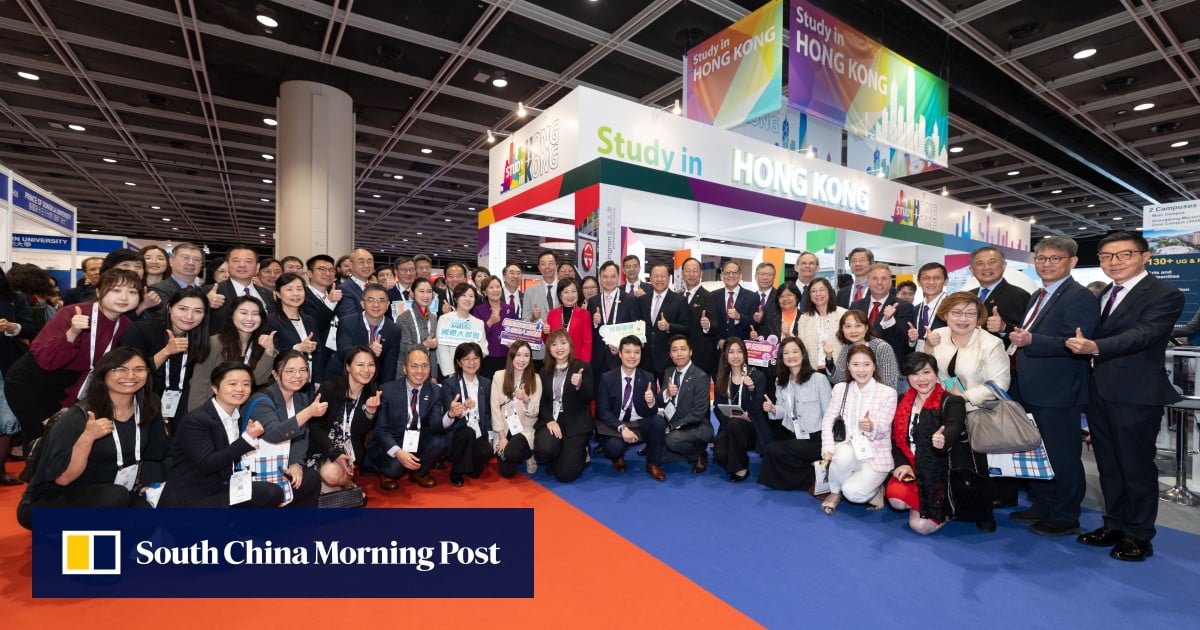
The successful conclusion of the Asia-Pacific Association for International Education (APAIE) 2026 Conference and Exhibition reflected and accelerated the transformation of numerous dialogues and sessions into tangible and impactful pathways for mobility, partnership, and innovation.
Supported by the Education Bureau of the HKSAR Government, the University Grants Committee (UGC) and the Hong Kong Tourism Board, with The Chinese University of Hong Kong (CUHK) as the lead host and the other seven UGC-funded universities as co-hosts, APAIE 2026, drew more than 3,500 education leaders and professionals from across 72 countries and regions, with over 600 exhibiting organisations creating immediate opportunities for deepened partnerships and new collaborations.
Global partnerships in higher education are essential to sustainable development, a conviction voiced at the conference by Professor Dawn Freshwater, Vice-Chancellor of the University of Auckland: “When universities think and act together across borders, we can solve the world’s greatest challenges.”
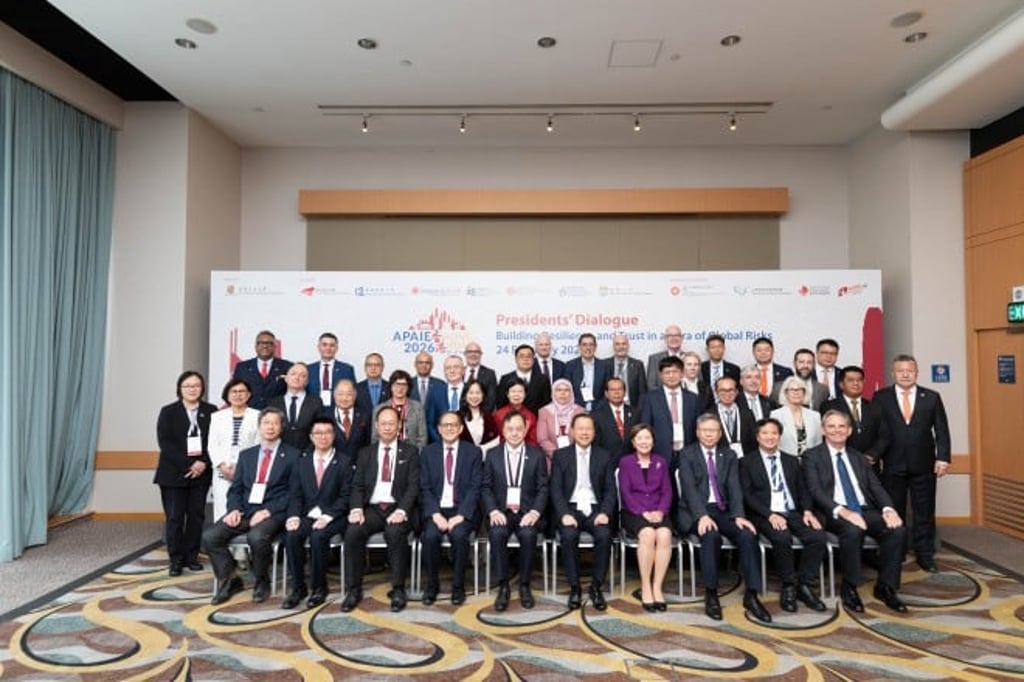
At APAIE 2026, the Presidents’ Dialogue embodied this conviction, bringing 25 university presidents and 45 senior leaders together to explore collaborative solutions and cross-border opportunities. The Hong Kong Government has reinforced this shared vision with bold investments to position the city as an international education hub.
University presidents and senior leaders gathered at the Presidents’ Dialogue.
That momentum is further supported by Hong Kong’s deep connections to Shenzhen and the Greater Bay Area (GBA). As Professor Irwin King, Pro-Vice-Chancellor (Education) of CUHK, noted, “As education institutions expand across the border, Hong Kong plays a leadership role in developing the infrastructure that turns opportunities into real careers and discoveries. When government, industry, and universities work together, students — local, non-local, and international — can capitalise on the triangular collaborations that bridge the Chinese Mainland and global partners.”
Professor Lily Kong, President of Singapore Management University, emphasised Hong Kong’s dual strengths: “One wonderful thing about Hong Kong is its strong international flavour combined with deep regional expertise in the Chinese Mainland and East Asia, much like Singapore’s profound knowledge of Southeast Asia. That anchoring blend — an outward-looking perspective with a distinct Chinese and Hong Kong character — makes partnerships between Hong Kong and Singapore universities especially powerful in contributing insights to the world.”
Holistic learning in Hong Kong and beyond
For a holistic experience that blends academic rigour with cultural understanding, local universities offer programmes that immerse students at the intersection of Western and Chinese cultures. President of Hong Kong Baptist University (HKBU), Professor Alexander Wai, cited as an example the university’s “One University, Two Campuses” approach and the “Extended Study Programme” in the GBA: “We give students direct access to HKBU’s Zhuhai campus and curated study tours across the region, so they gain both comparative perspectives and practical, place-based learning.”
At The Hong Kong University of Science and Technology (HKUST), experiential integration is central to student support and engagement. HKUST builds inclusive, experiential pathways that help non-local students integrate into campus and city life. Its flagship “Spark Global” programme empowers students to co-design year-round activities – urban walks, hikes, island excursions, camping, museum visits, and on-campus gatherings – that enhance cultural insight, social confidence, and practical connections with local peers, according to Professor Nancy Ip, President of HKUST.
Industry access and cultural belonging
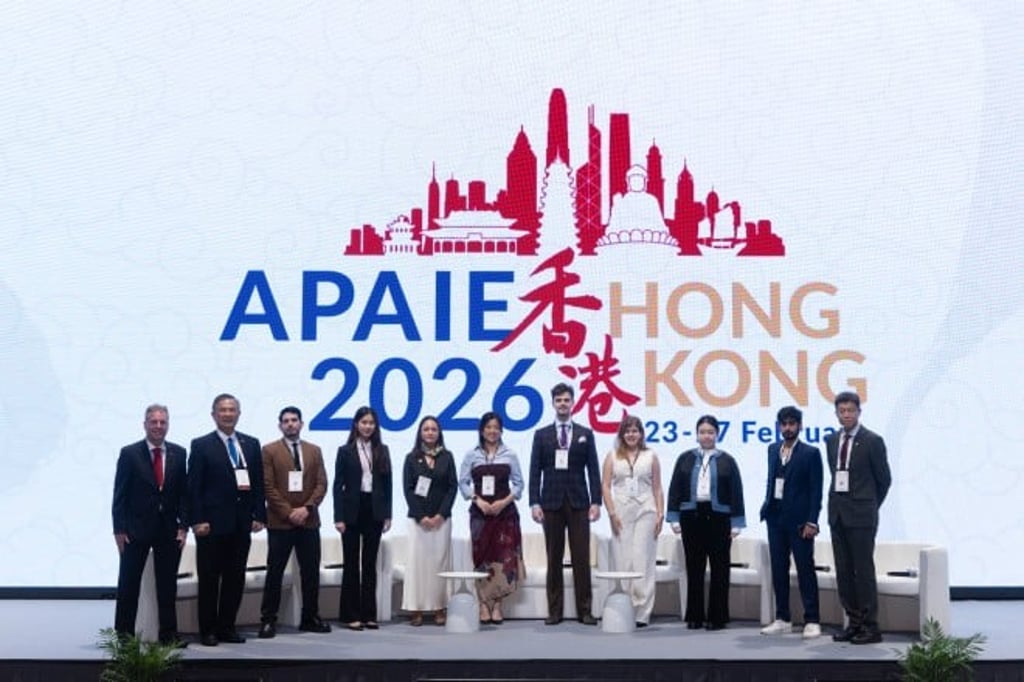
Firsthand accounts from local and international students underline the practical and personal benefits of studying in Hong Kong. Students from the eight UGC-funded universities, representing eight different countries and regions, shared their experiences at APAIE 2026.
Students from the eight UGC-funded universities, representing eight different countries and regions, shared their experiences with delegates.
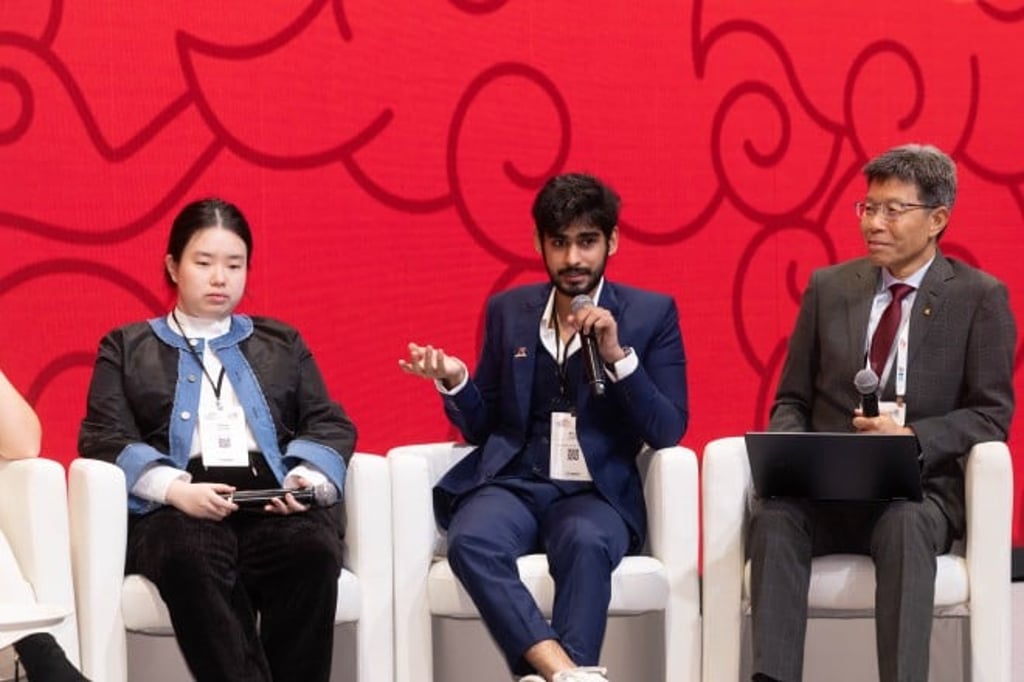
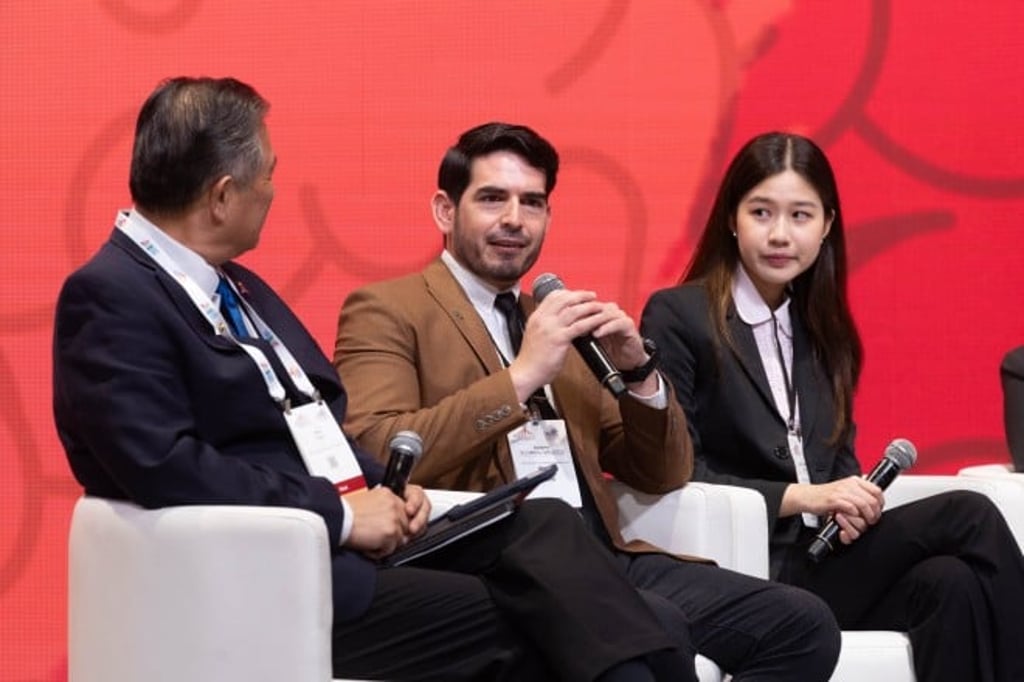
Shiven Garg, a PhD engineering student from India at CUHK, shared that industry links accelerate his research: “CUHK has been instrumental in connecting me with top robotics manufacturers across the Chinese Mainland, like Unitree. Being based in Hong Kong gives me direct access to the latest innovations, from alpha prototypes to manufacturing partners, so my team can secure advanced platforms from the mainland and focus on integrating AI on top. I travel to innovation hubs like Hangzhou for meetings, and those connections are already shaping my PhD work. As I want to get the most out of it, spending time on the ground in China is essential and Hong Kong provides convenient access for that.”
Shiven Garg (middle) shared his study experience in Hong Kong.
Octavio Flores Orozco, a PhD candidate from Mexico at The Education University of Hong Kong (EdUHK), reflected on cultural integration and campus support: “Moving to Hong Kong was a real adjustment for me – I didn’t speak Cantonese and I wanted to connect with people, especially when I shop at the wet market near my home in Tai Po. EdUHK helped me bridge that gap: I took a beginner Cantonese course and even knowing a few numbers and greetings made a huge difference – people became more open and I began to feel like I belonged. The campus is designed to help students settle in with ease: libraries, seminars, sports teams, the gym and pool all give them places to meet people and try new things. Thanks to the campus’s support and infrastructure, my move lets me adapt and grow.”
Octavio Flores Orozco (middle) spoke about his study journey in Hong Kong.
With targeted public investment, institutional innovation, and deep industry partnerships converging, Hong Kong is turning policy into practice. Its strategic location and campus initiatives give the city a unique advantage as a bridge between Chinese and Western cultures, shaping a resilient, practice-oriented ecosystem that converts global dialogue into lasting opportunities for students and scholars.
South China Morning Post, News, Opinion, China, Hong Kong, World, US, Asia, Business, Economy, Technology, Lifestyle, Sport#Hong #Kong #strengthens #role #international #education #hub #gateway #GBA #expanding #crossborder #learning #research1772726432