A trio of ancient reservoirs in present-day Guatemala is revealing both the strength—and limitations—of Mayan water science. While the civilization’s purification techniques resulted in comparatively clean drinking sources, archaeologists say the unknowable consequences of a commonly used , deep-red pigment consistently subjected the Indigenous population to toxic mercury poisoning.
City of three reservoirs
It’s no accident that Mayan society lasted thousands of years. The pre-industrial Central American civilization boasted sprawling, densely populated urban centers, complex agricultural practices, and effective civic planning structures. But above all else, access to reliably potable water was an absolute necessity for these cities to flourish. For example, the city of Ucanal at the mouth of the Belize River in northern Guatemala likely featured anywhere from 8,000 to 11,000 inhabitants. This required maintaining at least three nearby reservoirs, each for different uses.
Between 2018 and 2024, researchers from the University of Montreal in Canada explored the archaeological remains around Ucanal’s reservoirs. The results, detailed in a series of recently published studies, showcase just how much work went into ensuring Mayan water sources remained as clean as possible.
The team focused on a trio of specially engineered reservoirs designated Aguada 2, Aguada 3, and Piscina 2. Situated on high ground, Aguada 2 included a natural filtration system composed of rocky inlet channels that siphoned out unhealthy sediments and waste. However, Aguada 2’s biggest benefit was its ability to remove cyanobacteria. Often known as blue-green algae, the toxic organisms still pose problems for people around the world. Their blooms are also often extremely large, meaning Mayans were acutely aware of their existence and linked them to health problems.
“The Maya knew about cyanobacteria and these algae are clearly visible,” archaeologist and study co-author Jean Tremblay explained in a university profile. “The Maya could deal with bacteria they could see.”
Additional surveys also indicated that the reservoirs were purposely surrounded with shady vegetation. This kept overall water temperatures cooler and limited the spread of cyanobacteria. An analysis of carbon-to-nitrogen ratios showed any residual organic matter came from terrestrial plants and not algae in the water. Meanwhile, a notable lack of phosphorus supports the theory that the ecosystem never underwent eutrophication—the process that leads to algae blooms.
By contrast, Aguada 3 (located in a lower class region of Ucanal) featured contaminant levels similar to present-day polluted lakes. Researchers say this reservoir was intentionally used as a smaller waste pit, and included everything from domestic waste, to broken ceramics, to even a disturbed human grave.
Piscina 2 connected to a sizable drainage canal that boosted aeration and water movement. Although also located in an urban area, this reservoir exhibited limited contaminants.
The color of blood, life, and death
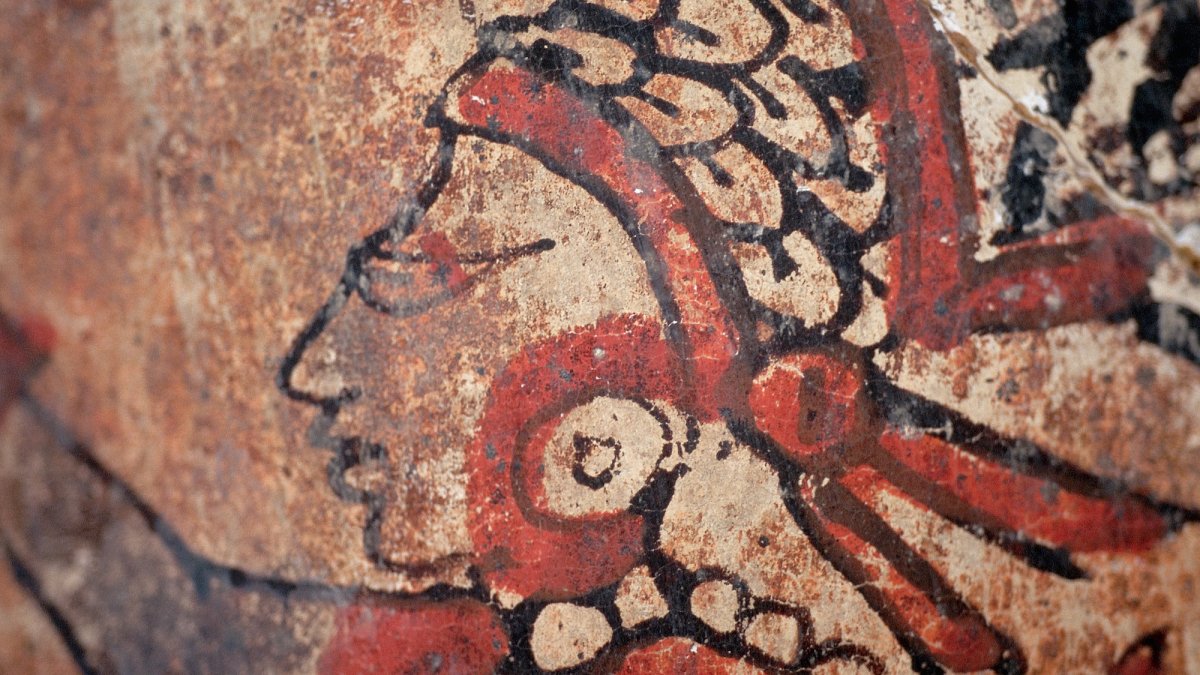
But even with engineering feats rarely documented anywhere else that time, the Mayans could only tackle the problems they could see. Mercury poisoning was not one of them, unfortunately. Every reservoir studied by archaeologists exhibited huge levels of mercury contamination thanks to cinnabar, a vibrantly red pigment that gets its coloration from mercury sulfide that was everywhere in Mayan society. It decorated buildings and highly coveted items, as well as corpses and their grave monuments.
“Its color was reminiscent of blood. In Mayan cosmology, blood, life, and death are omnipresent,” explained archaeologist and study co-author Christina Halperin.
Over time, cinnabar washed away from rainfall and seeped into the surrounding soil and water. But while a contaminant like cyanobacteria is notoriously foul-smelling, mercury runoff is both colorless and odorless. It also would have degraded small enough to evade the reservoir filtration systems.
“They had no way of knowing it was toxic. It didn’t cloud the water or turn it red,” said Tremblay.
Increasing regional trade over the years meant a wider access to religious items, so that by the Terminal Classic period (830–950 CE), mercury levels in the reservoirs had increased over 300 percent.
“It wasn’t just the elites using it—everyone was exposed,” added Halperin.
Today’s toxicologists directly link mercury contamination to neurological development issues in children, as well as reproductive health complications. While the mercury levels discovered at Ucanal are dramatic, they shouldn’t detract from the Mayan civilization’s many marvels. There was simply no way people at the time could have known or linked cinnabar to their wellbeing. The society’s more than 2,000 years of history speak to its resilience and knowledge base. Tremblay summarized it succinctly.
“They didn’t live day by day,” he said.

2025 PopSci Best of What’s New
Science,Archaeology,Environment,Healthculture,history,News#Ancient #Mayan #water #filters #stopped #lotjust #mercury #poisoning1772817165

Recent Post



Gallery






Featured Videos