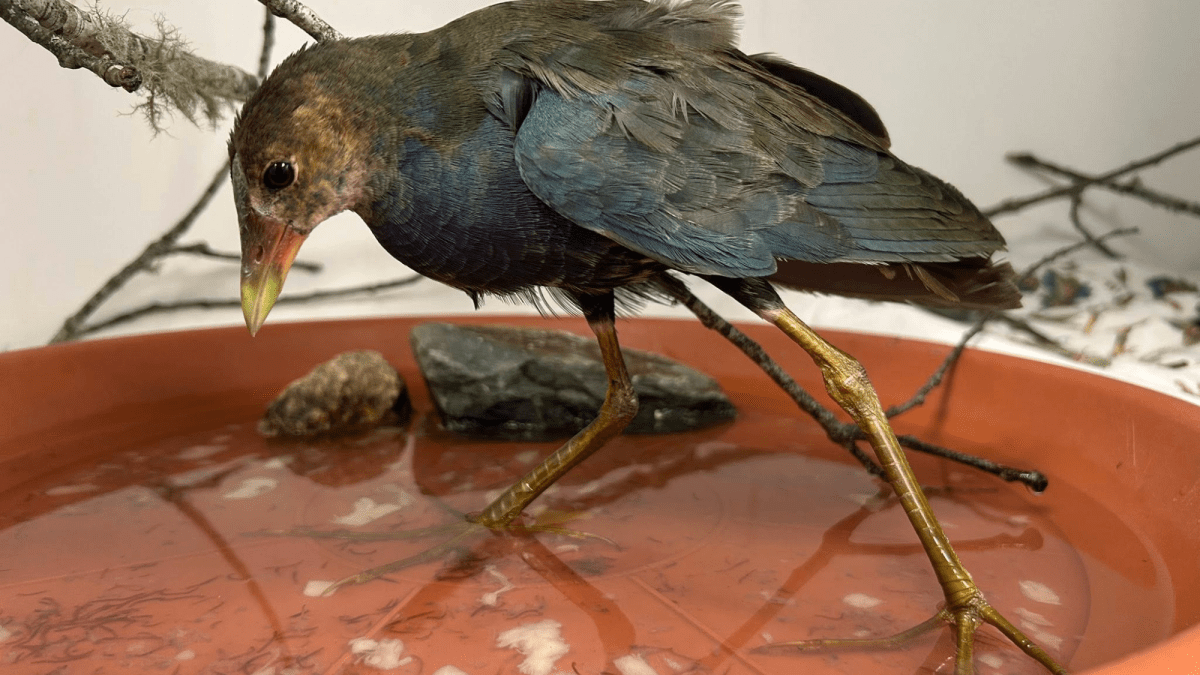
A winter storm blew an unexpected visitor from the south into a backyard in New Bedford, Massachusetts—a purple gallinule (Porphyrio martinica). These gorgeously colored birds with shockingly large feet, live in marshes from the southeastern United States through South America. These long-legged avians can walk across lily pads, and they eat seeds, aquatic plants, and small invertebrates like insects and snails.
Upon seeing this unique bird, an unidentified woman called the New England Wildlife Center in Weymouth, Massachusetts. The organization had never received a purple gallinule before. Priya Patel, wildlife medical director at the wildlife center, tells Popular Science that in Massachusetts, purple gallinules are exceptionally infrequent, with “a few reports of one or two up here in the last 10 years or so.”
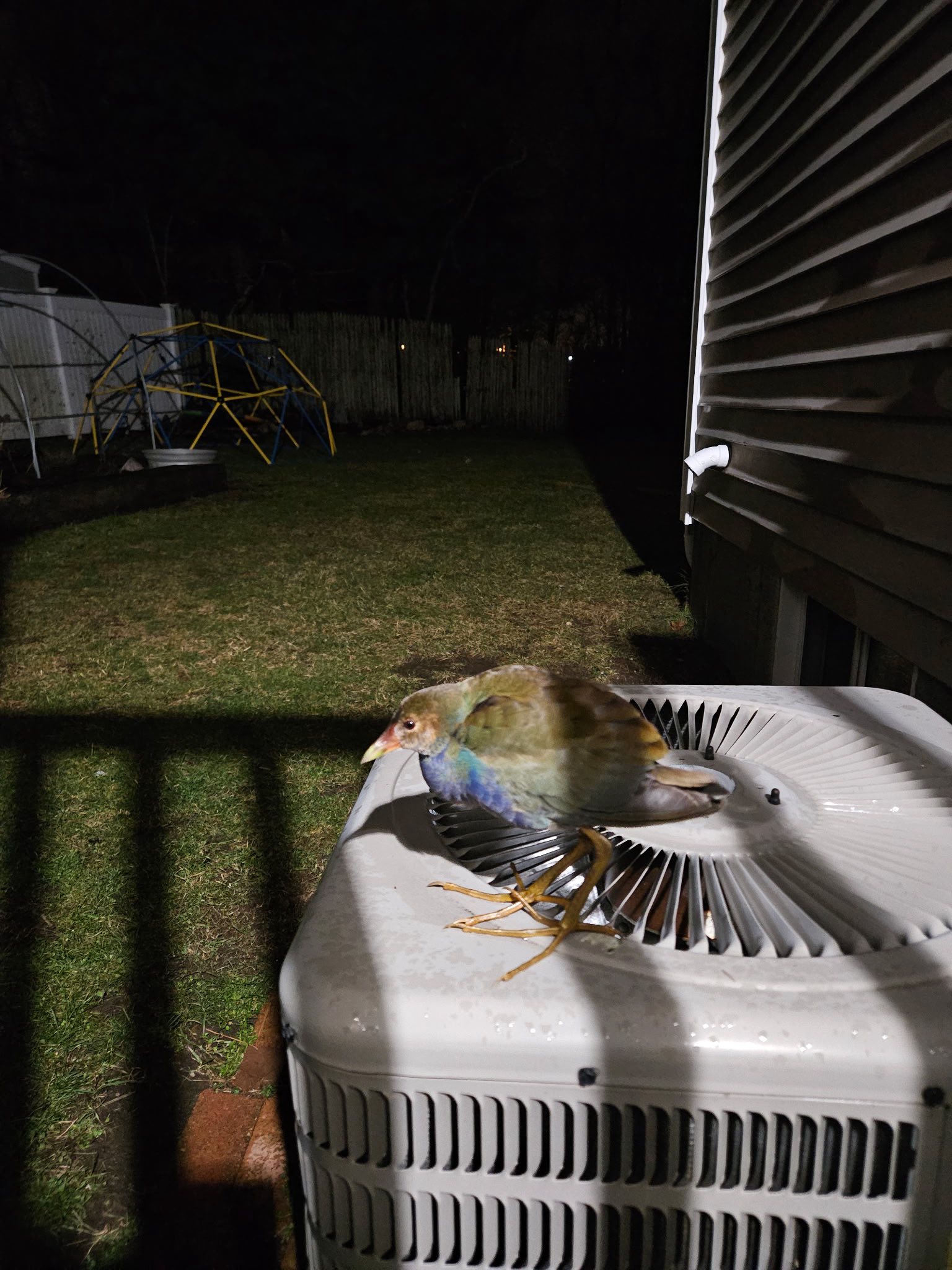
According to the New England Wildlife Center, southern birds sometimes end up in Massachusetts. “During periods of strong storm systems and shifting low pressure these birds can get pushed off course and carried north along the coast,” the center writes.
The purple gallinule in question, whom the staff did not name to avoid getting attached, arrived at the wildlife center majorly underweight and in a precarious condition. Thankfully, however, the team didn’t find any major injuries in their initial examination and X-rays.
While it may seem that the best thing to do upon finding a struggling bird is feeding it as much food as possible, that is a dangerous move. If a starving animal eats a lot of food all at once, it can cause refeeding syndrome—when the stomach draws the limited remaining resources from the most vital organs, like the heart, brain, and lungs, too fast. This could lead to serious consequences, such as heart arrhythmias or brain seizures. This is why, among other reasons, the New England Wildlife Center doesn’t want the public to feed found animals before they have undergone an exam.

“This is why food must be introduced slowly to the animal so the organs have time to respond,” Patel says. “The best thing to do for these cases is fluid therapy, and rehydrating the patient often by giving injectable fluids.”
Related Bird Stories
As the purple gallinule’s health improved, they collaborated with partners to decide how to best return the bird to its habitat. On January 8th, the purple gallinule landed in South Carolina aboard a small private plane piloted and co-piloted by New England Wildlife Center volunteers, explains Patel. It made the journey with another fellow purple gallinule found in Vermont. After landing, the birds were picked up by Carolina Wildlife Rehabilitation Center volunteers.
While the team in Massachusetts doesn’t know specifically when the volunteers will release the birds, Patel says that the plan is for the volunteers there to briefly monitor them to make sure they are okay before letting them travel further south.

2025 PopSci Outdoor Gift Guide
Environment,Animals,Birds,Science,WildlifeNews#giantfooted #bird #showed #Massachusetts #backyard #didnt #belong1768235675