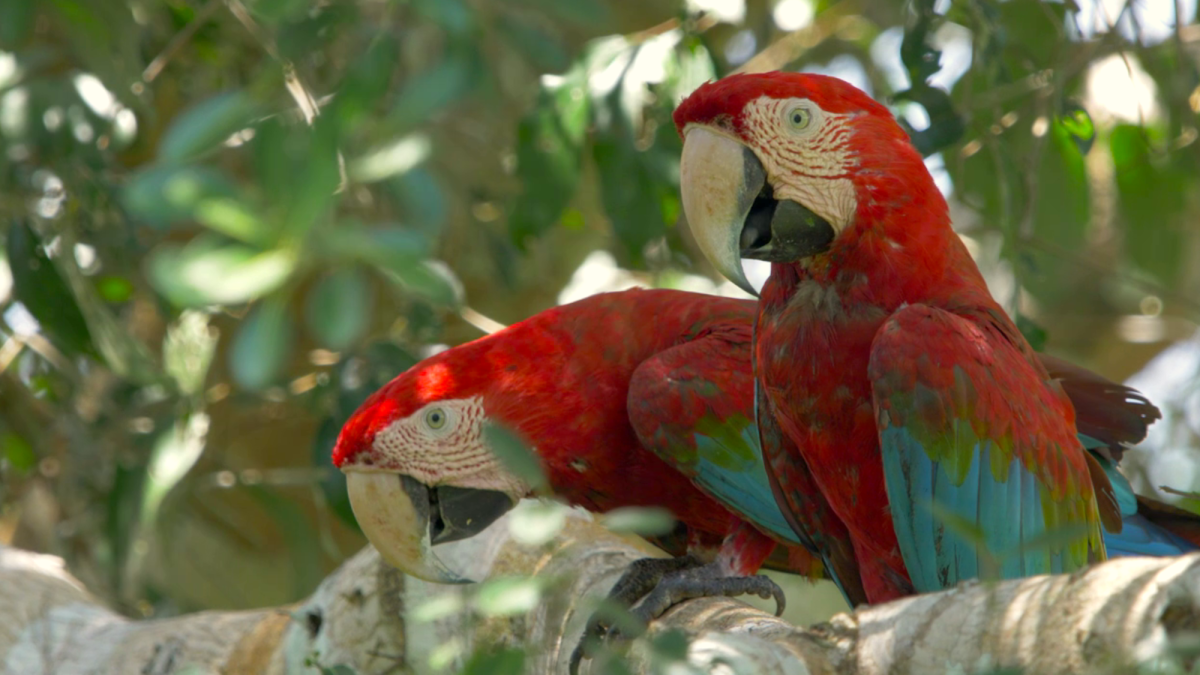
Ancient parrots really got around. A new analysis of their DNA found that humans transported living Amazonian macaw parrots across the Andes mountains to coastal Peru hundreds of years before the Inca Empire. The findings are detailed in a study published today in the journal Nature Communications, and reveal a highly sophisticated and long-distance bird trading network across deserts, highlands, and rainforests.
A team of researchers from Peru, Spain, the United States, United Kingdom, and Australia analyzed parrot feathers that were discovered at Pachacamac in present-day Peru. The village on the central coast was a major religious center for the Andean civilization and was first inhabited about 200 BCE. This site is home to the Temple of the Sun and Oracle of Pachacamac, which the early Spanish explorers wrote about. Pachacamac is also far outside the parrots’ native rainforest range.
“Through combining ancient DNA sequencing, isotope chemistry and computational landscape modelling, we have been able to trace how and where these birds were moved across the landscape,” Dr. George Olah, a study co-author and conservation ecologist at The Australian National University, said in a statement. “Our ancient habitat modelling confirmed that the western side of the Andes was just as inhospitable to these species one thousand years ago as it is today. These parrots are strictly rainforest dwellers with a natural home range of around 150 kilometres [about 93 miles].
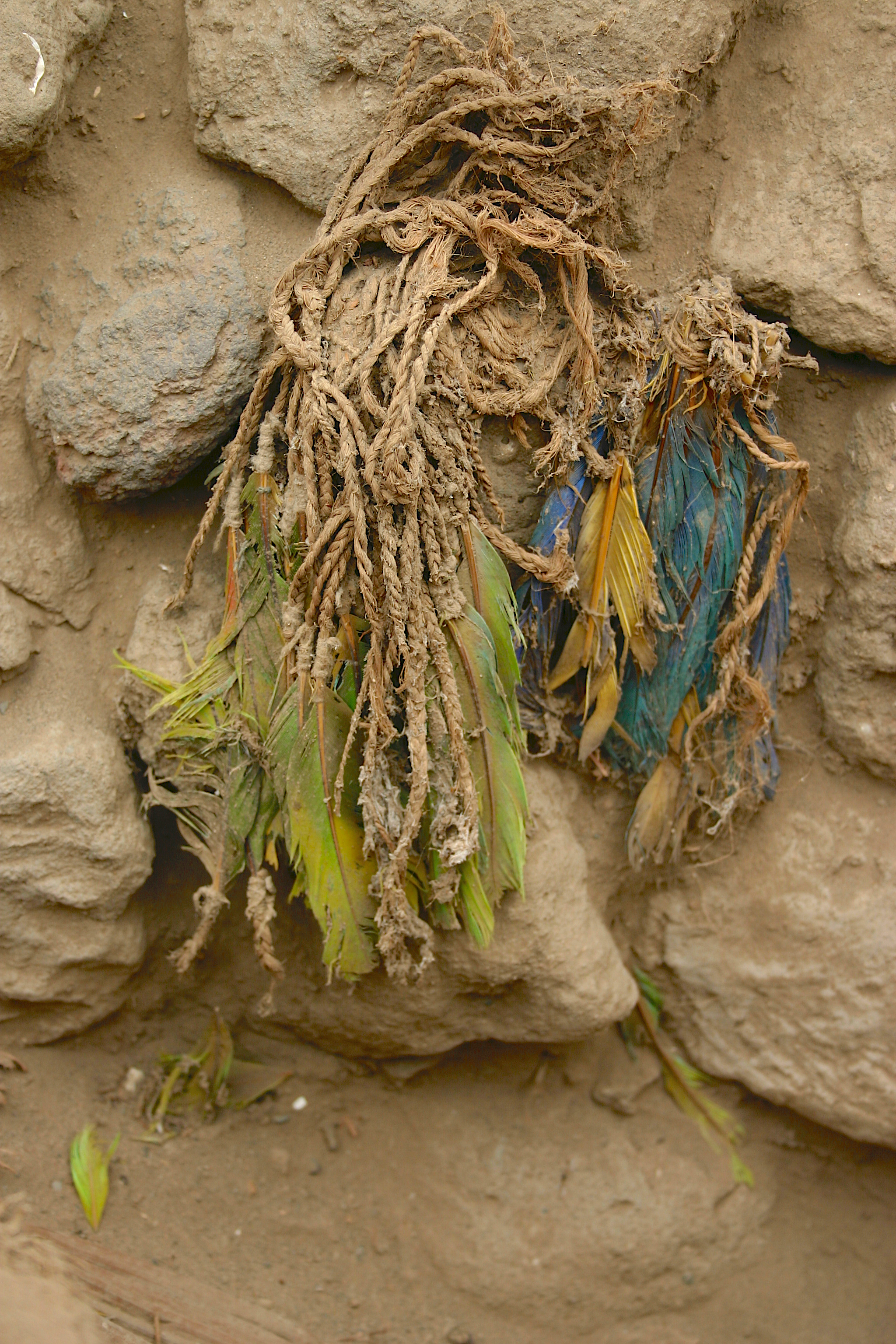
The birds ending up over 300 miles away and on the other side of the highest mountain range in South America proves that humans must have been involved.
“They do not naturally fly over the Andes,” said Olah.
The team believes that humans living in Pachacamac captured several species of Amazonian macaw parrots that were native to the lowland rainforest just east of the Andes. The birds were then carried over high mountain passes and must have stayed alive on the coast long enough to grow new feathers in their new environment.
Based on genomic analysis, the feathers belonged to four Amazonian parrot species—the scarlet macaw (Ara macao), blue-and-yellow macaw (Ara ararauna), red-and-green macaw (Ara chloropterus), and mealy Amazon (Amazona farinosa). All of these species are native to rainforest habitat hundreds of miles away from Peru’s Pacific coast. Transporting the birds likely took weeks or months, as travellers made their way through steep plateaus and rugged mountain passes.
“We can now demonstrate with genetic and isotopic evidence that these parrots weren’t just traded as feathers—they were transported alive, across dramatic terrain, into coastal ritual contexts,” Olah said.
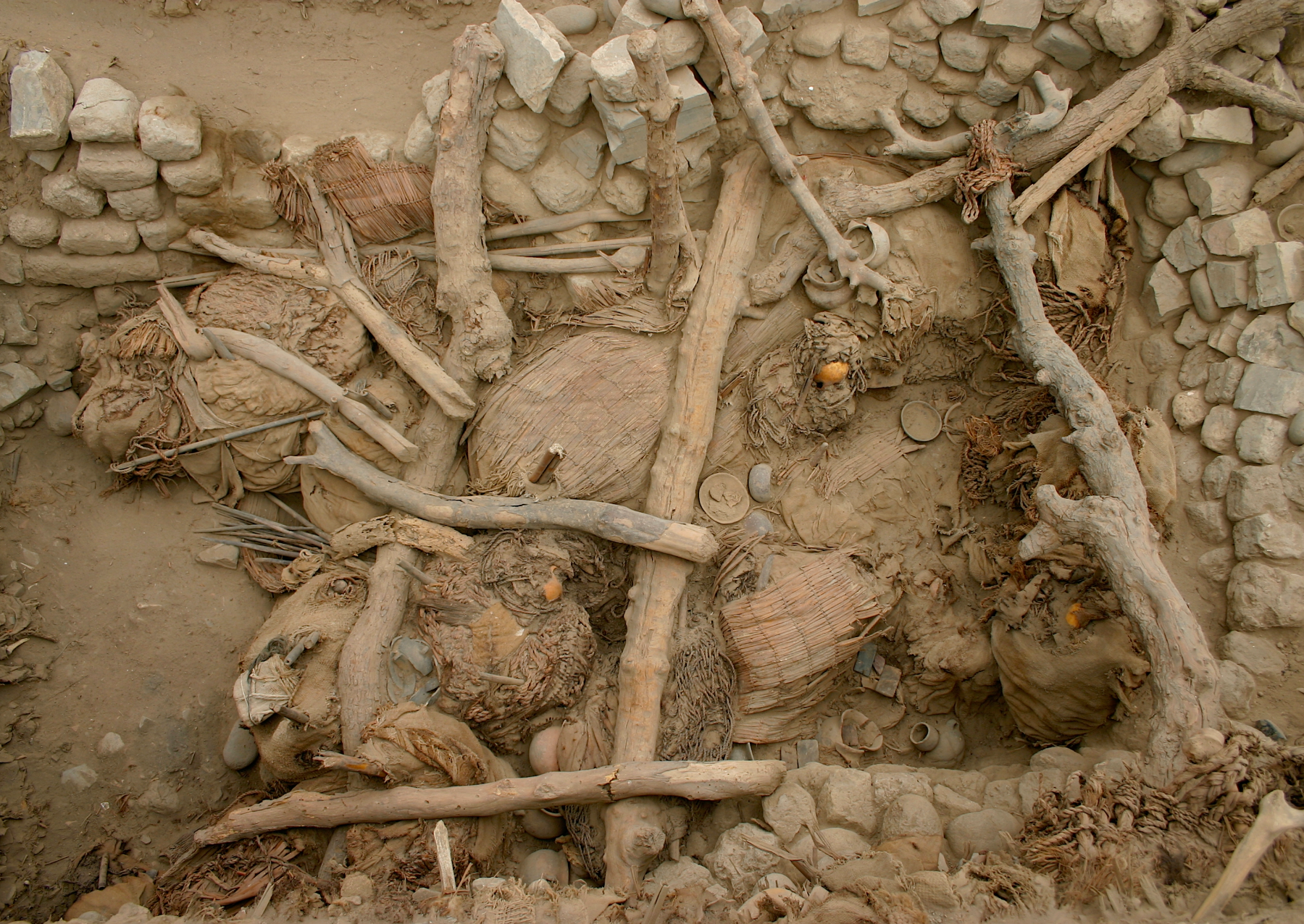
By analysing the chemical signatures contained in the feathers, the researchers also saw that the birds’ diets shifted to maize and marine protein, indicating that they were kept alive after crossing the mountains.
“Our analysis reveals the parrots were fed the same nitrogen-enriched diet consumed by their captors – a clear sign of prolonged care after their removal from the rainforest,” Olah said.
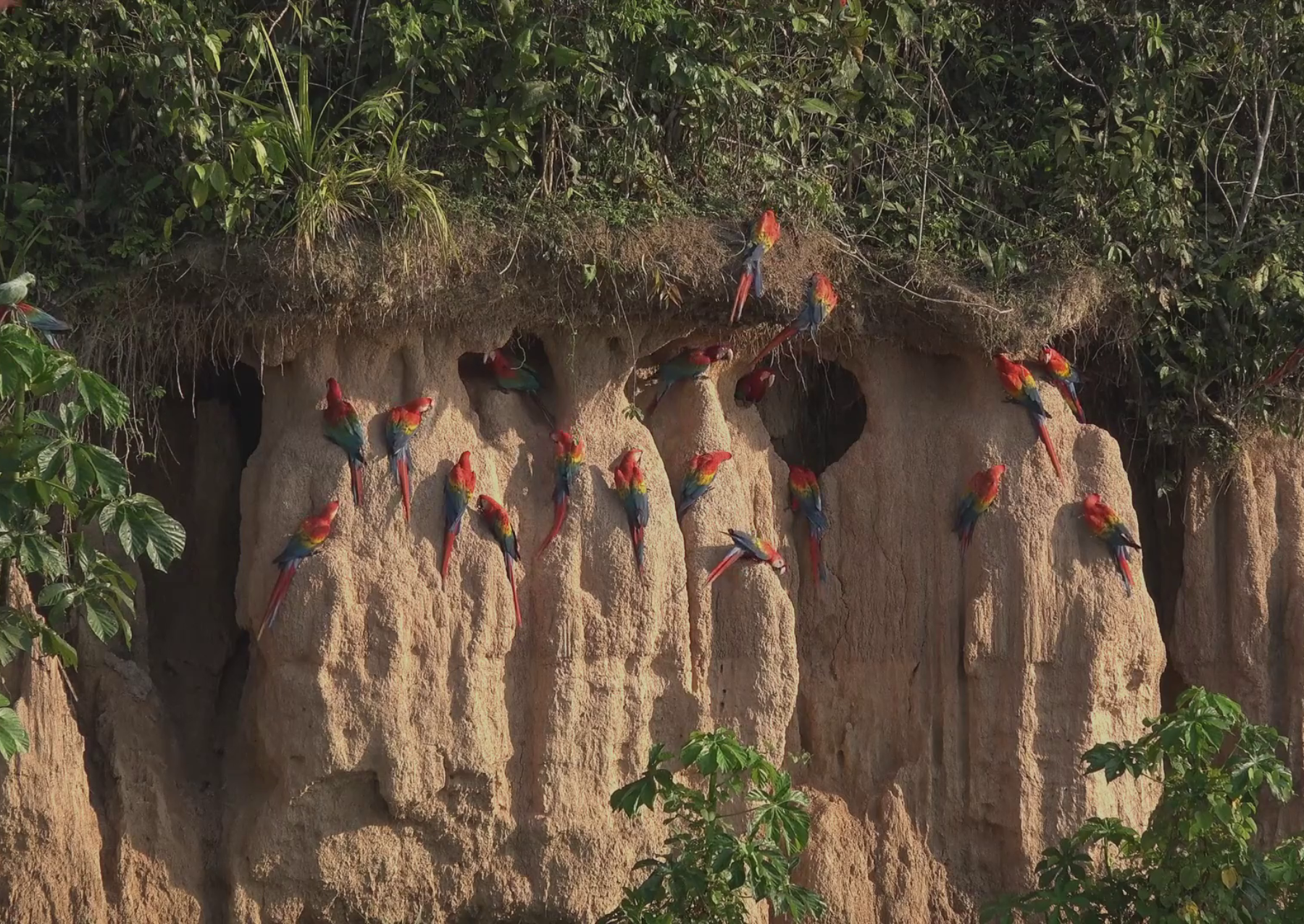
When the team used computer modeling to understand the landscape, they found some potential trans-Andean corridors and river routes that were used to transport the birds, revealing sophisticated exchange networks. The birds were likely traded and prized for their vibrant feathers. They held deep cultural value across pre-Hispanic societies and were used in rituals and high-status burials.
“This discovery challenges long-held assumptions that pre-Inca societies were isolated or fragmented,” Olah explained. “Instead, we see evidence of organised exchange, ecological knowledge and logistical planning that connected vastly different environments long before imperial roads formalised these connections.”
According to the team, this study marks one of the first successful ancient DNA studies of fragile archaeological feathers. Refining these techniques opens up new avenues for tracking how organic materials moved through ancient trade networks around the world.

2025 PopSci Best of What’s New
Science,Animals,Archaeology,Birds,Environment,WildlifeNews#Ancient #Andean #parrot #trade #route #stretched #miles1773159122

Recent Post



Gallery






Featured Videos