The arrangement of the 32 pieces on a standard chess board has remained the same for centuries, but a forthcoming study suggests an overhaul is in order. Based on recent statistical calculations, the fairest and most balanced setup for both players can be found among the 960 possible starting positions popularized by former world champion Bobby Fischer over 30 years ago.
What is Chess960?
The standard rules of chess grant most people a lifetime of dynamic and challenging matches, but that’s not always the case for the world’s best players. To reach the top, grandmasters memorize mountains of opening strategies, midgame variations, and tactical endgame attacks that often result in predictable—even boring—showdowns.
It’s also well-known that playing as white offers at least a slight (but sometimes decisive) advantage during any given match. Amid decades of discussion and chess theory into the subject, the principal reason is simple: white goes first, and the first move often offers an extra bit of momentum and helps dictate the course of a game.
In the 1990s, the (infamous) former world chess champion Bobby Fischer devised a way to reinvigorate the centuries’ old game called Fischer Random Chess. The variation maintains the classic movement rules and keeps pawns in their standard starting positions, but randomizes the back rank pieces for more unpredictable and creative bouts. The result is a game that offers a total of 960 possible starting setups, earning it the more commonly known name, Chess960.
According to Fischer and his supporters, the new iteration also largely solved the longstanding white side starting advantage. Chess960 now boasts professional tournaments around the world featuring its own dedicated adherents and experts—but they may be wrong in claiming it’s a major leap forward for the sport.
Statistics to solve the first-move advantage
At France’s Paris-Saclay University, statistical theorist Marc Barthelemy says Fischer’s variant still can’t wholly solve for the so-called “first-move advantage.” He recently examined the 960 starting positions in Fischer’s variant using the popular open-source chess engine Stockfish to calculate the best possible moves. From there, Barthelemy developed a novel statistical approach to investigate decision-making complexity by determining the amount of positional information a player requires to choose the best moves. The results revealed that in almost all 960 potential starting layouts, white retains a clear upperhand. And by “almost all” layouts, Barthelemy means 99.6 percent of them.
“Stockfish evaluations show a near-universal first-move advantage for White…indicating that the advantage conferred by moving first is a robust structural feature of the game,” he wrote in a forthcoming study.
Barthelemy argued that, if anything, Chess960 illustrates a constant theme throughout both standard chess and other similar strategic games. Over generations, each piece’s accepted starting position likely solidified thanks to how they contributed to the board’s overall memorable visual symmetry.
“Standard chess, despite centuries of cultural evolution, does not occupy an exceptional location in this landscape,” he wrote. “It exhibits a typical initial advantage and moderate total complexity, while displaying above-average asymmetry in decision difficulty.”
Getting the ‘most balanced’ position
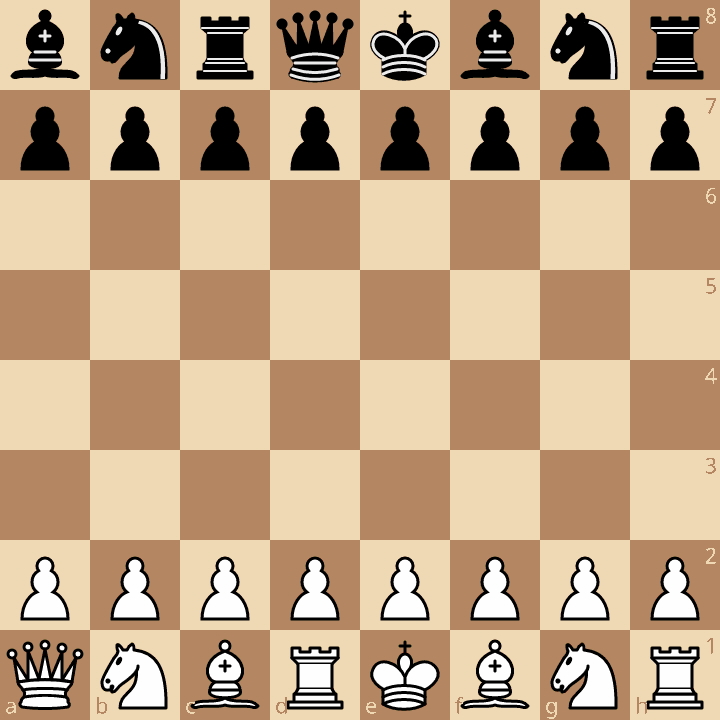
Of Fischer Standard Chess’ 960 openings, Barthelemy cites position 198 as the “most balanced, with both evaluation and asymmetry near zero.” In this arrangement, the back rank piece order is as follows:
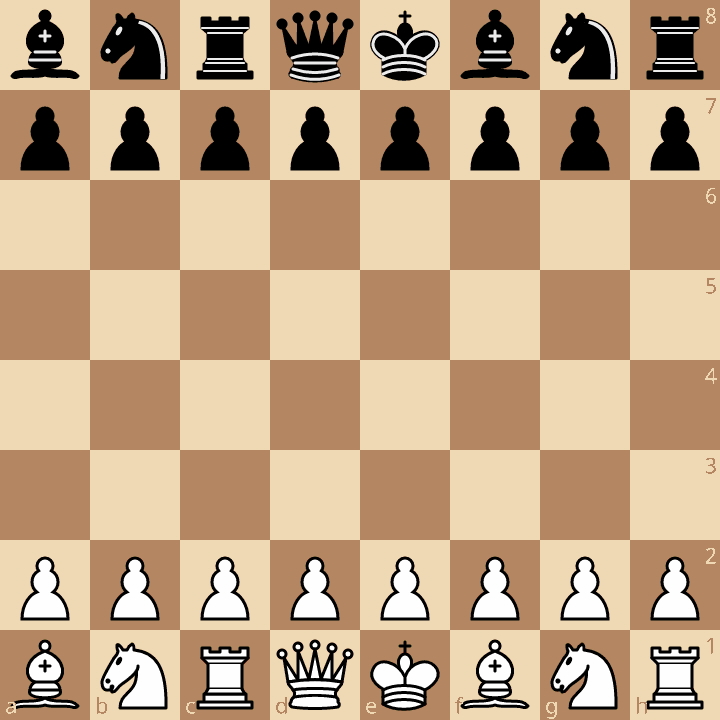
However, players should opt for position 226 if they want the most complex possible setup:
If confirmed, Barthelemy’s findings aren’t intended to diminish either standard chess or Chess960’s appeal. Instead, he hopes the analysis will help tournament organizers ensure the fairest matches possible—regardless of which version of the game you prefer puzzling over for hours.

2025 PopSci Outdoor Gift Guide
Science,Internet,Technologyculture,mathematics,News#Chess #isnt #fairso #rearrange #pieces1767634862