


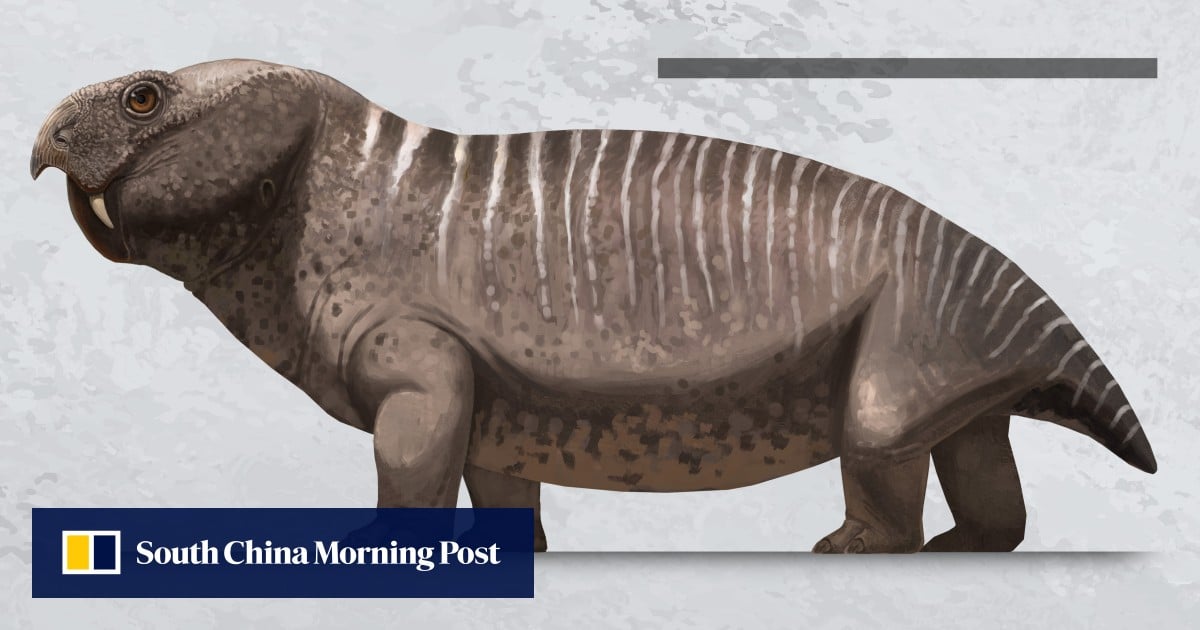
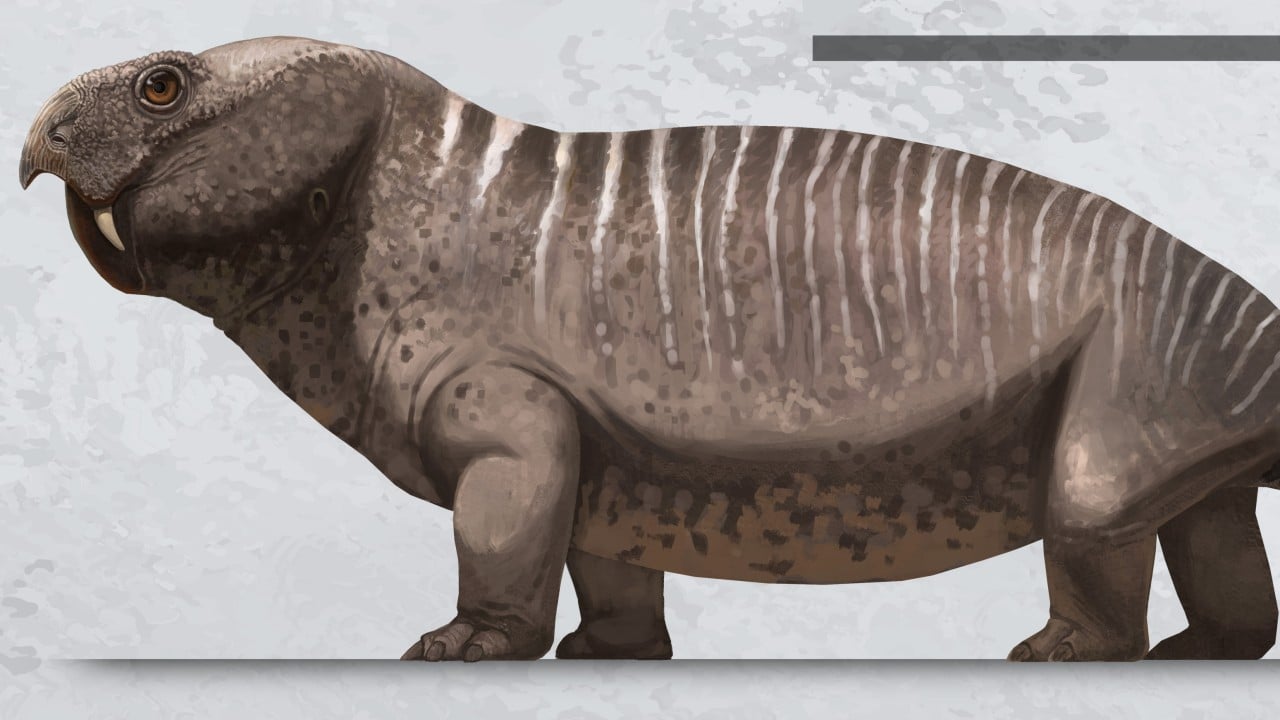
Scientists in China have discovered fossils of a new mammal-like reptile species in Gansu province – the first of its genus to be found in both South Africa and China.
The finding suggests that Late Permian (299 to 252 million years ago) tetrapods crossed the equator of the supercontinent Pangaea more often than expected, revealing an ecological corridor capable of supporting large animal migration.
The new species of dicynodont, an extinct clade of non-mammalian therapsids – a group that includes mammals, their ancestors and close relatives – was identified by researchers from the Chinese Academy of Sciences’ Institute of Vertebrate Palaeontology and Paleoanthropology (IVPP).
“A new dicynodont species, Dinanomodon guoi, is established based on a specimen collected in Gulang county, Gansu province, China,” the team said in a paper published in the peer-reviewed journal Cladistics on December 15.
“This discovery marks the first bidentalian genus shared between China and South Africa.”
Dicynodonts – considered a “cousin” to today’s mammals – were a herbivorous clade of mostly toothless animals that ranged in size from small burrowers to large grazers. Bidentalians are a specific group of dicynodonts.
Gondwana, Dicynodonts, Chinese Academy of Sciences Institute of Vertebrate Palaeontology and Paleoanthropology (IVPP), Gulang County, Karoo Basin, South Africa, Cladistics, Pangea, Gansu province, Great Dying, Guo Wangang, Moschowhaitsia lidaqingi, Laurasia, China, Dinanomodon guoi#China #fossil #unveils #crossequator #migration #corridor #supercontinent #Pangaea1767585861

China
Chinese Academy of Sciences Institute of Vertebrate Palaeontology and Paleoanthropology (IVPP)
Cladistics
corridor
crossequator
Dicynodonts
Dinanomodon guoi
fossil
Gansu province
Gondwana
Great Dying
Gulang County
Guo Wangang
Karoo Basin
Laurasia
migration
Moschowhaitsia lidaqingi
Pangaea
Pangea
South Africa
supercontinent
unveils
Recent Post



Gallery






Featured Videos