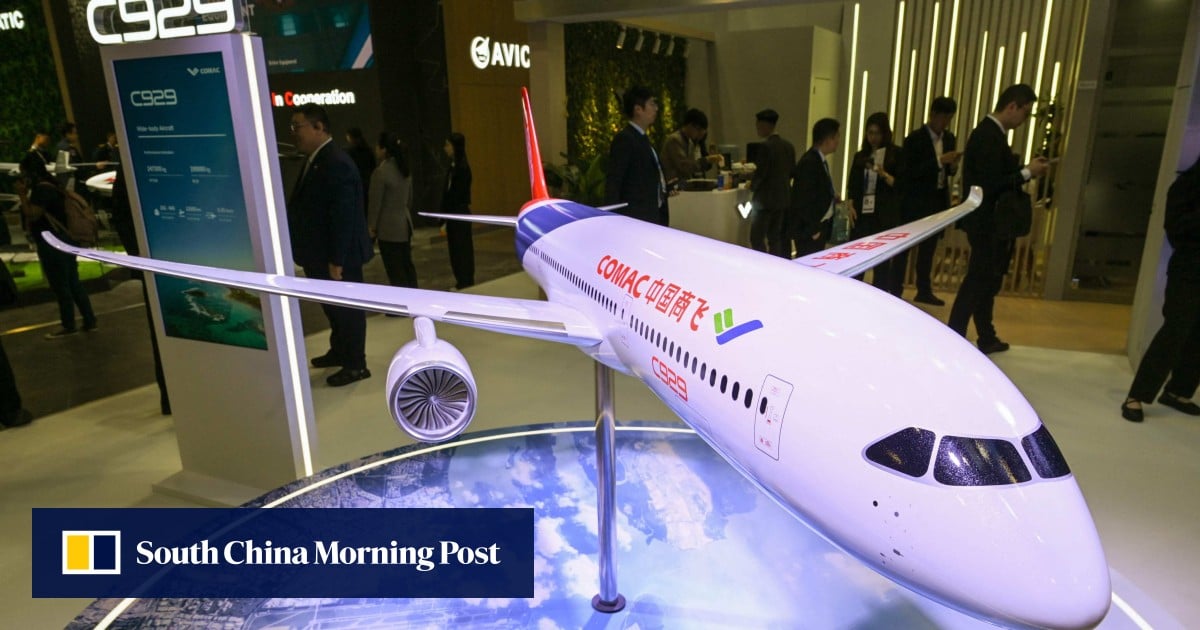
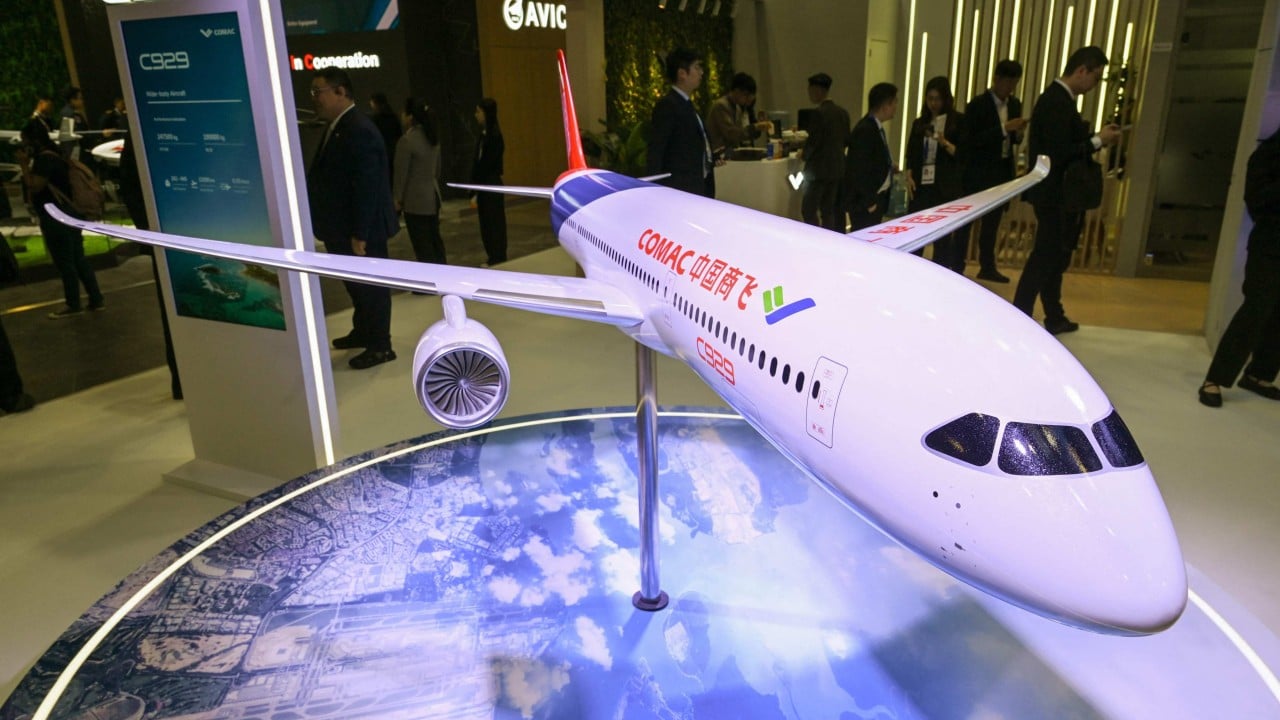
Beijing aims to accelerate the rise of China’s home-grown airliner fleet, including the C909 regional plane, C919 narrowbody and C929 widebody, through 2030.
This push to challenge the duopoly of Boeing and Airbus comes as a national five-year plan calls for aircraft production, development and the roll-out of a domestically developed engine.
The next five years will prove vital to the success of the three aircraft models and the continued localisation of critical parts such as engines, according to an analyst. The road map addresses vulnerabilities amid ongoing disruptions and geopolitical turmoil.
China will boost production and strengthen supply chains. Specialised models will be developed – including a high-plateau variant designed to operate at high-altitude airports, where thinner air reduces engine performance and lift. And efforts will be stepped up to resolve technological hurdles in widebody-jet development.
These goals form part of the latest national plan, which is set to be approved by the top legislature this week and will guide socio-economic development in the 2026 to 2030 period. The certification and use of a high-bypass turbofan engine, the CJ-1000, will also be accelerated, the plan noted.
“For the C919, the key words are output and supply chains,” said Brian Yang Bo, a veteran aviation consultant. “This is a candid admission of the challenges it has faced, and thus the focus is squarely on stabilising and growing output.”
The narrowbody jet is the flagship model from the Commercial Aircraft Corporation of China (Comac) and has been in domestic operations since May 2023.
Safran, Airbus, South China Morning Post, Boeing, Brian Yang Bo, Europe, CFM International, CJ-1000, GE Aerospace, Leap-C engine, United States, China, Comac, France, Beijing#Chinas #5year #jet #goals #target #C919 #output #engine #reduced #reliance1773283318

5year
Airbus
Beijing
Boeing
Brian Yang Bo
C919
CFM International
China
Chinas
CJ-1000
Comac
Engine
Europe
France
GE Aerospace
goals
Jet
Leap-C engine
output
reduced
reliance
Safran
South China Morning Post
target
United States
Recent Post



Gallery






Featured Videos