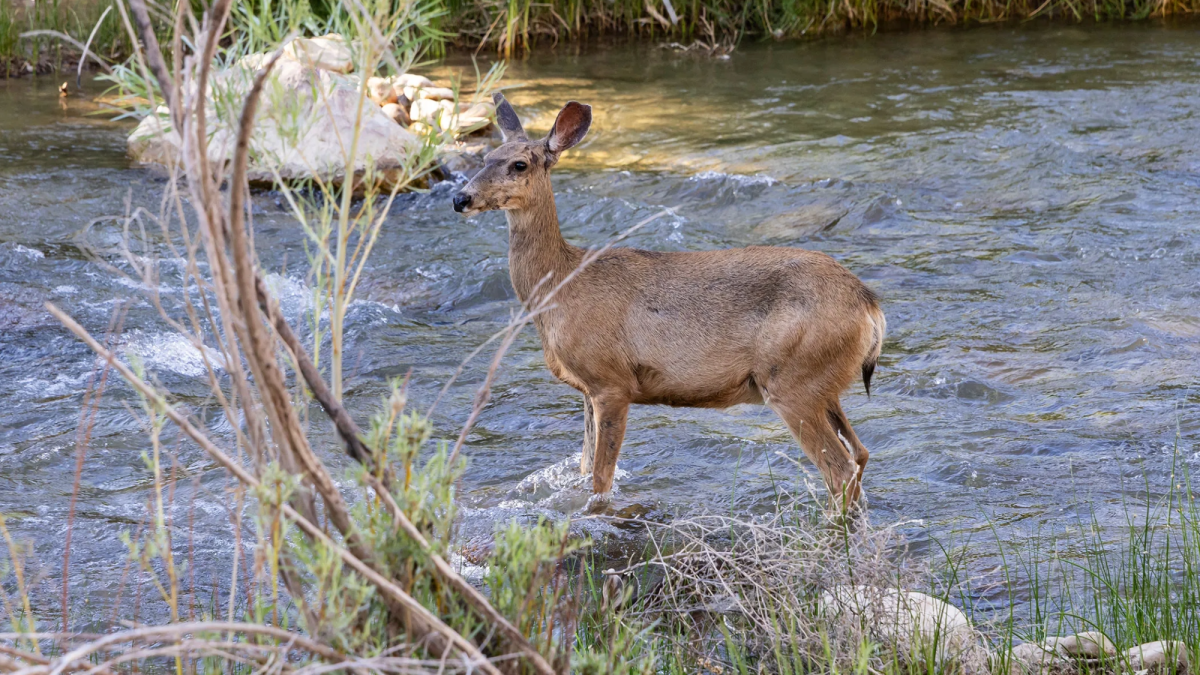
Animals see the world around them in ways that we humans can only imagine. Arctic reindeer’s eyes change color with the season to help them find food, while giant squid have eyes the size of dinner plates. Many species take advantage of seeing ultraviolet (UV) light that’s invisible to humans—including deer.
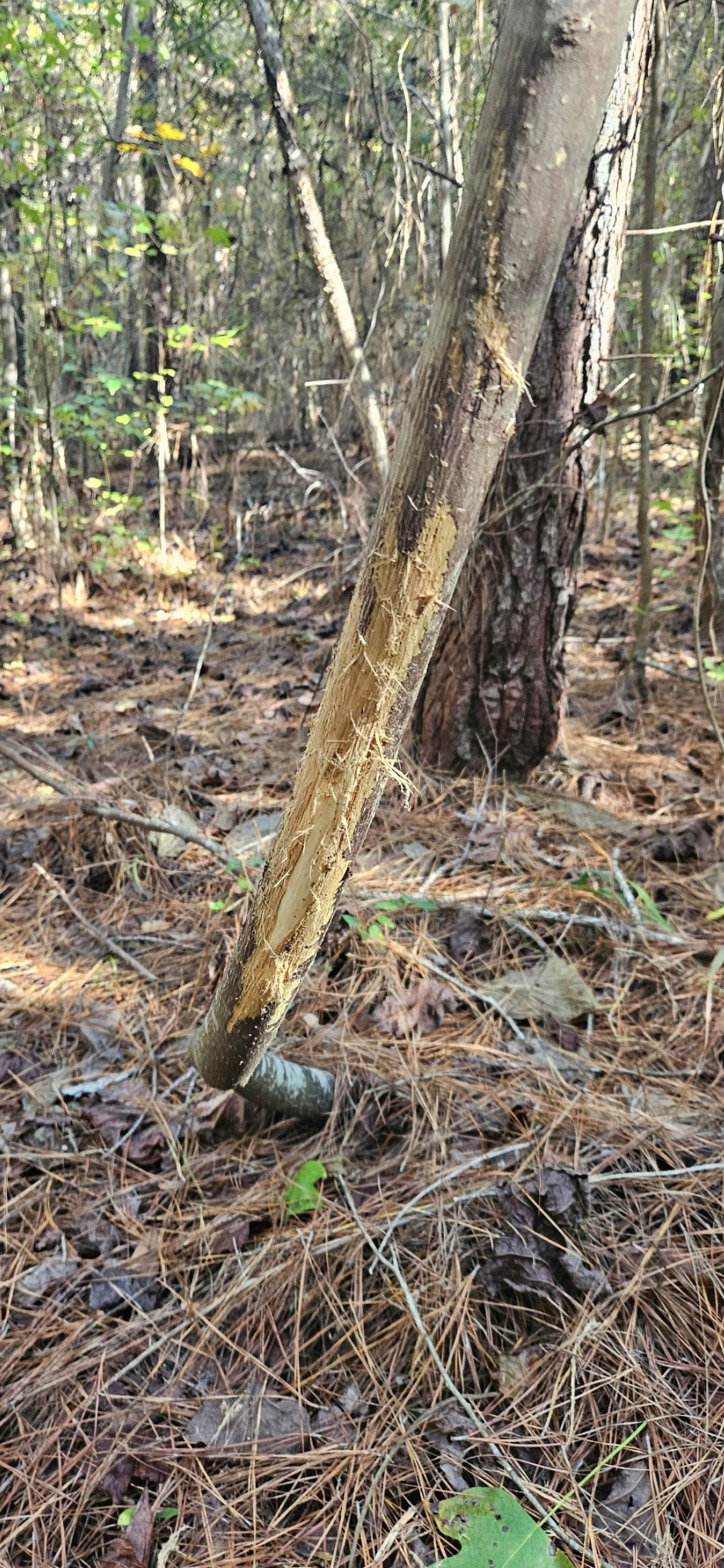
The woodland mammals appear to be using UV as a way of communicating. Their scrapes—markings they make in the dirt or on wood and fill with secretions—glow under UV light that they can see and we can’t. The same goes for their rubbings, or the secretion-filled marks their antlers make on trees and fence posts. According to the findings published in the journal Ecology & Evolution, the photoluminescence is potentially a way for the mammals to find a mate.
“People have been hypothesizing about if this glow exists in the environment, but nobody had gone out yet to try and connect it to the deer until now,” Daniel DeRose-Broeckert, a study co-author and ecologist at the University of Georgia’s Deer Lab, said in a statement. “As we got closer to breeding season, those markings increased in visibility as deer prepared for it.”
Over three months, the Deer Lab team searched for white-tailed deer markings in Whitehall Forest near Athens, Georgia, during the day. By night, they investigated them with UV lights. They analyzed 109 antler rubs on trees and 37 urine-marked acres across 800 acres of forest.
“Their vision is vastly different from ours. Once the sun is slightly gone around dusk and dawn, the UV light dominates for deer since it’s not being washed out by the visible light spectrum from the sun,” said DeRose-Broeckert.
The team believes that rubs’ glow may be made from a combination of plant and tree sap and secretions from the animal’s forehead glands. The scrapes’ glow is likely from urine.
“In the process of scraping the bark off a tree with their antlers, they are depositing glandular secretions. Likewise, when they make a scrape, a different gland is also between their toes,” added study co-author and ecologist Gino D’Angelo. “Deer have lots of ways to interact with the environment, and they are leaving those signatures out there to smell and glow.”
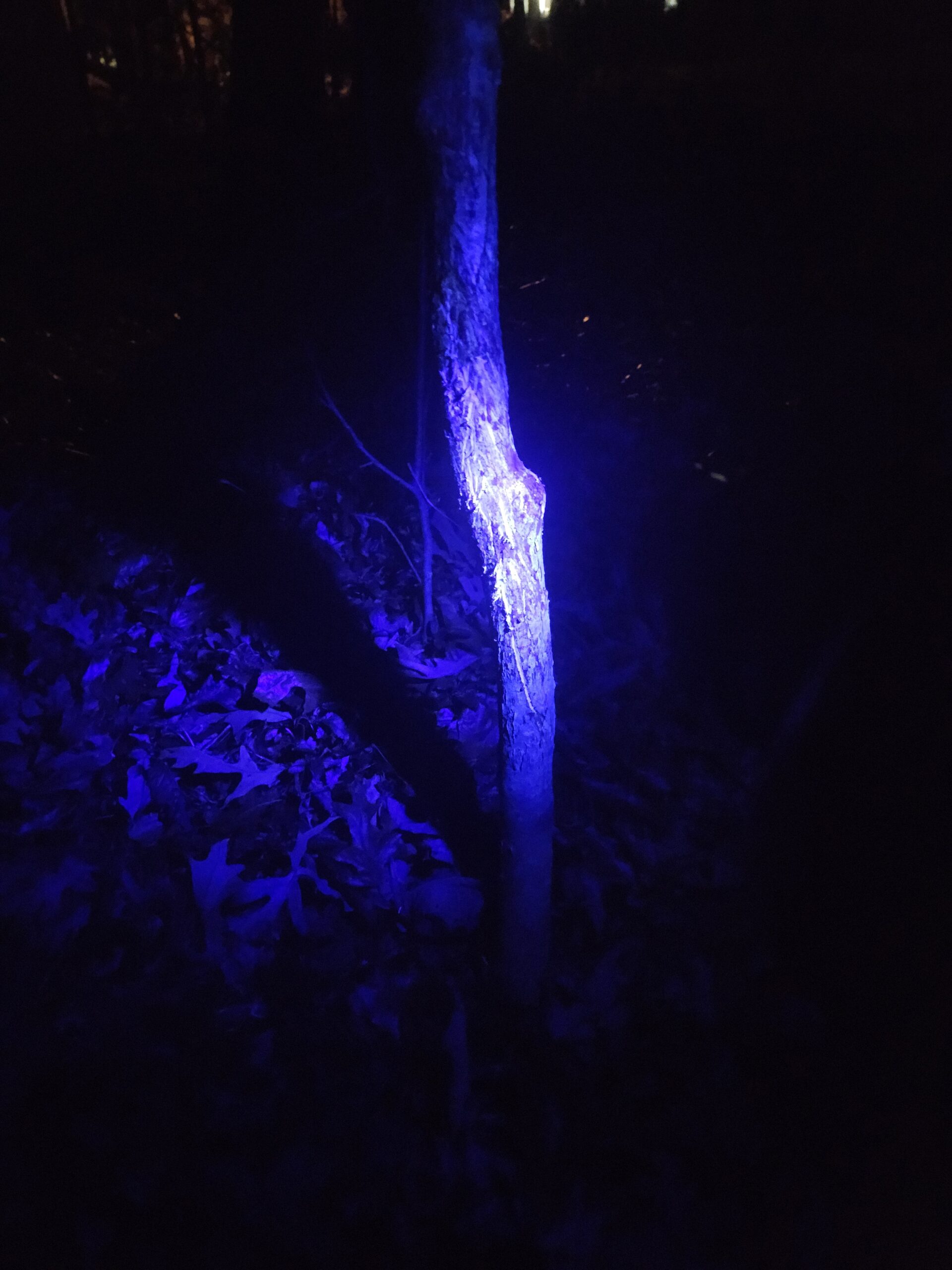
Earlier studies suggest that other mammals also glow under UV light, but the reasons why have been vague. Deer use the same scrapes as a way to communicate through scent, so the team on this study believes that the glow offers a visual way for deer to communicate
“The scrapes become a communication hub where other deer will visit it after it’s created and contribute to it. It’s like a phone booth out in the city when trying to make nighttime plans at a meeting point,” D’Angelo said.
During deer mating season from mid-October through December, marking is particularly important.
“We’ve known that there’s an olfactory component, but now we know the deer are also getting stimulated in two senses, both olfactory and visually,” said DeRose-Broeckert. “Both males and females utilize scrapes to advertise their presence in the environment and their breeding status and fitness level.”

2025 PopSci Outdoor Gift Guide
Environment,Animals,Biology,Science,WildlifeNews,Vision#Deer #markings #glow #Popular #Science1768426700

Recent Post



Gallery






Featured Videos