Key Highlights:
- Ford Motor Company unveiled an AI-powered digital assistant and a next-generation BlueCruise system at the Consumer Electronics Show 2026.
- The AI assistant will launch in Ford’s smartphone app in early 2026 and expand to in-vehicle use by 2027, offering real-time, vehicle-specific information.
- Ford said the next version of BlueCruise will be cheaper to build and more capable, with plans to support eyes-off driving later this decade.
Ford Pushes Deeper Into AI and Hands-Free Driving at CES 2026
Ford Motor Company unveiled plans for an AI-powered digital assistant and a next-generation version of its BlueCruise driver-assistance system at the Consumer Electronics Show 2026 in Las Vegas, outlining its latest push toward software-driven and hands-free vehicle technologies.
The announcements were made during a “Great Minds” speaker session at CES, rather than a headline keynote, reflecting a more measured presence from the automaker at the annual technology event, which has increasingly shifted its focus from vehicle launches to software, AI, and mobility platforms.
App-first rollout ahead of in-car deployment
According to TechCrunch, Ford Motor Company’s AI-powered digital assistant will be debuting the company’s smartphone app in early 2026, before expanding into vehicles in 2027.
The assistant is being built using off-the-shelf large language models hosted on Google Cloud, rather than a proprietary foundation model. The app-based rollout allows the company to test how customers interact with the assistant, refine its responses, and address potential reliability or safety concerns before embedding the technology directly into vehicles.
Furthermore, it also gives Ford greater flexibility to update and improve the system through software changes without requiring vehicle-level upgrades.
Built around real-time vehicle data
What sets the assistant apart is its deep access to vehicle-specific data. Drivers will be able to ask not just general questions, but also real-time, context-aware queries. Ranging from load capacity and towing limits to oil life, battery status, and other diagnostics.
Although Ford did not disclose full details of the in-car experience, the phased rollout points to a cautious strategy. Testing user behaviour and system reliability through the app before scaling the assistant into vehicles once confidence and safeguards are in place.
BlueCruise gets cheaper and more ambitious
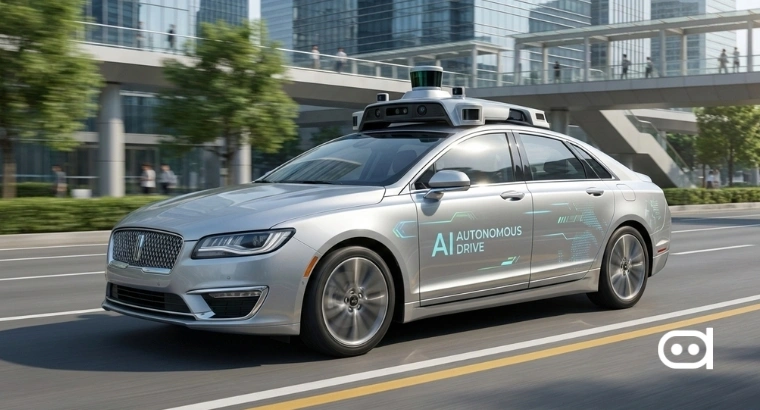
Alongside the AI assistant, Ford teased a next-generation version of BlueCruise, its advanced driver-assistance system currently used for hands-free highway driving with eyes-on monitoring. The company said the upcoming system will be about 30% cheaper to manufacture while delivering greater capability than the current iteration.
The new BlueCruise is expected to debut in 2027 on the first electric vehicle built on Ford’s low-cost “Universal Electric Vehicle” platform, which is anticipated to underpin a mid-sized electric pickup truck. Lower production costs could make advanced driver assistance viable across a wider range of vehicles, rather than remaining a premium feature.
Eyes-off driving by 2028
Looking further ahead, Ford outlined ambitions to enable eyes-off driving by 2028, a step beyond today’s hands-free but eyes-on systems. The company also referenced “point-to-point autonomy,” a concept that allows vehicles to navigate from one location to another under supervision.
This would place Ford in closer competition with Tesla’s Full Self-Driving (Supervised) system and autonomy efforts underway at Rivian. As with rival technologies, Ford emphasized that drivers would still be required to remain alert and ready to take control at any time.
A quieter CES, a clearer strategy
Ford’s low-key presence at CES 2026 showcases a broader shift in the auto industry. Where flashy concept cars once dominated the show floor, today’s focus is on software, AI, and scalable platforms. By prioritising cost reduction, cloud-based intelligence, and gradual autonomy milestones, Ford appears to be betting on practical deployment over spectacle.
In an era where AI assistants and advanced driver-assistance systems are rapidly becoming table stakes, Ford’s announcements suggest the company is less interested in stealing the CES spotlight and more focused on catching up, and competing, where it matters most: inside the vehicle and across the software stack.
AI News#Ford #Assistant #BlueCruise #Roadmap #Revealed #CES1767899400

Recent Post

Gallery






Featured Videos