The partnership announced this week between Microsoft and Hexagon Robotics marks an inflection point in the commercialisation of humanoid, AI-powered robots for industrial environments. The two companies will combine Microsoft’s cloud and AI infrastructure with Hexagon’s expertise in robotics, sensors, and spatial intelligence to advance the deployment of physical AI systems in real-world settings.
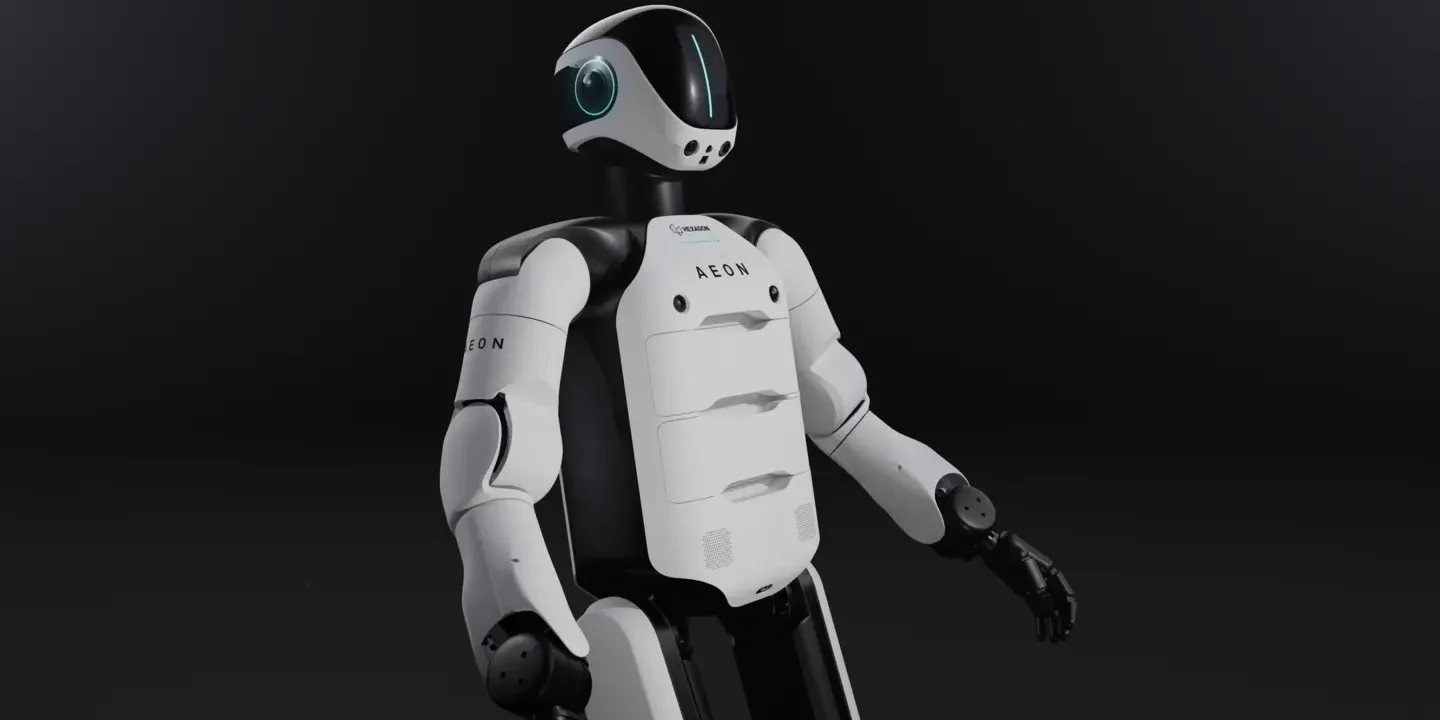
At the centre of the collaboration is AEON, Hexagon’s industrial humanoid robot, a device designed to operate autonomously in environments like factories, logistics hubs, engineering plants, and inspection sites.
The partnership will focus on multimodal AI training, imitation learning, real-time data management, and integration with existing industrial systems. Initial target sectors include automotive, aerospace, manufacturing, and logistics, the companies say. It’s in these industries where labour shortages and operational complexity are already constraining financial growth.
The announcement is the sign of a maturing ecosystem: cloud platforms, physical AI, and robotics engineering’s convergence, making humanoid automation commercially viable.
Humanoid robots out of the research lab
While humanoid robots have been the subject of work at research institutions, demonstrated proudly at technology events, the last five years have seen a move to practical deployment in real-world, working environments. The main change has been the combination of improved perception, advances in reinforcement and imitation learning, and the availability of scalable cloud infrastructure.
One of the most visible examples is Agility Robotics’ Digit, a bipedal humanoid robot designed for logistics and warehouse operations. Digit has been piloted in live environments by companies like Amazon, where it performs material-handling tasks including tote movement and last-metre logistics. Such deployments tend to focus on augmenting human workers rather than replacing them, with Digit handling more physically demanding tasks.
Similarly, Tesla’s Optimus programme has moved out of the phase where concept videos were all that existed, and is now undergoing factory trials. Optimus robots are being tested on structured tasks like part handling and equipment transport inside Tesla’s automotive manufacturing facilities. While still limited in scope, these pilots demonstrate the pattern of humanoid-like machines chosen over less anthropomorphic form-factors so they can operate in human-designed and -populated spaces.
Inspection, maintenance, and hazardous environments
Industrial inspection is emerging as one of the earliest commercially viable use cases for humanoid and quasi-humanoid robots. Boston Dynamics’ Atlas, while not yet a general-purpose commercial product, has been used in live industrial trials for inspection and disaster-response environments. It can navigate uneven terrain, climb stairs, and manipulate tools in places considered unsafe for humans.
Toyota Research Institute has deployed humanoid robotics platforms for remote inspection and manipulation tasks in similar settings. Toyota’s systems rely on multimodal perception and human-in-the-loop control, the latter reinforcing an industry trend: early deployments prioritise reliability and traceability, so need human oversight.
Hexagon’s AEON aligns closely with this trend. Its emphasis on sensor fusion and spatial intelligence is relevant for inspection and quality assurance tasks, where precise understanding of physical environments is more valuable than the conversational abilities most associated with everyday use of AIs.
Cloud platforms central to robotics strategy
A defining feature of the Microsoft-Hexagon partnership is the use of cloud infrastructure in the scaling of humanoid robots. Training, updating, and monitoring physical AI systems generates large quantities of data, including video, force feedback from on-device sensors, spatial mapping (such as that derived from LIDAR), and operational telemetry. Managing this data locally has historically been a bottleneck, due to storage and processing constraints.
By using platforms like Azure and Azure IoT Operations, plus real-time intelligence services in the cloud, humanoid robots can be trained fleet-wide, not isolated units. This leads to multiple possibilities in shared learning, improvement by iteration, and greater consistency. For board-level buyers, these IT architecture shifts mean humanoid robots become viable entities that can be treated – in terms of IT requirements – more like enterprise software than machinery.
Labour shortages drive adoption
The demographic trends in manufacturing, logistics, and asset-intensive industries are increasingly unfavourable. Ageing workforces, declining interest in manual roles, and persistent skills shortages create skills gaps that conventional automation cannot fully address – at least, not without rebuilding entire facilities to be more suited to a robotic workforce. Fixed robotic systems excel in repetitive, predictable tasks but struggle in dynamic, human environments.
Humanoid robots occupy a middle ground. Not designed to replace workflows, they can stabilise operations where human availability is uncertain. Case studies show early value in night shifts, periods of peak demand, and tasks deemed too hazardous for humans.
What boards should evaluate before investing
For decision-makers considering investment in next-generation workplace robots, several issues to note have emerged from existing, real-world deployments:
Task specificity matters more than general intelligence, with the more successful pilots focusing on well-defined activities. Data governance and security continue to have to be placed front and centre when robots are put into play, especially so when it’s necessary to connect them to cloud platforms.
At a human level, workforce integration can be more challenging than sourcing, installing, and running the technology itself. Yet human oversight remains essential at this stage in AI maturity, for safety and regulatory acceptance.
A measured but irreversible shift
Humanoid robots won’t replace the human workforce, but an increasing body of evidence from live deployments and prototyping shows such devices are moving into the workplace. As of now, humanoid, AI-powered robots can perform economically-valuable tasks, and integration with existing industrial systems is immensely possible. For boards with the appetite to invest, the question could be when competitors might deploy the technology responsibly and at scale.
(Image source: Source: Hexagon Robotics)

Want to learn more about AI and big data from industry leaders? Check out AI & Big Data Expo taking place in Amsterdam, California, and London. The comprehensive event is part of TechEx and co-located with other leading technology events. Click here for more information.
AI News is powered by TechForge Media. Explore other upcoming enterprise technology events and webinars here.
Computer Vision,Multimodal AI,Reinforcement Learning,Workforce & HR AI,cloud,distribution,manufacturing,microsoft,physical ai,roboticscloud,distribution,manufacturing,microsoft,physical ai,robotics#cloud #factory #humanoid #robots #coming #workplaces1767966676

Cloud
coming
distribution
Factory
humanoid
manufacturing
Microsoft
physical ai
robotics
robots
workplaces
Recent Post


Gallery






Featured Videos