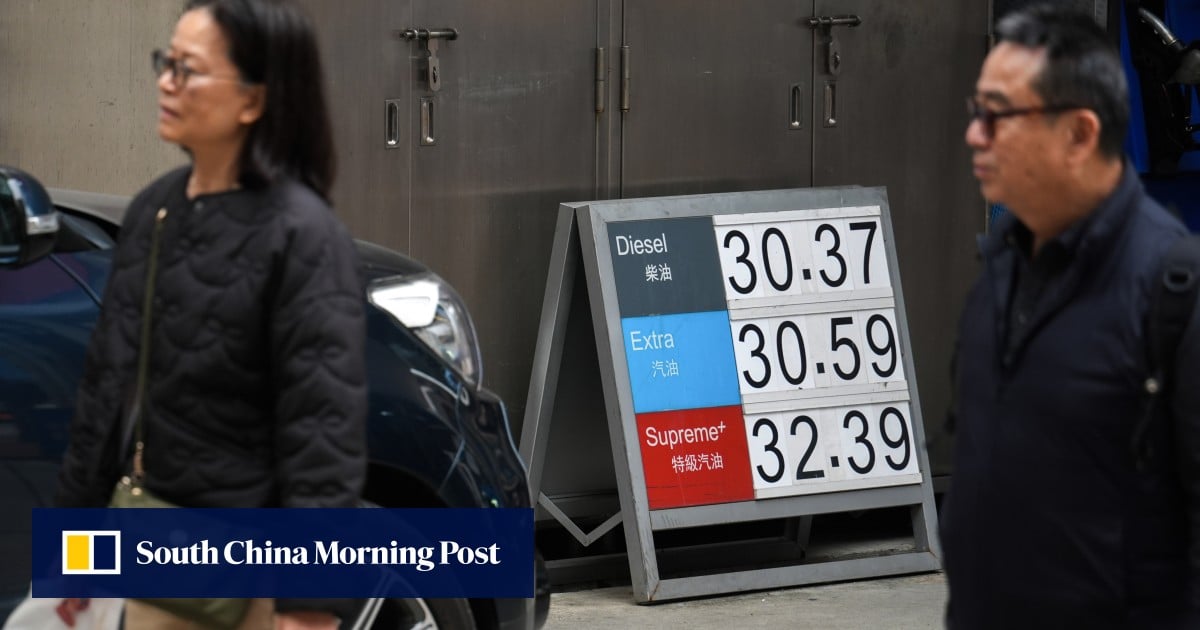
Authorities are communicating with local oil companies to monitor how the war in the Middle East is affecting Hong Kong’s fuel market, amid a public backlash over what has been called premature price hikes.
Responding to a South China Morning Post inquiry on Tuesday, the Environment and Ecology Bureau also said the government had been urging oil companies to provide more data on auto-fuel prices.
“In light of the ongoing geopolitical tensions in the Middle East, the government has been in touch with major oil companies to [closely] monitor the impact of international fuel prices on Hong Kong’s auto-fuel market,” the bureau said.
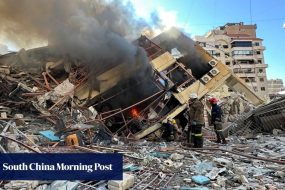
Oil markets have been volatile since the US-Israel war with Iran broke out at the end of February, forcing Persian Gulf producers to curb production and effectively closing the strategic Strait of Hormuz, where 20 per cent of the world’s oil passes.
The price of Brent crude, the international benchmark, shot up to nearly US$120 on Monday, the highest since 2022, before settling back to around US$90. Before the war, it had been trading in the low- to mid-US$70s.
In Hong Kong, public pressure is growing over what has been described as “unfair” and “premature” fuel price hikes made before the city used up its stock. Meanwhile, the transport sector is considering a temporary surcharge to offset rising costs.
ExxonMobil, US-Israeli war with Iran, Consumer Council, South China Morning Post, Middle East, Strait of Hormuz, Brent Crude, Sinopec, PetroChina, Tse Chin-wan, Shell, Census and Statistics Department, Hong Kong, Chevron, Environment and Ecology Bureau#Hong #Kong #monitors #fuel #prices #Iran #war #sparks #premature #unfair #hikes1773120145

Brent crude
Census and Statistics Department
Chevron
Consumer Council
Environment and Ecology Bureau
exxonmobil
fuel
hikes
Hong
Hong Kong
Iran
Kong
Middle East
Monitors
PetroChina
premature
prices
Shell
Sinopec
South China Morning Post
sparks
Strait of Hormuz
Tse Chin-wan
unfair
US-Israeli war with Iran
war