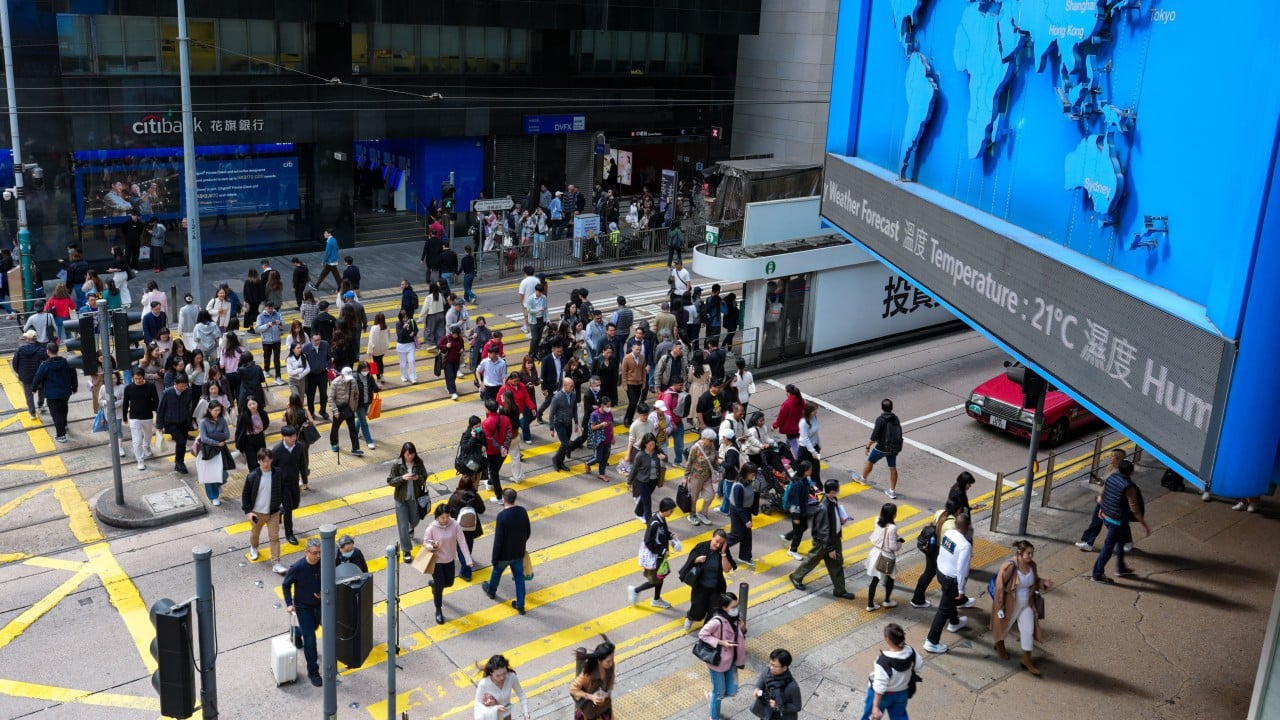
A combination of a strong initial public offering (IPO) market and bond sales has helped put Hong Kong’s financial health back in the black sooner than expected, with analysts expecting a robust pipeline of listings to be key to sustaining the city’s surplus.
In his budget speech on Wednesday, Financial Secretary Paul Chan Mo-po said the city was previously expected to record a HK$67 billion deficit for the 2025-26 financial year, which ends on March 31, but emerged with an estimated HK$2.9 billion consolidated surplus.
Some economists on Thursday expressed optimism regarding the outlook for 2026-27, pointing to factors such as the stabilised property market and the transfer of billions of Hong Kong dollars between government funds or accounts.
Billy Mak Sui-choi, an associate professor at Baptist University’s accountancy, economics and finance department, attributed the operating surplus in 2025-26 directly to the bustling stock market, noting that robust turnover and listing activities were the primary engines for government revenue.
“The main reason is that in the past year … Hong Kong stock turnover was much larger, so government stamp duty [revenue] increased by a lot, by tens of billions,” he said.
Lee Shu-kam, head of Hong Kong Shue Yan University’s economics and finance department, expressed optimism that a compounding effect from new companies coming to Hong Kong, a booming stock market and a recovering property sector would mutually reinforce one another to sustain higher tax revenues.
scmp, news, Financial Secretary Paul Chan Mo-po, Hong Kong Exchanges and Clearing, Hong Kong Shue Yan University, Exchange Fund, Billy Mak Sui-choi, Capital Works Reserve Fund, Northern Metropolis, Lee Shu-kam, Christopher Hui, Hong Kong, Natixis, initial public offering, Secretary for Financial Services and the Treasury, US dollar, Baptist University#Hong #Kong #records #HK2.9 #billion #consolidated #surplus #Heres1772115191

Baptist University
Billion
Billy Mak Sui-choi
Capital Works Reserve Fund
Christopher Hui
consolidated
Exchange Fund
Financial Secretary Paul Chan Mo-po
Heres
HK2.9
Hong
Hong Kong
Hong Kong Exchanges and Clearing
Hong Kong Shue Yan University
initial public offering
Kong
Lee Shu-kam
Natixis
News
Northern Metropolis
Records
scmp
Secretary for Financial Services and the Treasury
surplus
US dollar