A 7,000-year-old grave site in present-day Oman indicates that the region’s Neolithic communities sometimes turned to an unexpected trade to not only survive, but thrive in the harsh desert landscape. According to findings published in the journal Antiquity, the people of southern Arabia actually hunted sharks and even stingrays.
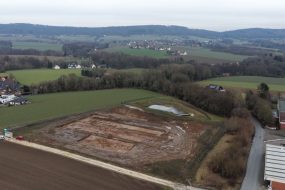
Since 2020, researchers from the Archaeological Institute of the Czech Academy of Sciences, Prague (ARÚ) have investigated Wadi Nafūn, an ancient grave site megalith (a structure built with large stones) used by Neolithic locals during the 5th century BCE. Amid their excavations, researchers found the skeletal remains of over 70 men, women, and children. But this wasn’t a single generation of people. The crypt’s size and subsequent radiocarbon dating indicate that Wadi Nafūn was built and maintained communally for over 300 years.
“This monument was not built by a single small group. It represents cooperation, shared beliefs, and repeated return to a common ceremonial landscape,” project director lžběta Danielisová recently told Arkeonews.

However, Danielisová and collaborators faced an immediate challenge. Biological materials like teeth and skeletal fragments usually do not retain many organic components after being exposed to Oman’s arid climate for thousands of years. To properly understand their discoveries, the team needed to ship the materials back to the Czech Republic. There, they utilized isotopic analysis to examine a mineralized substance called bioapatite that remains on bones even after collagen disappears.
They particularly focused on traces of carbon, oxygen, and strontium to pinpoint some of each Neolithic person’s dietary sources of protein. But it was the discovery of certain nitrogen isotopes that surprised them most, as these compounds are only found in very specific marine animals.
“We know that these were not just ordinary proteins, but proteins from the top of the food chain,” Danielisová said in a university statement.
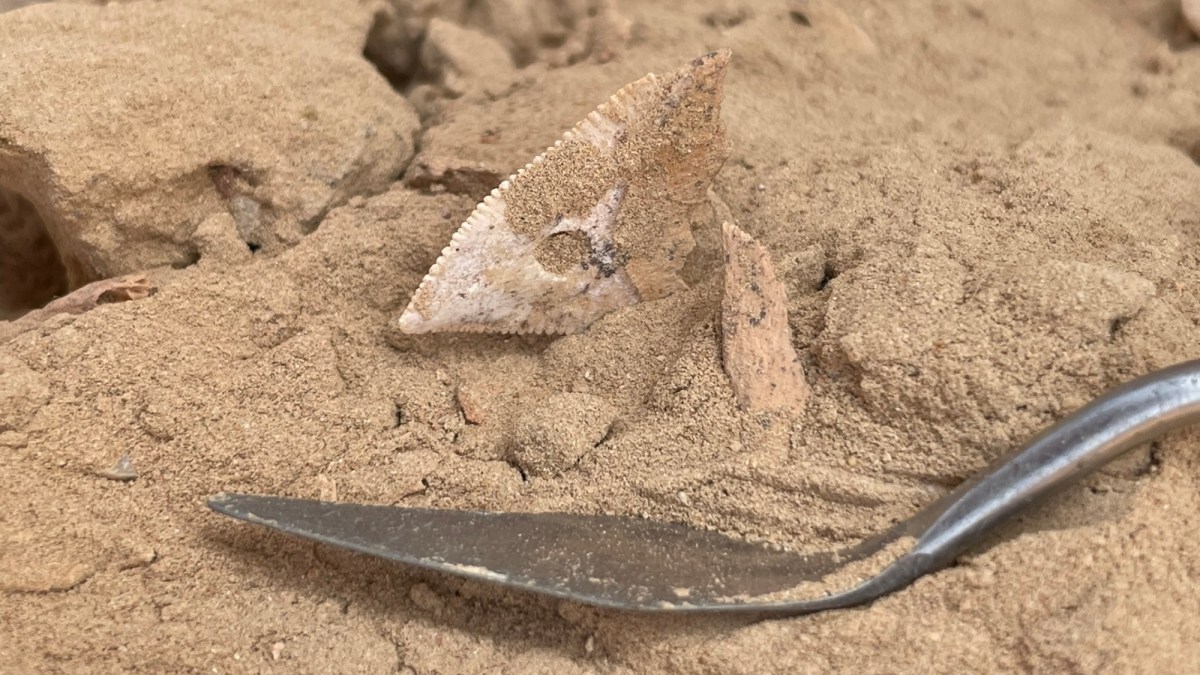
For hundreds of years, it appears the Neolithic communities of southern Arabia regularly hunted and consumed sharks. They didn’t only eat the apex predators, either. Throughout Wadi Nafūn, archaeologists excavated shark tooth pendants, additional tiger shark teeth, fishing tools, and stingray barbs. In order to harvest all these materials, the Neolithic hunters appear to have even used their own teeth to help process and prepare their catches.
“The teeth of this community have an interesting pattern. This indicates a specific diet and also that people used their teeth as tools,” explained ARÚ Prague anthropologist Jiří Šneberger.
Additional evidence gleaned from the isotopic analysis also showed that some of the individuals buried at Wadi Nafūn weren’t technically locals. Strontium and oxygen levels suggest certain adults buried here at least spent their childhoods over 30 miles inland. Taken altogether, the shark and human evidence illustrate a highly dynamic, resourceful, and collaborative region that used everything at their disposal to flourish.
“For the very first time, we were able to use natural science data to document specialized hunting of marine predators, directly by analyzing the local buried community,” said Danielisová. “The connection of this burial community with sharks is very interesting and is a new finding not only in prehistoric Arabia, but in the area of all Neolithic cultures of the arid zone.”

2025 PopSci Outdoor Gift Guide
Science,Agriculture,Animals,Archaeology,Environment,Sharks,Wildlifehistory,News#ancient #Arabia #people #dined #sharks #stingrays1768580759