
Simons Foundation president David Spergel talks about the evolving landscape for science philanthropy, his outlook for the research enterprise, and remaining hopeful in an uncertain time.
Astrophysicist David Spergel has an insider’s perspective on just about every aspect of the research enterprise. As president of the Simons Foundation, one of the largest donors to science and basic research in the country, Spergel oversees both its grantmaking operations and the foundation’s Flatiron Institute, an in-house research arm that focuses on advancing computational methods in many areas of science.
Spergel has also led science teams for several large NASA projects, including the Nancy Grace Roman Space Telescope, which is scheduled to launch in 2027, and the Wilkinson Microwave Anisotropy Probe, which played a significant role in establishing the standard model of cosmology. He is the Charles Young Professor of Astronomy Emeritus on the Class of 1897 Foundation at Princeton University, where he spent more than 30 years on the faculty, including serving a decade as department chair. A member of the National Academy of Sciences, he has received numerous awards and honors, including the 2018 Breakthrough Prize for mapping the early universe, and is a two-time recipient of NASA’s Exceptional Service Medal.
In an interview with Issues editor Molly Galvin, Spergel discusses how philanthropy is responding to the seismic shifts in the US science policy landscape, what worries him most about drastic cuts in federal funding and science agencies, and his predictions about where US science could land five years from now.
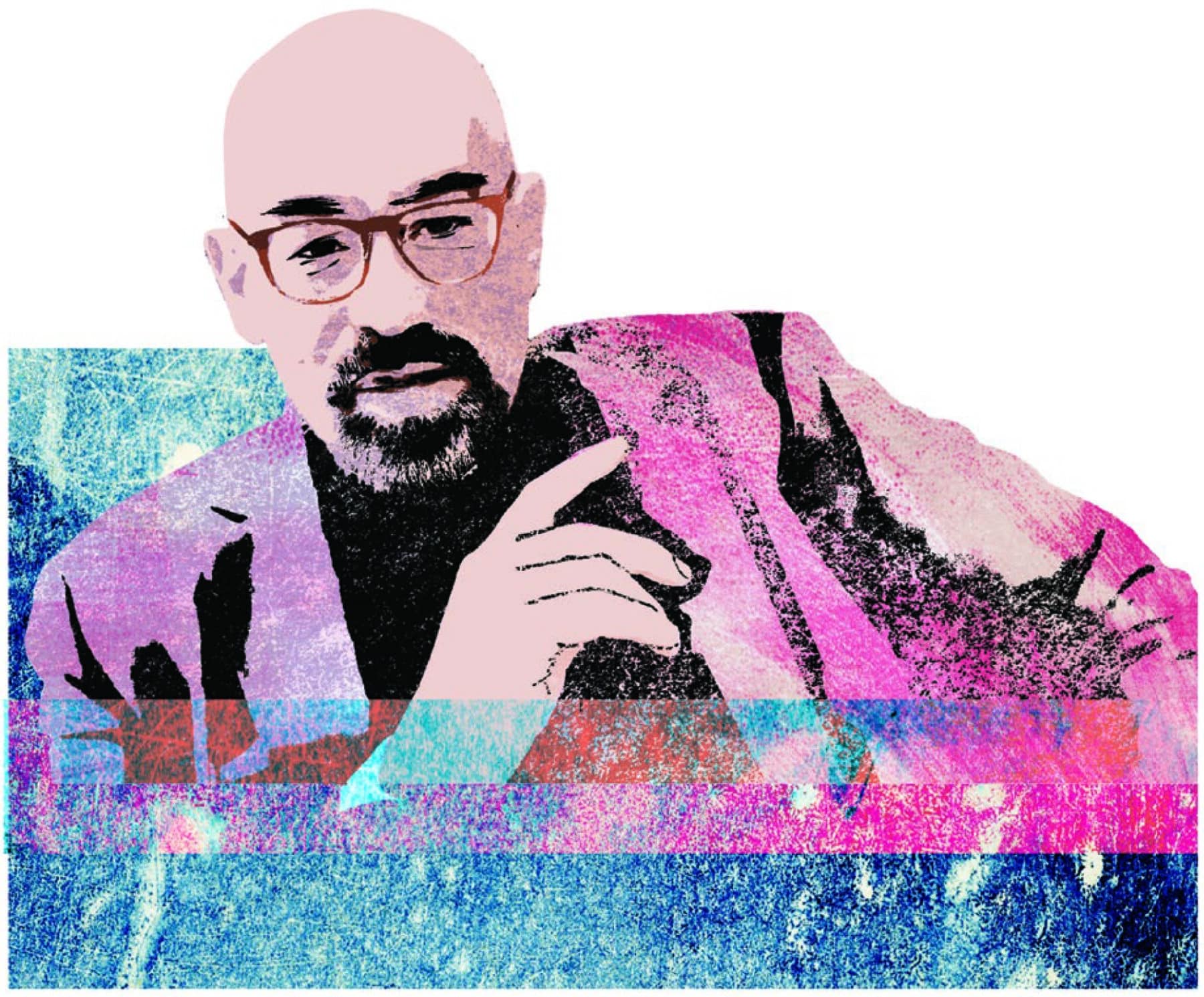
You started out in academic science and worked with NASA before joining the Simons Foundation. What led you to philanthropy?
Spergel: I joined philanthropy gradually. I was a professor at Princeton for most of my career. Jim Simons, the cofounder of the Simons Foundation, invited me to come to New York to help set up the Center for Computational Astrophysics as part of the Flatiron Institute. In many ways that was not so different from what I was doing at Princeton, where I’d been department chair for 10 years. At Princeton, I was part of a great department that was a leading center in astrophysics for nearly a century. My job as chair was to maintain that level of excellence. And at Flatiron, I was employee number one and the goal was, “How can you build a top research institute in computational astrophysics from scratch?”
It was kind of like being a start-up, where you get to build the culture and create something new. We developed deep links with the surrounding universities, including New York University, Columbia, the City University of New York, Rutgers, and Stony Brook, and also maintained ties with Princeton. We strove to become an intellectual center, with this focus on computation to connect with computational biology and neuroscience and quantum materials and mathematics.
Jim and Marilyn Simons ran the foundation for over 20 years. Marilyn was the driver behind most of the scientific engagement initiative we now call Science, Society & Culture, and Jim was not just chairman of the board, but the chief scientific officer. He was making the major science decisions on research directions. They created a very effective philanthropy. So when they asked me if I’d be interested in becoming president, it was an opportunity to have a real impact and to think through how we can be most effective in supporting science.
How is being in a grantmaking role different than being a scientist?
Spergel: Of course, the federal government is a major supporter of basic research and science, so a big piece of what we do as a foundation is to figure out ways to complement the funding landscape. The metaphor I like to think of is contrapuntal music. We hear the tune that the federal government plays and we think, “What can we do to lead to a richer structure and harmonize with what’s there?” We’re well positioned to cross boundaries, whether those boundaries are between math and biology, for example, or between countries. We support a lot of international collaborations. We have collaborative groups with principal investigators in the United States, Britain, France, and Switzerland. That kind of arrangement would be difficult for a federal agency to set up without a lot of negotiation. We can do this easily.
The whole research enterprise is currently undergoing a huge shift in federal funding and staffing at the science agencies. What do you see as the role for philanthropy in this moment?
“We hear the tune that the federal government plays and we think, ‘What can we do to lead to a richer structure and harmonize with what’s there?’”
Spergel: We cannot be a replacement for federal funds. Roughly speaking, philanthropy is about 10% of the overall funding for science. The National Institutes of Health (NIH) is by far the biggest funding agency, and most of the philanthropic funding is in biomedical. But regardless of whether you’re looking at biomedical or physical sciences, there just isn’t the capacity in philanthropy. If we all increased our spend rates by 20%, the share of the overall science budget from philanthropy would go from 10% to 12%.
If you have cuts as large as were proposed in the initial budget from the Office of Management and Budget (OMB)—50% is a characteristic number for NASA, for the National Science Foundation, and for NIH—those are devastating. You just can’t see those made up by philanthropy.
There are two possible futures for American science. One is that this proposed budget is a bump in the road and funding will stay at close to the same level. A second version is where this represents a real sea change in the relationship between government and science funding. I don’t think we know what world we’re in yet.
I think philanthropy’s role at the moment is to be supportive of science and the scientific community, regardless of which direction we go.
How is the foundation’s overall philosophy of grantmaking evolving to meet today’s challenges?
Spergel: We are not starting new research projects, as exciting as some of the ideas that people propose to us are. I think this is a moment where we could be most effective by supporting young people. Young people are most vulnerable right now.
“Young people are most vulnerable right now.”
According to the academic math jobs listings, there were 150 faculty tenure-track jobs advertised in 2024. There were 70 advertised in 2025. So that gives you a sense of the cuts. Of those 70 jobs, Simons is funding 10 of them. That gives you a sense of what we can do as a philanthropy. We can’t solve the whole problem, but we can make a significant contribution to the investment in the young scientists who will drive the field forward.
We are funding 55 faculty positions in total for three years in mathematics, physics, biology, and neuroscience at New York State universities, both private and public. We are hoping that this can serve as a model for some of the other philanthropies to do regional funding, perhaps with state support.
You spent a good deal of your career in academia. How are you seeing universities respond to these pressures?
Spergel: There are a lot of pressures on universities. Funding sources are uncertain, and there are changes in policies, like overhead rates. Universities are behaving like rational actors at this moment of uncertainty by cutting hiring drastically.
If you are a 75-year-old professor reading this, now would be a good time to take emeritus status. It’s something that a lot of people could do that would contribute enormously. The job market for young people would be in much better shape if most people over 75 retired.
A lot of universities are asking hard questions about what they do. As someone involved in leadership at any organization, you always have to be asking, “What are we doing exceptionally well and what really isn’t playing to our strengths?” To give you an example, one of the areas that the Simons Foundation funds is autism research, with the goal of really improving the lives of people with autism. We’ve recognized our strength there is supporting basic science. We do basic science well.
What would you say to young scientists who may be interested in going into astrophysics or some other field of science?
Spergel: Keep doing your best science. Even in the worst-case scenario, where we hire half the number of people, there will still be some opportunities. And if you’re doing great work, you’ll get those opportunities.
And I would remain hopeful. It’s also a time where, because of the burst in AI, depending on what you do, most people who have science PhDs have skills that are highly valued in the market. I have had many former students and friends who’ve pursued careers in industry and are doing incredibly exciting, important stuff.
Are you seeing any new innovations occurring across philanthropy?
Spergel: We’re seeing a lot more cooperation between philanthropies. For instance, there are many really valuable datasets that we may lose because of funding cuts. There are some really good discussions among philanthropists about what role they might play in doing things like ensuring the continuity of climate data, public health data, and vaccination data.
“If you are a 75-year-old professor reading this, now would be a good time to take emeritus status.”
In a sense, it’s the worst moment to lose this data. If you train AI on high-quality data, this is an incredibly powerful tool. If you train on data that is biased and limited, you get results that are spurious. There was this line about politics, “It’s the economy, stupid.” My line about AI is, “It’s the training data, stupid.” It really matters what you train on.
I’m also hoping that this moment brings some new people to science philanthropy. There is a lot of wealth that has been made by people building on advances in science and engineering. There are new billionaires who are scientists or technologists. Some of them are now getting excited about the role they could play in science philanthropy. I am hoping that this moment will deliver some positive outcomes. And I think growing the size of science philanthropy would be one.
Do you think that independently funded research institutes like the Flatiron Institute at Simons will play a bigger role globally and nationally in the coming years?
Spergel: One of the real strengths of the structure of American science is we have many different ways of doing science. NASA has these centers that are fabulous at building big missions, and we have the Department of Energy’s national labs. We have university research centers, and we have private institutes that are funded by endowments or a series of endowments and government grants. The Carnegie Institute has been around for well over 100 years, and places like Cold Spring Harbor Labs, which is one of the great research centers and is a combination of endowment funding, philanthropic funding, and government funding.
What philanthropic funding can do is operate on a different timescale and with more risk tolerance than government funding. I think of what we do, in some ways, as like being venture capitalists. What you really want is to have 10% of your funds go into companies that generate a 50 times return, because that drives your rate of return to be over fivefold. If we’re not funding some projects that fail, that don’t reach their goals, we’re not taking enough chances.
You have done a lot of work with NASA over the years. For example, you recently cochaired the science team for the Nancy Grace Roman Space Telescope, which is now in danger of being eliminated due to the drastic budget cuts to NASA. Could you talk about the role that NASA and other federal agencies play in big science projects?
Spergel: For launching missions to space, for studying astronomy, for exploring the solar system, for studying the sun and also our Earth, NASA’s a world leader. No one can do the things that NASA can do. It is exceptional in that way. NASA is the only place that’s going to fund basic research in space science.
“There are new billionaires who are scientists or technologists. Some of them are now getting excited about the role they could play in science philanthropy.”
The initial set of cuts to NASA’s budget that OMB put out were very poorly thought out. The Roman telescope is a good example. In the case of Roman, the mission was ahead of schedule and under budget. It was really well managed. I was a part of the scientific community that made the hard choices to keep it under budget. That meant sometimes giving up some sensitivities that we wanted, but we felt it was important to stick to our budget and make it a success.
You also recently cochaired the NASA committee that looked at what used to be called UFOs, now unidentified aerial phenomena. Why did you agree to chair that committee given the conspiracy theories that abound around this?
Spergel: NASA played a very important role in enabling the scientific research that was at the heart of my career. Without NASA, I could not have done the research that I did. And when the NASA administrator asks you to help, you help. If the government asks you to help, you help.
Most of the aerial phenomena—around 90-odd percent—are explainable as airplanes or drones or other things we understand. But for some of the events, the data is ambiguous, and it’s not clear what they are. When you see something you don’t understand, you want to study it further. The example I like to think about in this context is lightning sprites. If you don’t know what a lightning sprite is, stick it into your favorite search engine and you’ll see incredible pictures. It’s like upward lightning, and I believe more common than the downward lightning we’re accustomed to.
The existence of lightning sprites was denied for many years. It was so hard to get data on them, and pilots would report them, but no one knew what they were. They’re short duration, and they required new instrumentation to measure. So sometimes when you see something strange, it really is something strange and interesting.
There are huge numbers of planets in our galaxy. There is certainly a possibility that they host life, and there’s certainly a possibility that they host advanced life. It just seems unlikely that aliens who would be capable of space travel would come here using technology that looks remarkably like that current drone technology.
One of the recommendations from your committee was to create an app so that people could report what they are seeing. Are approaches like this a way to build public trust in science?
Spergel: I think that is the hope—both to build public trust and really engage people in the act of science. If you’ve got some strange thing happening and you get 10 people with smartphones who look up in the sky and see it, you can geolocate where it is, determine its velocity, and figure out what it is. And the model we wanted was that this data would be collected and then amateurs can go look. Ninety-nine percent of the time, you’ll figure out that it was an airplane or drone from the data. And you’d have people who were great at doing this and would find 1% of the time something surprising or interesting.
As you look at the research enterprise as a whole, taking into account the changes in funding and generative AI and our move away from globalization, what do you think of the outlook for science right now?
“It just seems unlikely that aliens who would be capable of space travel would come here using technology that looks remarkably like that current drone technology.”
Spergel: I would say uncertain. There’s a world in which we emerge five years from now stronger, having gone through some difficult times. When we look back on this, we would say it was a time of turbulence and uncertainty, but we took the time as a community to think about the choices we’re making, become more efficient, and eliminate things that are unnecessary. There are opportunities for reform, and there are people trying to use this as a moment for reform.
For instance, there is the National Academies report that Simons helped fund, which identified a lot of unnecessary government bureaucracy that slows the rate of science. I think that’s something that will likely resonate with this administration.
In this optimistic scenario, we work to maintain our international ties. Some of that we try to do as a foundation, but I think a lot of individual scientists can also maintain and strengthen international connections.
“There are opportunities for reform, and there are people trying to use this as a moment for reform.”
But there’s also this possibility of real devastation. There is also a scenario in which this is the moment when the United States gives up its global scientific leadership. China starts to play that role, with a tremendous impact economically and militarily.
I’m concerned about the hundreds of PhDs this year who will not pursue careers in research because the market is unable to find positions for them. I’m worried about tens of thousands of undergraduates who decide they don’t want to go to graduate school because there’s just not opportunity there.
I’m hopeful that our political leadership will not go down this path in the end. It would be so devastating to the country to destroy this incredible science enterprise that we’ve built.
Uncategorized#Interview #David #Spergel1767613137

Recent Post



Gallery






Featured Videos