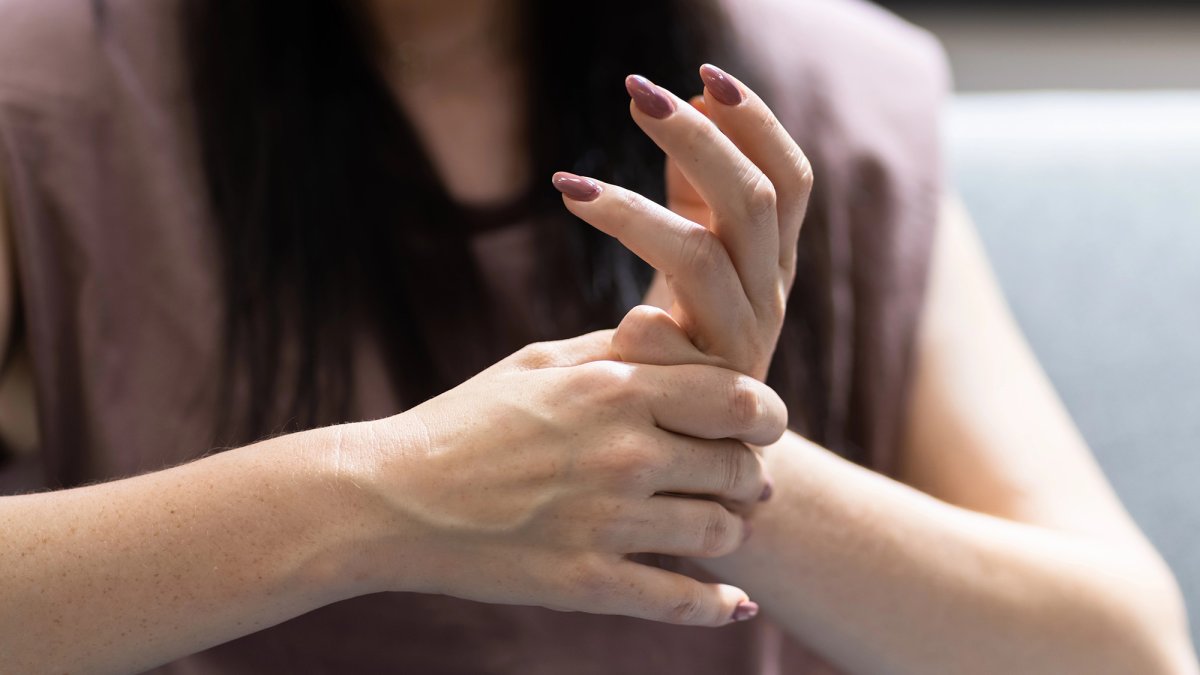
It’s an age-old tale: A knuckle-cracking lover and hater enter a room. Then, a loud pop cuts through the silence. That’s hurting your knuckles, says the hater. No, it’s not, says the lover.
Turns out, science says the knuckle cracker is right. Just like the myth that crossing your eyes will make them stay that way, warnings from parents, grandparents, and Great Aunt Mildred that cracking causes harm to knuckles remains an urban legend, says Dr. John Fernandez, an orthopedic surgeon specializing in hands, wrists, and elbows at Rush University Medical Center in Chicago.
Here’s the science that backs that up.
Why cracking your knuckles got a bad reputation
Fernandez has a suspicion about where the myth about knuckle cracking dangers emerged. He suspects Great Aunt Mildred and other critics had social etiquette on the mind when they warned against the practice. “It’s rude to make noises in public,” Fernandez says.
Indeed, most people don’t relish hearing (and smelling) other biological processes, such as burps and farts. And while a knuckle crack isn’t stinky, it is a reminder of our bodily functions—specifically the fluid and gas in our knuckles.
How do knuckles pop?
Our knuckle joints are composed of two bones capped with cartilage. The bones and cartilage are enclosed in a membrane that’s filled with an oily liquid called synovial fluid. This grease-like substance lubricates the joints, Fernandez says. The consistency is similar to olive oil and includes oxygen, carbon dioxide, and nitrogen gases that are dissolved within the fluid. (Our blood also includes these dissolved gases as well, Fernandez notes.)
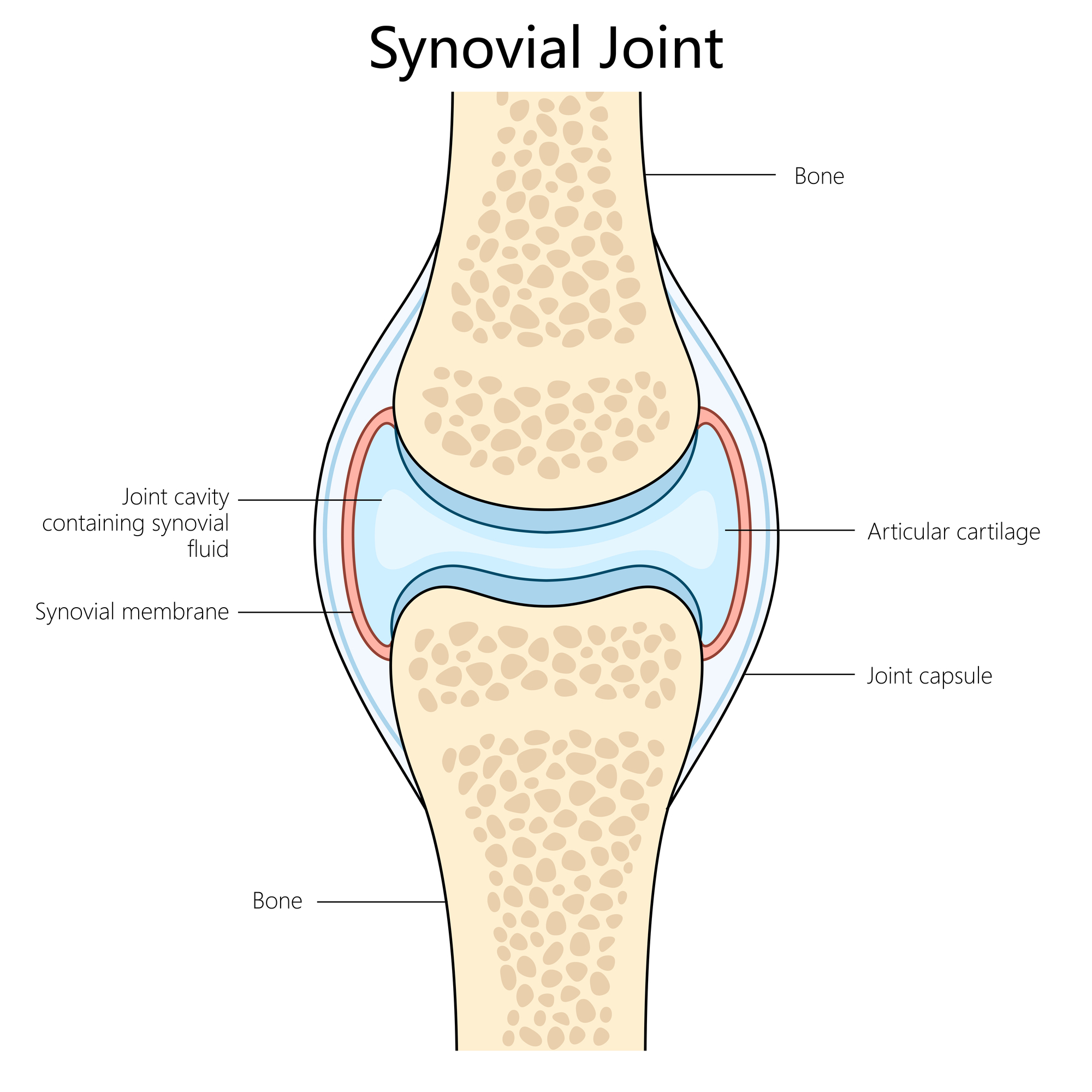
When someone stretches or bends their knuckle to crack it, they increase the space between the bones, which creates a drop in pressure in the joint. As a result of that pressure drop, the dissolved gases form a bubble, in a process called “cavitation.”
Henry’s Law helps explain this phenomenon. It states that how much gas can stay dissolved in a liquid is dependent on pressure. When pressure drops, gases are released from the solution and form bubbles—sort of like how soda fizzes when you pop open a can.
Cavitation also can happen in other instances, such as while scuba diving, Fernandez says. When scuba divers ascend too quickly, that pressure drop can cause nitrogen bubbles to form in the bloodstream, potentially causing serious injury.
Does cracking your knuckles actually hurt them?
Luckily, a side effect of knuckle cracking is not the bends—or even a case of arthritis. Generations of scientists, perhaps all with Great Aunt Mildreds who recoiled at the noise, have looked into whether cracking truly bad for our joints or overall health. Bottom line, Fernandez says: “There’s no science that really supports that knuckle cracking leads to osteoarthritis or arthritis.”
An early study from 1947 identified the changes that take place in a joint when it’s cracked. A 1975 study of 28 geriatric patients, all knuckle crackers, failed to show any correlation. A 2018 literature review came to the same conclusion.
And one regular knuckle cracker and medical doctor, Dr. Donald L. Unger, documented what was going on in his own body for the cause. For more than 60 years, he cracked the knuckles on his left hand—but never his right—with no ill effect.
For his work, which was published in the journal Arthritis & Rheumatism in 1998, he won the satirical 2009 Ig Nobel Prize in medicine. At the awards ceremony, Unger declared: “On my tombstone, I want it to say, ‘Here lies Don Unger, who finally has quit cracking his knuckles.’”
A cracking debate
Still, despite decades of research into knuckle cracking, one big question persists: When is that cracking sound actually created, Fernandez says.
“There’s a big debate over: does the bubble make the noise when it comes out of solution, or does the bubble make the noise when the bubble actually pops?” Fernandez says. Some studies suggest the noise is made when the gas bubble is formed, he said. Others believe that it happens when the bubble actually pops.
The bubble, Fermandez says, is almost instantaneously created and instantaneously popped, so it’s difficult to pinpoint the exact moment the sound is made, even using sophisticated, high sequence MRI scans.
But there’s a limit to how much gas you can pull out of your synovial fluid. Knuckle crackers know this well: You can’t crack the same knuckle two or more times in a row because you no longer have that gas that’s able to escape, Fernandez says. “You have to wait about 15 to 20 minutes for the gas to dissolve back into the fluid before you pop it out again.”
Still rude
For habitual crackers, some minor thickening of the tissue around the joint may occur and make the joint appear fatter or larger, Fernandez notes. “It makes it look like an arthritic joint, but the joint is perfect,” he says.
Arthritis happens with the breakdown of cartilage, which is not impacted when we crack our joints. “Other than annoying your mother, cracking the knuckles is not dangerous. It’s not unhealthy,” he says.
Of course, not everybody can crack their knuckles. The ability depends on both physical factors and learned behavior, Fernandez says. Some people have joints with enough flexibility, while others don’t. And there’s also some skill involved.
“It’s almost like learning how to whistle,” Fernandez says. Once you figure out the technique, such as which knuckle to pull or at what angle, most people can pop at least a few knuckles, though not necessarily all of them equally well.
So should you crack away? In private, have at it, Fernandez says. But in public? “No!” he added with a chuckle. “It’s rude.”
In Ask Us Anything, Popular Science answers your most outlandish, mind-burning questions, from the everyday things you’ve always wondered to the bizarre things you never thought to ask. Have something you’ve always wanted to know? Ask us.

2025 PopSci Outdoor Gift Guide
Health,Ask Us Anything,Diseases,Medicine,Scienceevergreen,Features,News#cracking #knuckles #bad1767801389