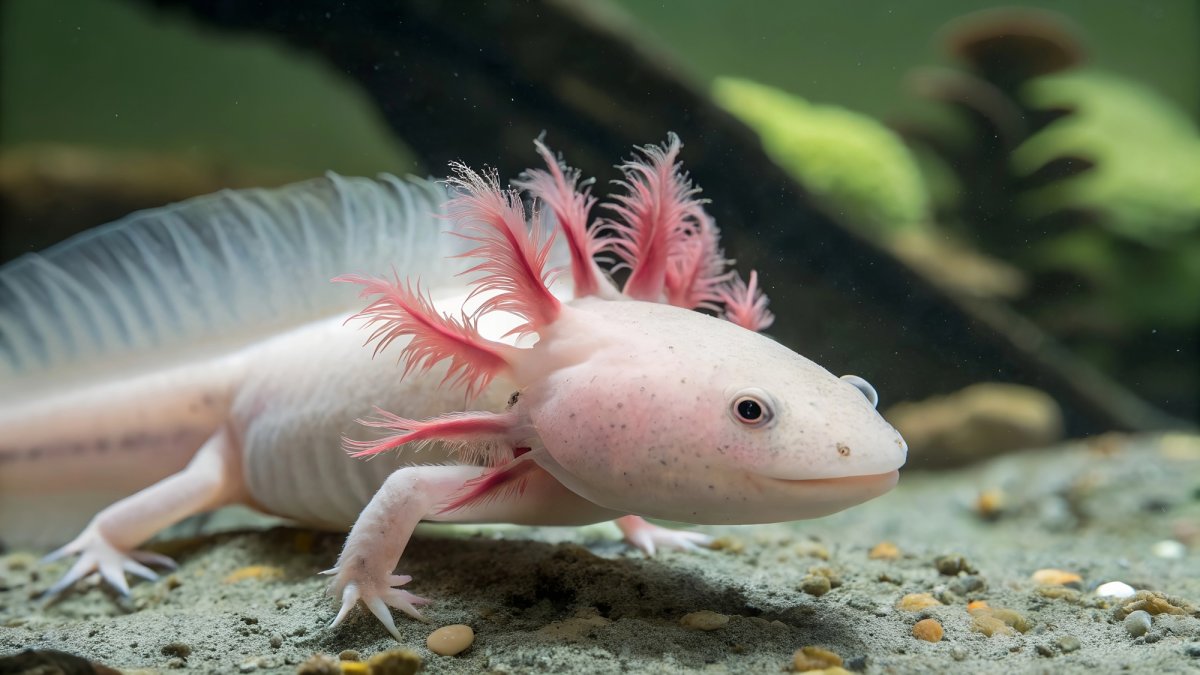
The axolotl (Ambystoma mexicanum) is a confusing creature, and not simply because it looks like a real-life Pokémon. Despite its cultural prominence, even the most optimistic conservationists estimate that less than 1,000 of the foot-long amphibians can be found living in a single location—Mexico City’s Lake Xochimilco. At the same time, captive-bred axolotls are an increasingly popular exotic pet in the United States. But due to their status on the IUCN Red List and potential problems as an invasive species, it can be difficult to determine when, where, or even if it’s okay to adopt your own axolotl pal.
A good example of the ongoing amphibian conundrum recently occurred at Chicago’s O’Hare Airport. According to a U.S. Fish and Wildlife Service (FWS) social media post earlier this month, inspectors flagged a shipment containing “smuggled” axolotls inside a commercial import of live fish intended for pet resale. Already listed under the Convention on International Trade in Endangered Species of Wild Fauna and Flora (CITES), regulators also added them to the Lacey Act in 2025 an “injurious species” because of their potential to spread disease to native amphibians if released. Despite this, comments from both impassioned axolotl fans and wary observers quickly inundated the FWS.
“These are commonly bred in captivity. Why the fuss?” one user asked. Another claimed that, “Making them illegal was a mistake. They will still be bought and sold everywhere.”
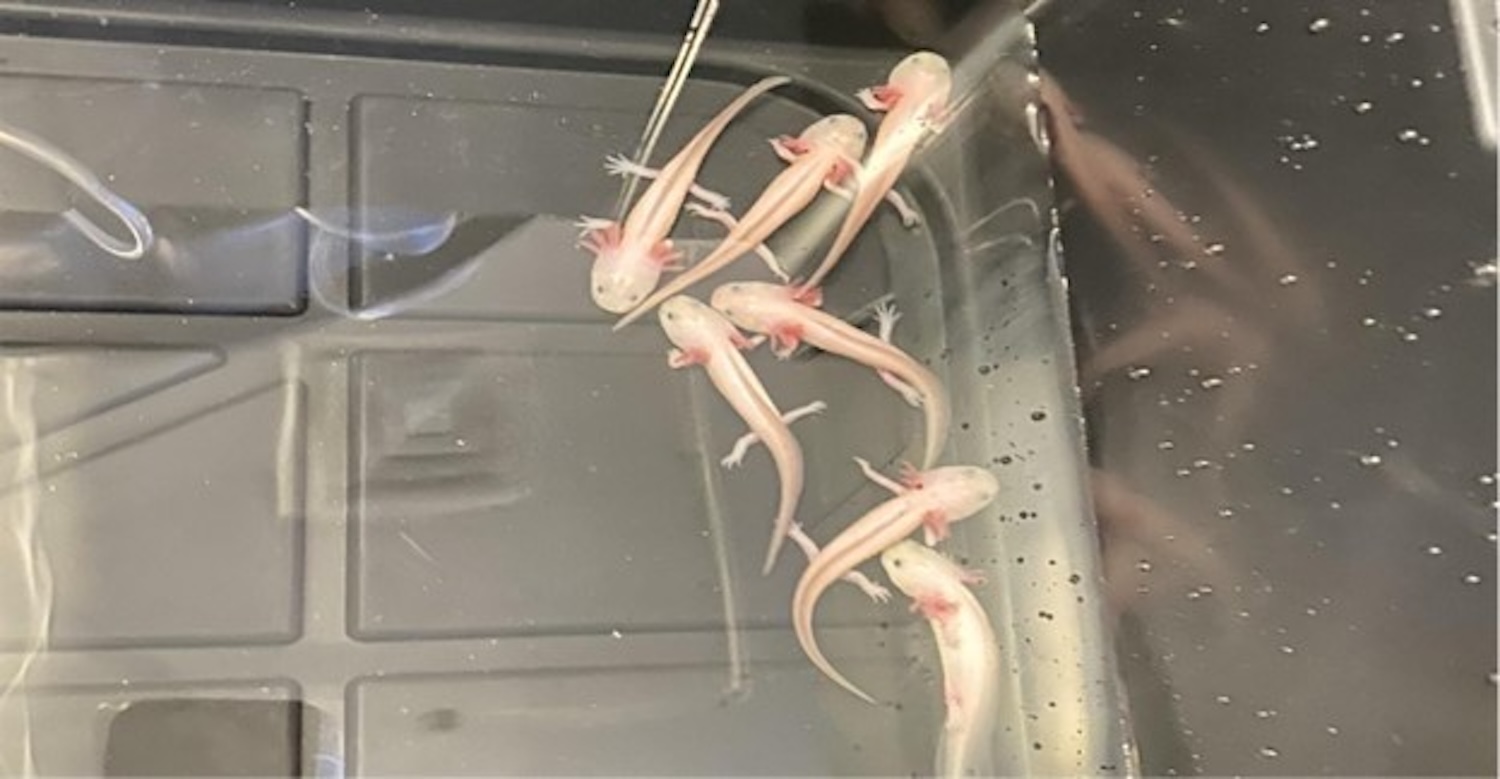
Many others noted another mixed message from the FWS, this time in the post’s accompanying photo. Unlike Mexico’s dark-colored amphibians, these pinkish-white axolotls appeared to be leucistic, meaning they lacked their standard pigmentation. Leucistic axolotls are routinely bred in captivity—you may have even seen some in a local pet store. So, what’s the deal? Can or can you not own axolotls?
“Even though wild axolotls are imperiled, many of these animals are bred in captivity to be sold as pets. These animals are often cross bred with other species (such as tiger salamanders) and may be both genetically and behaviorally different than wild populations,” FWS senior public affairs specialist Christina Meister tells Popular Science.
Meister explains that while they are illegal to own in some states, that isn’t the case everywhere. At the same time, the axolotl’s recent addition to the Lacey Act’s injurious species list makes it illegal to import the amphibians into the U.S. It’s also unlawful to transport them from the continental U.S. to either the District of Columbia or any U.S. territories without a proper permit. And because Meister says the Lacey Act “broadly prohibits” the sale or transfer of basically any wildlife in violation of federal, state, tribal, or foreign law, that means that you really need to check the fine print before acquiring your axolotl.
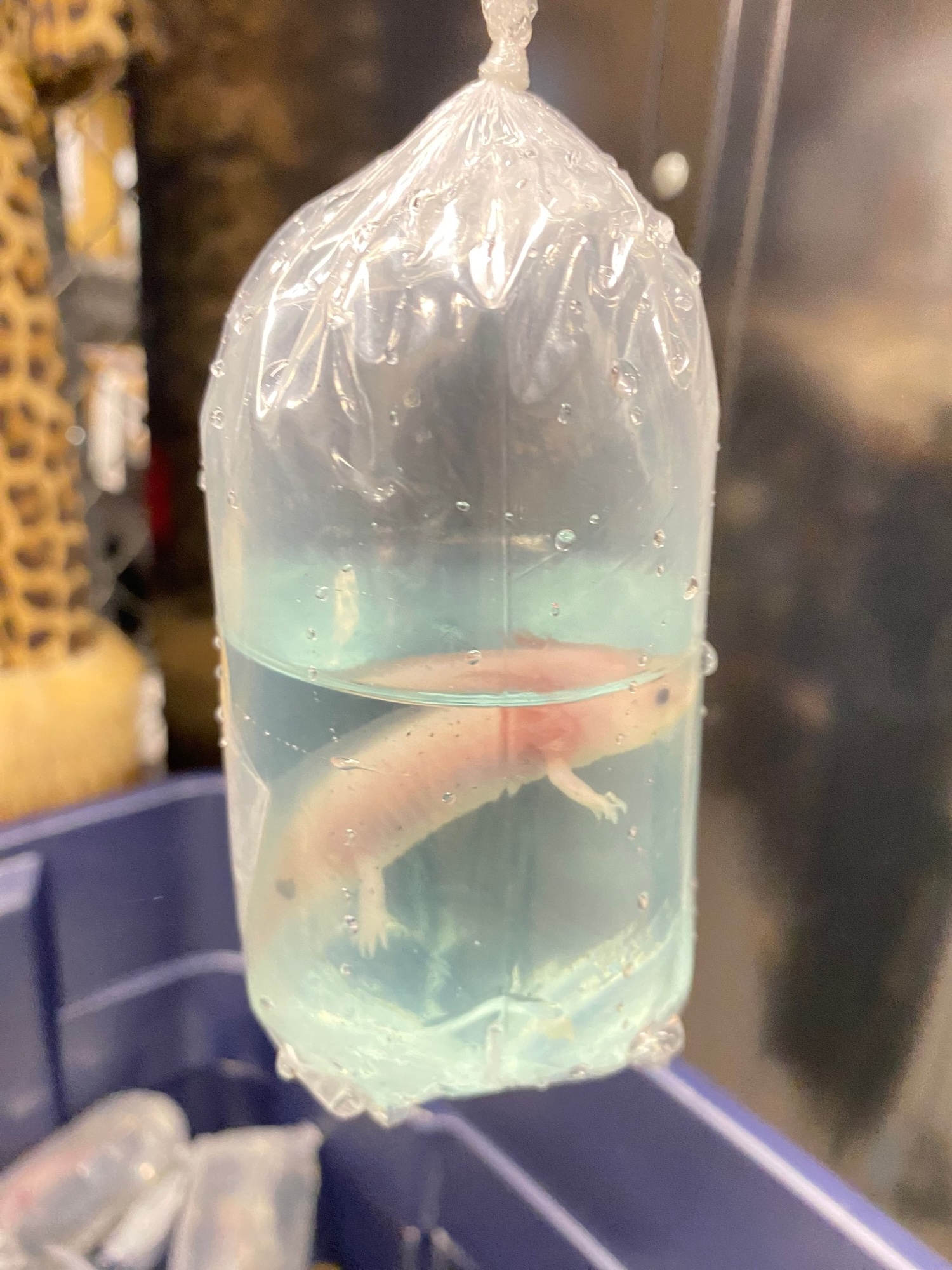
In the case of the recent incident at O’Hare Airport, the FWS clarified the exotic pets were part of a larger shipment that violated the Lacey Act, and included, “other wildlife that was not properly declared or labeled, violating both the Endangered Species Act (ESA) and the Lacey Act’s trade provisions.”
Axolotl demand now goes beyond pet owners, however. Meister says animal traffickers are particularly attracted to them due to their “unique appearance and inability to defend themselves make them a relatively easy target.” Meanwhile, they’re coveted by many researchers—particularly in the biomedical industries—because the critically endangered amphibians possess a remarkable ability to regenerate limbs and even certain organs.
So although they aren’t illegal everywhere in the U.S., Meister highly recommends people consult both federal and state wildlife laws before considering purchasing an axolotl. And when you do, be sure to buy them from reputable vendors and not those trying to sneak them through airports.

2025 PopSci Outdoor Gift Guide
Environment,Animals,Conservation,Endangered Species,Pets,Science,Wildlifeculture,News,policy#illegal #axolotl #depends1768330934