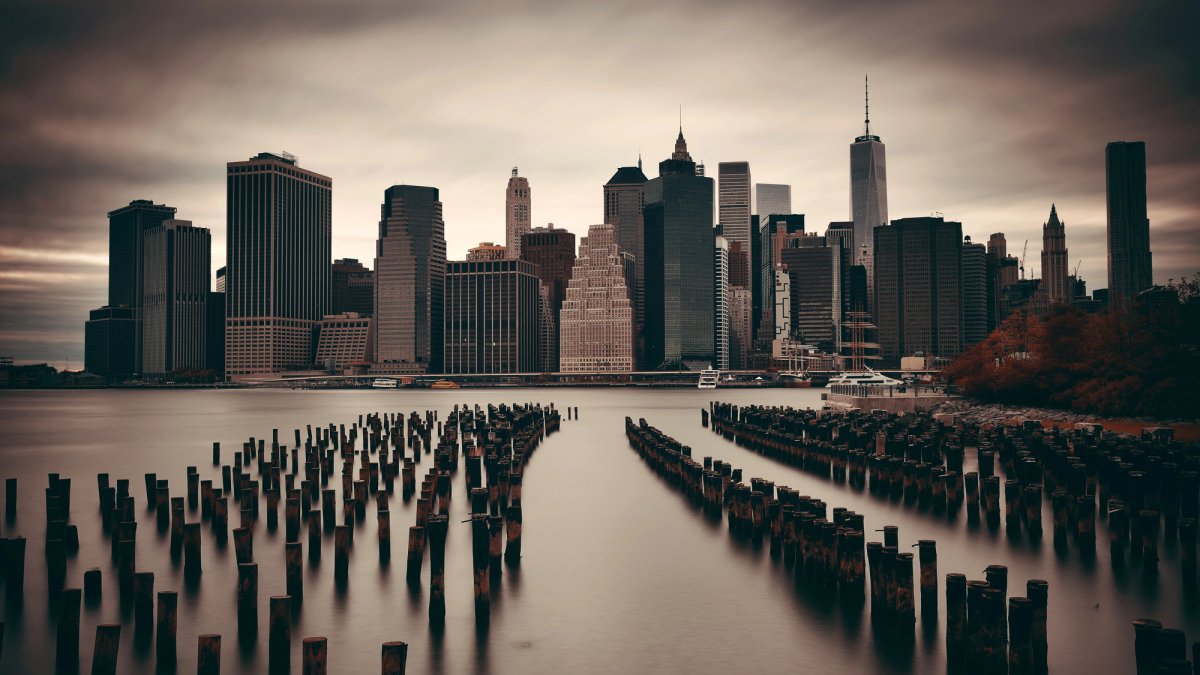
New York City is one of the noisiest cities in the world. With a population of eight and a half million people, the city is a nonstop symphony of car honks, yelling, and ambulance sirens.
Now, imagine if all that noise and all those people suddenly disappeared overnight. Just how quickly would nature move into abandoned apartments? Well in a new episode of Popular Science’s Ask Us Anything podcast, we explore just that. We even talk to special guest Les Stroud, the multi-award winning film producer of over 130 documentaries, including the beloved series Survivorman.
Ask Us Anything answers your most outlandish, mind-burning questions—from the everyday things you’ve always wondered to the bizarre things you never thought to ask. So, yes, there’s a reason cats love boxes and no, hot workout classes usually aren’t better. If you have a question for us, send us a note. Nothing is too silly or simple.
This episode is based on the Popular Science article “In a world without people, how fast would NYC fall apart? Here’s the timeline.”
Subscribe to Ask Us Anything
Listen and follow Ask Us Anything on your favorite podcast platform:
Spotify | Apple Podcasts | YouTube | Or wherever you get your podcasts.
Full Episode Transcript
Sarah Durn: Imagine the ceaseless cacophony of New York City suddenly stopped. No sirens wailed, no cars zoomed. No subways rumbled beneath sidewalks, all because the eight and a half million New Yorkers have disappeared overnight. Now imagine what would happen next. If no one’s around to sweep the sidewalks weed Central Park or turn the power grid on, nature would move in and quick.
Dandelions would spring up from asphalt cracks. Raccoons would move into abandoned apartments. Sidewalk trees would outgrow their planters, but just how swiftly would the city return to a natural state? We talk to architects and urban ecologists to map out a potential timeline.
Welcome to Ask Us Anything from the editors of Popular Science, where we answer your questions about our weird world from what is going on when you shiver to how do snakes actually move? No question is too zany or humdrum. I’m Sarah Durn, an editor at Popular Science.
Annie Colbert: And I’m Annie Colbert, editor-in-chief at Popular Science.
SD: We thrive on curiosity here at Popular Science. The stranger, the question, the more we need to answer it.
AC: And this week our curiosity has led us to the somewhat bleak but fascinating question of what would happen if people suddenly abandoned New York City.
SD: And just how quickly would nature move in.
AC: As a perpetually paranoid New Yorker, I must know.
SD: Yeah. Honestly, I was surprised just how quickly nature would move in. First things first, the power goes out. New York City goes instantaneously dark. Within a year, you’d start to see pretty major building deterioration. Single pane windows on brownstones and family homes would crack. And once windows break, moisture seeps in, and then pretty soon plants and animals follow.
After a hundred years without maintenance, the city’s most iconic landmarks, like the Empire State Building or One World Trade Center, would collapse entirely.
AC: Yikes.
SD: All in all, New York City would probably fare worse than the pyramids of ancient Egypt. Many modern skyscrapers and buildings just aren’t designed to last centuries, at least not without continual upkeep.
AC: That’s humbling.
SD: Yeah, right. If New York was abandoned, our ancestors might not even know that it was one of the largest cities in the world.
AC: Broadway, Times Square, pizza rats… all just lost to history. Well, before we dive deep into all the details, we wanna know what questions are keeping you curious.
If there’s something you’ve always wondered, submit your questions through popsci.com/ask. We might even feature it in a future episode.
SD: Give us your weirdest or simplest ideas.
AC: Yeah, we’re not picky, just curious. Up next, we’re gonna get into all the nitty gritty details of just how quickly New York City would fall apart without humans.
SD: From which would collapse first, the Empire State Building or One World Trade Center to which animals would be the first to move in. That’s coming up next after this quick break.
AC: Welcome back! So Sarah, this story is actually something you pitched me last year. So I live in Brooklyn and I used to live in Manhattan, and I don’t know, there’s something kind of peaceful about imagining a city without all of its noise. Like one of my favorite times in New York is when everyone leaves.
Like there’s certain parts of summer where the city is just a little bit quieter. But just a little bit. So I imagine without any people, that would seem peaceful at first, but then also kind of sad and scary and strange and all of the unsettling things.
SD: Yeah, no, definitely.
AC: And, it’s probably kind of inevitable, right? Many cities get abandoned at some point. There’s plenty of real world examples of this.
SD: Oh yeah? Do tell.
AC: All right. Well, you know, I love a little history detour on this podcast, and a classic example of this is Pripyat in Ukraine. The city, which had a population of about 50,000 was evacuated in 1986 after the Chernobyl disaster.
Within a few years, trees and shrubs were growing through the streets and buildings, wolves and wild boars started roaming the empty city. It was eerie, but also wild, like nature was there to reclaim what humans had abandoned, even when there were high radioactive levels.
SD: Oh yeah, I’ve seen the photos. It’s very, very, very eerie.
AC: Extremely. And then let’s go back a little bit further into history. There’s the Native American metropolis of Cahokia, which was located near modern day St. Louis. At its peak around the year 1000, it was home to 12,000 people. And it was equal in complexity to contemporary European cities like a London.
SD: Whoa.
AC: But then by the end of the 1300s, as the climate cooled in the Little Ice Age, the city was abandoned.
SD: Yeah. So those examples, they kind of give us a trailer of what could happen in New York City.
AC: Right? But New York is like a whole different movie, right? It’s bigger, it’s denser, it has more infrastructure. It’s gonna unfold in its own very specific, dramatic way.
SD: So let’s start at the very beginning. Imagine the city is empty. Eight and a half million people gone overnight.
AC: Silent streets empty subways.
SD: Right? Peaceful. Manhattan peaceful. And for the purposes of today’s episode, we aren’t going to get into how this might happen or what could have caused everyone to evacuate.
AC: Needless to say, it’s probably something bad.
SD: Yeah, no, definitely probably something bad.
AC: That’s a segue. So Sarah, what’s the first thing to go?
SD: So, probably the power without anyone monitoring or repairing the grid. Midtown goes dark in just a few days. Without light pollution, the Milky Way would shine over Manhattan
AC: Living off a very bright road, I truly cannot imagine. It sounds incredible.
SD: Yeah, no, exactly. And once the lights go out, temperatures inside buildings start to fluctuate wildly. No air conditioning, no heat. Architect Jana Horvat, who I interviewed for the story, told me that mold would start to form inside apartments within a week.
AC: Oh, that’s gross. But also kind of fascinating.
SD: I know. The subways would also fill with water pretty quickly. Every day pumps remove 13 million gallons of water from underground train lines. Without them, the subway tunnels flood. Rats, cockroaches, pigeons, opossums, they’re first to move in near the stairs and platforms.
Plants like mosses, grasses, and hardy weeds would need a little more time to grow, but soon enough, at least where there’s light within the subway tunnels, it would pretty quickly start looking like a wetland.
AC: Cool. Like little underground jungles.
SD: Yeah, right. Moving forward in the timeline, all of New York City’s glass buildings would be in trouble. The glass on brownstones and older apartments, like we mentioned earlier, those would crack first, and then the reinforced glass on fancy skyscrapers would crack.
AC: Mm.
SD: And once that happens, water gets in. Apartments turn into humid hot houses. Warm, wet, moldy, perfect for mosquitoes. Water, snakes, fungus, rushes. It’s like a wetland on the second, or you know, 22nd floor.
AC: That sounds creepy. Eerie. Sounds a little bit like The Last Of Us.
SD: Oh my god, love The Last Of Us. Also gave me nightmares for months.
AC: Yes, absolutely.
SD: And after a few years, the streets would be in bad shape too. Especially without maintenance. Asphalt cracks form from freeze thaw cycles, so after a few winters, you’d have pretty major cracks in the asphalt, as well as starting to have cracks in cement. Water would then settle in those cracks. Moss would grow first, but eventually young trees, especially London planetrees, which are the most common trees in the city, actually would start to sprout from the asphalt.
The same process would happen even more quickly in New York City Parks. Central Park would be unrecognizable in five years.
AC: Like a full on forest?
SD: A young forest, but yeah. And then after 50 years, a totally new ecosystem emerges. As Peter Del Tredici, one of the sources I had, calls it “a novel ecosystem.”
It won’t look like anything humans have ever seen. Crab apple trees, London planetrees, honey locusts, pines, oaks, Norway maples would all start filling the city. Poison ivy and nightshade vines would creep up buildings. Moss would cover skyscrapers.
AC: And I’m almost scared to ask, but the animals?
SD: Oh yeah. I mean, there’d be plenty.
AC: Oh, okay.
SD: Deer, rabbits, groundhogs, wild turkeys, they’d all start moving in. Predators would then follow, you know, their prey. You’d have copperhead snakes, even black bears, and bobcats. Birds would move in pretty quickly. They would start nesting in hollowed out buildings. You’d have peregrine falcons and bald eagles and red-tailed hawks and great horned owls.
AC: So it’s like a zoo, but with skyscrapers.
SD: Yeah. I mean like, just nature. But yeah, there’s lots of animals.
AC: Nice.
SD: And eventually even the city’s skyscrapers would fail. Annie, what do you think would last Longer? Newer skyscrapers, like Hudson Yards or older skyscrapers, like the Empire State Building.
AC: Ooh, a quiz! Pop quiz. Um, I’m gonna go with the newer ones, right? More building regulations, fancier building materials, all that.
SD: Yes, yes. It’s an excellent guess. But the newest high rises, like 10 Hudson Yards, 111 West 57th Street, they would actually collapse first.
AC: Ah, wrong.
SD: So yeah, with those newer skyscrapers, once their reinforced glass facades crack, water would seep in and eventually corrode the steel beams that keep newer skyscrapers upright.
AC: Oh, so what about the older skyscrapers?
SD: Yeah, older ones, like the Empire Step building or Chrysler Building, would actually last longer thanks to thick masonry and overbuilt steel frames. Basically when they were first building skyscrapers, they over-engineered them so that they were even stronger than they needed to be.
AC: Gotcha.
SD: So they’re sort of reinforced. At the end of the day, you’re looking at 10 Hudson Yards might last a century without upkeep and the Empire State Building would maybe last 150 years potentially. But eventually everything’s coming down.
AC: Gotcha. So what replaces them?
SD: A forest.
AC: Hmm.
SD: After a century, you could have trees over a hundred feet tall. Soil regenerates, concrete dissolves. The Hudson and East River parks become wetlands teeming with egrets and turtles and eels, beavers, muskrats.
AC: Wow. But yet, even with all of that rewilding, some human traces survive. Tell me it survives a little bit, right?
SD: They will.
AC: Okay.
SD: Yeah. No, they will. There will be things for archeologists to discover if there’s still archeologists in this weird future we are imagining. You’d have rusted steel beams of skyscrapers that would stick around for a couple hundred years.
The stones and bricks from townhouses and older skyscrapers like the Empire State Building would make big rubble piles for future archeologists to decode. The New York Public library’s cracked marble lions might last a thousand years or more.
AC: So, you know, it’s really fascinating to visualize the ruins of New York City.
Yeah. To kind of like think about it in your mind of what would this look like. I think we all have, you know, visions of TV shows or movies, but realistically, humans probably wouldn’t disappear all at once, right?
SD: Yeah. Right. If we look at history, most cities get abandoned slowly over time.
AC: Yeah.
All of this makes you think, though, what do we need to do to survive? Can we survive? Like are there any basic techniques we should all know?
SD: Yeah. Well, Annie, lucky you ask because I actually spoke to the Survivorman, about just that.
AC: Yes, the Discovery Channel Survivorman?
SD: Uhhuh. Yeah. We’re just gonna take a quick break and then I’ll be back with Les Stroud!
And we’re back with Les Stroud. Les is often credited as the creator of the survival TV genre through his groundbreaking, much beloved survival series Survivorman. Les is a multi-award winning film producer with over 130 documentaries to his name, an author of four bestselling and award-winning books, and is even a celebrated and award-winning singer songwriter.
Les say, you’re in New York City, everyone disappeared. What would it take to survive in an abandoned New York City?
Les Stroud: Ah, see, that’s one of my favorite questions. For one thing, let’s remember, we’re gonna want to help our fellow neighbor. We’re not all going to be, “It’s me or die.” You know, that’s Hollywood. You know, if, if Sarah, you and your family came to me and I had supplies or goods, I’m going to want to help you.
I’m not gonna be like, “Go away.” You know, that stuff is silly. So the reality of how you survive something like this is number one, is to remember that you’re not going to all of a sudden overnight become cold hearted. Yes, you’re gonna be protecting your family with your life, but you’re not gonna become cold hearted to other people who need help.
So that’s, that’s a big one. And so when I look at city survival after it hits the fan, regardless of what “it” is, with maybe the exception of nuclear fallout, and you’re stuck in New York City, then you need to think about all of the resources that are available. And it is astonishing how many resources will be available.
And yes, it will look like a Hollywood movie set. There’ll be garbage everywhere, and there’ll be dilapidation and things will be falling into ruin and so forth. But nonetheless, there’s supplies everywhere and knowing where those supplies are, that I think a lot of people think, because I’m Survivorman, that it’s always gonna be about, you know, making a bow and arrow and going out into the Central Park and hunting deer.
It’s like, that’s silly. What I’m going to do is I’m going to go and figure out where all the industrial buildings are and what supplies they have because they’re abandoned. I’m going to assume at this point it’s more about where can I find the things I need to get to the next day or even make it for the next few months. And you have, in some ways anyway, there’s, I don’t wanna say ample supply, but a lot of opportunity.
SD: Yeah. Do you think, just to widen this out a little bit, do you think people should have a survival go bag with essentials?
Les Stroud: No.
SD: Why?
Les Stroud: I’d love to just leave that right there. Survivorman says “no,” and people freak out.
I think that is one of the kitchiest things, you know? It’s like, “oh, I got my go bag.” I think better that you have the knowledge of where everything is in your house and the ability to pack something together quickly, put it in the trunk and go. You know it, it’s all about the situation and the variables.
SD: Yeah.
Les Stroud: But this concept of “I’ve got my go bag, I’m set for the apocalypse.” It’s like, nah, no you’re not, you know, let alone having the strong skillsets of organization. Of survival methods and techniques, fire starting, water acquisition, food gathering. I can’t give you a perfect, in great shape, expensive compound bow and say, now go get us a deer.
It’s not going to happen. Right? So those things are Hollywood. What’s gonna happen is we’re all gonna be scared and you’re going to be pulling from everything that you’ve got in your cupboards. So if you’ve got a larger supply, that is good. I don’t wanna talk that down too much, but it’s also overplayed.
SD: Yeah. Okay. What are basic survival techniques you think everyone should know?
Les Stroud: As I said, number one: the ability to get a fire going anywhere, anytime, in any weather, using varying supplies, possibly without a match or a lighter. Number two: in a wilderness situation I would say the next one is knowing how to, how to signal people.
SD: Hmm.
Les Stroud: How to signal for rescue. But if that’s not needed and everybody knows what’s going on, then I, I think number two for me would be a skillset about knowing how to organize for movement. I’ve seen people try to go somewhere quickly, you know, with paper bags of groceries, it’s not gonna work. You know, a great way to know how to do that is to go backpacking.
You learn really quickly how to travel over land on foot with a heavy pack. That organizational skill is incredibly helpful. First aid, you know, having a skillset of knowing how to treat and be conscientious of that, which is going to lead into, of course, knowing how to procure water and then eventually food.
But, so there you go. That’s where it starts. The top fire. The ability to move and know how to logistically handle that. Medical skill sets, procuring water and shelter, those are vital. Without those, you’re, you’re really stuck.
SD: Yeah. Yeah. For sure. Well, thank you so much, Les.
Les Stroud: Okay, well that’s great. Well, thanks so much guys for reaching out to me for this.
SD: Bye. This was fun. Thank you, Les.
AC: Oh wow. Les is such a cool guy, but I’m gonna admit now I’m kind of nervous if I would survive New York City.
SD: Yeah, I don’t know how I would get out. It’s a good thing I don’t live there. Sorry, Annie.
AC: It’s not good.
SD: Oh, I know. He was so cool. It was so wild to talk to him after watching him on SurvivorMan growing up.
AC: Yes, absolutely also loved that show.
SD: Oh, it’s so good. And that’s it for this episode. Please follow or subscribe to Ask Us Anything by Popular Science wherever you enjoy your podcasts. And if you like our show, leave a reading and a review.
AC: We care what you think. Please tell us. Our theme music is from Kenneth Michael Reagan, and our producer is Alan Haburchak.
SD: This week’s episode was also produced by me, Sarah Durn, and is based on an article I wrote for Popular Science.
AC: Please check out Sarah’s full story in the show notes.
SD: And thanks to our whole podcast team and special thanks to you all.
AC: And one more time. If you want to have your own question explained on a future episode, go to popsci.com/ask. Until next time, keep the questions coming. And good luck surviving.
SD: Yeah, hopefully this helps.

2025 PopSci Outdoor Gift Guide
Science,Ask Us Anythingevergreen,News,podcasts#Nature #abandoned #NYC #surprisingly #quickly1768147739