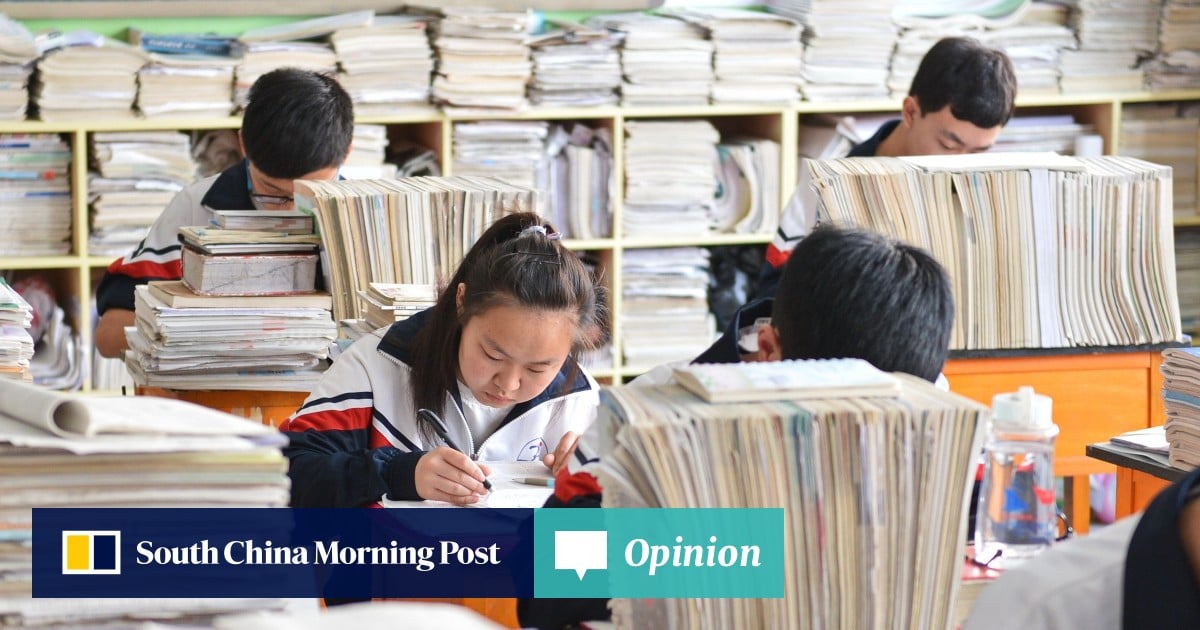
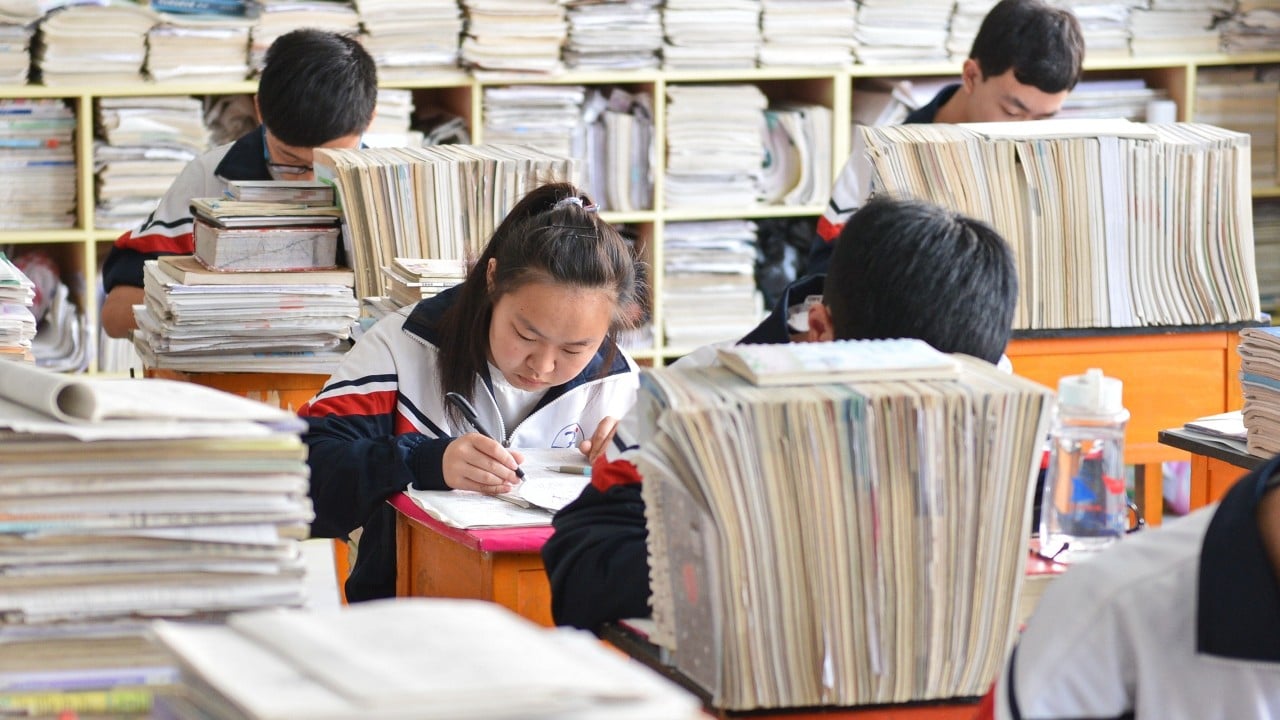
If you were asked which middle-income country has one of the lowest levels of educational attainment, very few would say China. We continually hear stories about mass university expansion, record numbers of annual graduates and elite institutions that rank among the world’s best. Despite these impressive strides, gaps in education remain a large roadblock for China’s further economic development.
The country remains largely undereducated for its level of economic development: only about 31 per cent of the Chinese population attained a high school degree or higher, based on the country’s last census. Even in relatively rich Shanghai, the share is only slightly above 50 per cent. These figures, which might be unremarkable for much poorer economies, put China near the bottom when compared with other middle-income countries – not to mention that China is within reach of becoming a high-income country, based on the World Bank’s standards.
In contrast, China’s investments in physical capital, such as factories, transport and infrastructure, have produced awe abroad and pride at home. China is filled with glimmering skyscrapers, high-speed rail and monumental infrastructure projects. Decades of investment in this physical capital have turned China into the world’s second-largest economy.
However, as China grows rich and faces new economic hurdles that cannot be solved with another new bridge, it must realise that economic upgrading has raced ahead of mass educational attainment. Addressing this imbalance, even though it could take decades, is a must if China wants to join and remain in the ranks of the developed world.
China has a long history of physical capital development. The country’s national founding myth includes Yu the Great using infrastructure for flood control. However, the disconnect between physical and human capital was not always present.
Before the reform and opening-up, China’s human capital, when compared to its level of development, was quite high. Mass literacy campaigns, universal primary education and public health initiatives, such as the barefoot doctors, meant that by the 1970s, China had a relatively healthy and basically literate population despite its low per capita income, giving it unusually strong human capital foundations for a country at its development level. This was key to China’s later economic take-off.
reform and opening-up, secondary education, physical capital, middle-income trap, Educational attainment, Human capital, GDP, High school, Middle-income countries, Barefoot doctors, High-income country, Economic development, World Bank, Common Prosperity, China#Opinion #Chinas #development #priority #secondary #education1768513852

Barefoot doctors
China
Chinas
Common Prosperity
Development
Economic development
education
Educational attainment
GDP
High school
High-income country
Human capital
Middle-income countries
middle-income trap
Opinion
physical capital
priority
reform and opening-up
secondary
secondary education
World Bank
Recent Post


Gallery






Featured Videos