A newly uncovered tyrannosaur leg bone is shaking things up in the dinosaur world. The leg bone uncovered in New Mexico belongs to an unusually large tyrannosaur—the group of dinosaurs that includes the mightyTyrannosaurus rex. The shinbone is three feet long and about five inches in diameter, only slightly smaller than the largest known Tyrannosaurus specimen. The giant leg bone is detailed in a study published today in the journal Scientific Reports.
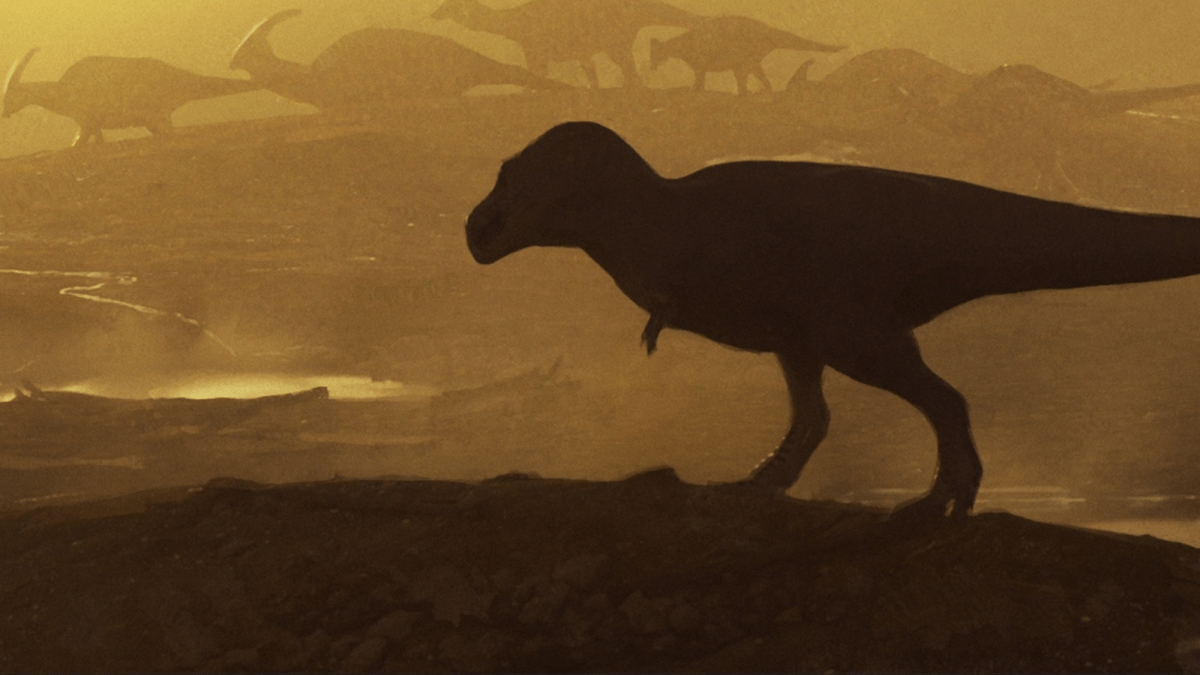
The shinbone was uncovered in northwestern New Mexico’s fossil-rich Kirtland Formation. It dates back 74 million years ago to the Late Campanian age. At the time, present-day North America had a subtropical climate and was split in half by a seaway that ran from the Gulf of Mexico north to the Arctic. This particular tyrannosaur lived near the seaway’s western coast, which was full of jungles and forests.
“For New Mexico during the time this tyrannosaur roamed the landscape, picture something like the current Gulf Coast, a low-lying floodplain,” Anthony Fiorillo, a study co-author and paleontologist at the New Mexico Museum of Natural History & Science tells Popular Science. “Other dinosaurs that were part of the ecosystem include horned dinosaurs, armored dinosaurs, and duckbilled dinosaurs, such as the new duckbilled dinosaur Ahshislesaurus that we named last fall. The flora included conifers, angiosperms, ferns, and horsetails.”
The sheer size of the tyrannosaur’s leg bone caught the team by surprise, but so did its placement among the rocks.
“That it is a very large tyrannosaur for its time, and much older geologically than anybody would have predicted,” study co-author and New Mexico Museum of Natural History & Science paleontologist Spencer Lucas tells Popular Science.
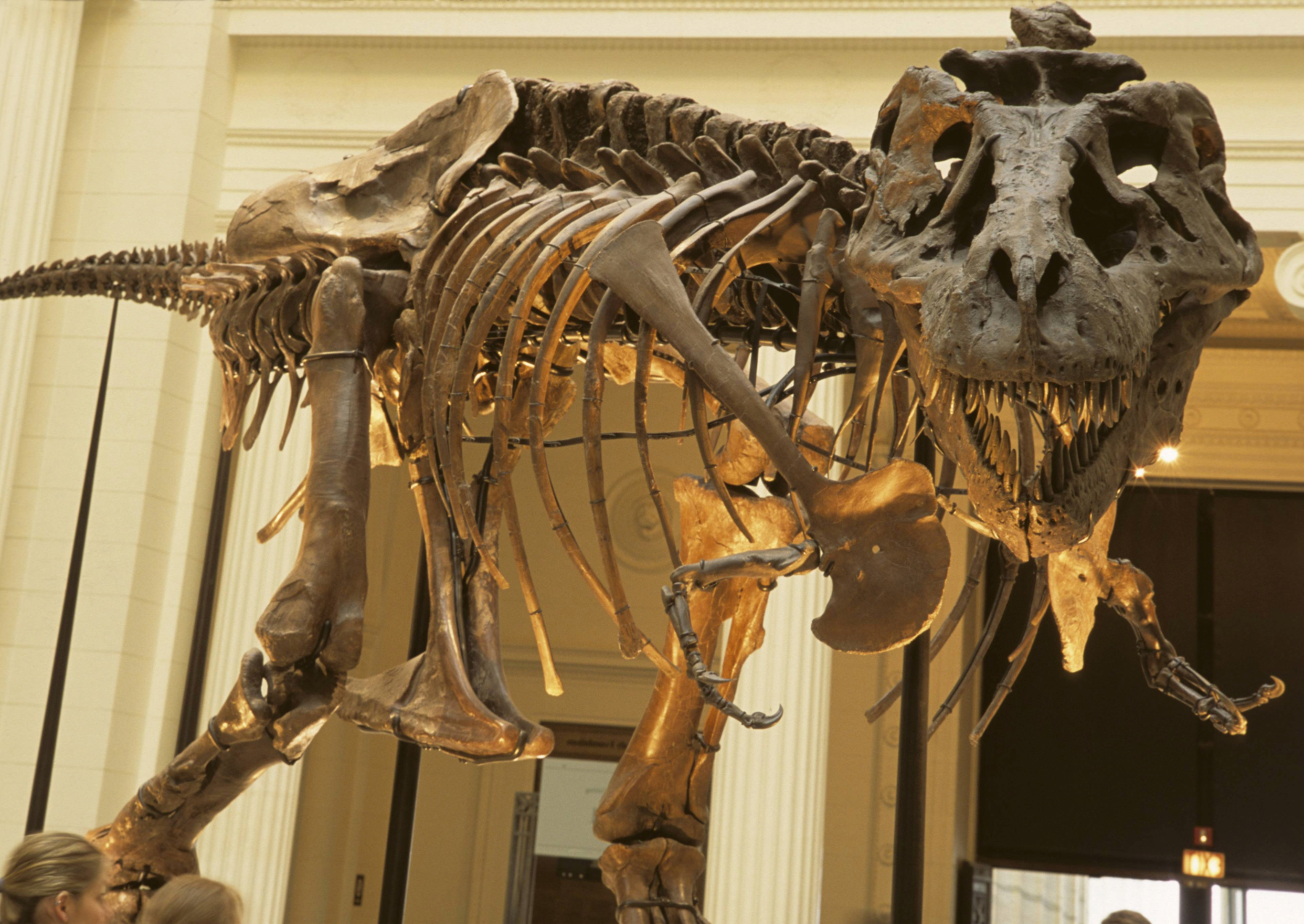
The bone is only slightly smaller than the shins belonging to Sue, the famous T. rex that has been on display at the Field Museum in Chicago for almost 26 years. Sue is the largest and most complete T. rex specimen paleontologists have ever found.
“Sue was found in much younger rocks than this tibia, so our tyrannosaur was the largest predatory dinosaur of its kind,” says Fiorillo.
Based on the bone’s large size, dimensions, straight shaft, and the triangular shape at the lower end, the team believes it may belong to a close relative of Tyrannosaurus. They estimate that it weighed roughly 10,361 pounds, which would make it the largest known tyrannosaur from this period. By comparison, Tyrannosaurs found in newer parts of the fossil records weighed about 4,000 to 6,000 pounds.
The team also compared characteristics of the shinbone with those of other tyrannosaurs. They propose that it may have shared a common ancestor with both T. rex and Tyrannosaurus mcraeensis. This means it could be an early member of a broad group called Tyrannosaurini, which includes Tyrannosaurus, Tarbosaurus, and Zhuchengtyrannus.
The big bone also adds more data to a big debate about the tyrannosaur’s origin story.
“There is debate about the origin of tyrannosaurs, with Asia and North America seen as the most likely sites of origin,” Lucas explains. “This large, geologically old tyrannosaur is most consistent with a North American origin, and one possibly in the southern part of the continent.”
However, further study of the dinosaur record in southern North America and Asia is needed to complete the picture. Paleontologists also need a more complete skeleton to identify the exact species, its relationships with other tyrannosaurs, and gain more accurate estimates of its size. And that will require more digging.
“Science is a process that unfolds on its own schedule,” says Fiorillo. “Each new fossil discovery forces us to step back and re-evaluate what we think we know, and that is why science can be so dynamic.”

2025 PopSci Best of What’s New
Science,Dinosaursfossils,News#Unusually #large #tyrannosaur #leg #bone #points #10000pound #behemoth1773332877

Recent Post



Gallery






Featured Videos