AI chip shortage became the defining constraint for enterprise AI deployments in 2025, forcing CTOs to confront an uncomfortable reality: semiconductor geopolitics and supply chain physics matter more than software roadmaps or vendor commitments.
What began as US export controls restricting advanced AI chips to China evolved into a broader infrastructure crisis affecting enterprises globally—not from policy alone, but from explosive demand colliding with manufacturing capacity that cannot scale at software speed.
By year’s end, the dual pressures of geopolitical restrictions and component scarcity had fundamentally reshaped enterprise AI economics. The numbers tell a stark story. Average enterprise AI spending is forecasted at US$85,521 monthly in 2025, up 36% from 2024, according to CloudZero’s research surveying 500 engineering professionals.
Organisations planning to invest over US$100,000 monthly more than doubled from 20% in 2024 to 45% in 2025—not because AI became more valuable, but because component costs and deployment timelines spiralled beyond initial projections.
Export controls reshape chip access
The Trump administration’s December 2025 decision to allow conditional sales of Nvidia’s H200 chips to China—the most powerful AI chip ever approved for export—illustrated how quickly semiconductor policy can shift. The arrangement requires a 25% revenue share with the US government and applies only to approved Chinese buyers, reversing an earlier April 2025 export freeze.
Yet the policy reversal came too late to prevent widespread disruption. US Commerce Secretary Howard Lutnick testified that China’s Huawei will produce only 200,000 AI chips in 2025, while China legally imported around one million downgraded Nvidia chips designed specifically for export compliance.
The production gap forced Chinese companies into large-scale smuggling operations—federal prosecutors unsealed documents in December revealing a ring that attempted to export at least US$160 million worth of Nvidia H100 and H200 GPUs between October 2024 and May 2025.
For global enterprises, these restrictions created unpredictable procurement challenges. Companies with China-based operations or data centres faced sudden access limitations, while others discovered their global deployment plans assumed chip availability that geopolitics no longer guaranteed.
Memory chip crisis compounds AI infrastructure pain
While export controls dominated headlines, a deeper supply crisis emerged: memory chips became the binding constraint on AI infrastructure globally. High-bandwidth memory (HBM), the specialised memory that enables AI accelerators to function, hit severe shortages as manufacturers Samsung, SK Hynix, and Micron operated near full capacity while reporting six-to twelve-month lead times.
Memory prices surged accordingly. DRAM prices climbed over 50% in 2025 in some categories, with server contract prices up as much as 50% quarterly, according to Counterpoint Research. Samsung reportedly lifted prices for server memory chips by 30% to 60%. The firm forecasts memory prices to continue rising another 20% in early 2026 as demand continues outpacing capacity expansion.
The shortage wasn’t limited to specialised AI components. DRAM supplier inventories fell to two to four weeks by October 2025, down from 13-17 weeks in late 2024, per TrendForce data cited by Reuters. SK Hynix told analysts that shortages may persist until late 2027, reporting that all memory scheduled for 2026 production is already sold out.
Enterprise AI labs experienced this firsthand. Major cloud providers Google, Amazon, Microsoft, and Meta issued open-ended orders to Micron, stating they will take as much inventory as the company can provide. Chinese firms Alibaba, Tencent, and ByteDance pressed Samsung and SK Hynix for priority access.
The pressure extended into future years, with OpenAI signing preliminary agreements with Samsung and SK Hynix for its Stargate project requiring up to 900,000 wafers monthly by 2029—roughly double today’s global monthly HBM output.
Deployment timelines stretch beyond projections
The AI chip shortage didn’t just increase costs—it fundamentally altered enterprise deployment timelines. Enterprise-level custom AI solutions that typically required six to twelve months for full deployment in early 2025 stretched to 12-18 months or longer by year-end, according to industry analysts.
Bain & Company partner Peter Hanbury, speaking to CNBC, noted utility connection timelines have become the biggest constraint on data centre growth, with some projects facing five-year delays just to secure electricity access. The firm forecasts a 163GW rise in global data centre electricity demand by 2030, much of it linked to generative AI’s intensive compute requirements.
Microsoft CEO Satya Nadella captured the paradox in stark terms: “The biggest issue we are now having is not a compute glut, but its power—it’s the ability to get the builds done fast enough close to power. If you can’t do that, you may actually have a bunch of chips sitting in inventory that I can’t plug in. In fact, that is my problem today.”
Traditional tech buyers in enterprise environments faced even steeper challenges. “Buyers in this environment will have to over-extend and make some bets now to secure supply later,” warned Chad Bickley of Bain & Company in a March 2025 analysis.
“Planning ahead for delays in production may require buyers to take on some expensive inventory of bleeding-edge technology products that may become obsolete in short order.”
Hidden costs compound budget pressures
The visible price increases—HBM up 20-30% year-over-year, GPU cloud costs rising 40-300% depending on region—represented only part of the total cost impact. Organisations discovered multiple hidden expense categories that vendor quotes hadn’t captured.
Advanced packaging capacity emerged as a critical bottleneck. TSMC’s CoWoS packaging, essential for stacking HBM alongside AI processors, was fully booked through the end of 2025. Demand for this integration technique exploded as wafer production increased, creating a secondary choke point that added months to delivery timelines.
Infrastructure costs beyond chips escalated sharply. Enterprise-grade NVMe SSDs saw prices climb 15-20% compared to a year earlier as AI workloads required significantly higher endurance and bandwidth than traditional applications. Organisations planning AI deployments found their bill-of-materials costs rising 5-10% from memory component increases alone, according to Bain analysis.
Implementation and governance costs compounded further. Organisations spent US$50,000 to US$250,000 annually on monitoring, governance, and enablement infrastructure beyond core licensing fees. Usage-based overages caused monthly charges to spike unexpectedly for teams with high AI interaction density, particularly those engaging in heavy model training or frequent inference workloads.
Strategic lessons for 2026 and beyond
Enterprise leaders who successfully navigated 2025’s AI chip shortage emerged with hard-won insights that will shape procurement strategy for years ahead.
Diversify supply relationships early: Organizations that secured long-term supply agreements with multiple vendors before shortages intensified maintained more predictable deployment timelines than those relying on spot procurement.
Budget for component volatility: The era of stable, predictable infrastructure pricing has ended for AI workloads. CTOs learned to build 20-30% cost buffers into AI infrastructure budgets to absorb memory price fluctuations and component availability gaps.
Optimise before scaling: Techniques like model quantisation, pruning, and inference optimisation cut GPU needs by 30-70% in some implementations. Organisations that invested in efficiency before throwing hardware at problems achieved better economics than those focused purely on procurement.
Consider hybrid infrastructure models: Multi-cloud strategies and hybrid setups combining cloud GPUs with dedicated clusters improved reliability and cost predictability. For high-volume AI workloads, owning or leasing infrastructure increasingly proved more cost-effective than renting cloud GPUs at inflated spot prices.
Factor geopolitics into architecture decisions: The rapid policy shifts around chip exports taught enterprises that global AI infrastructure can’t assume stable regulatory environments. Organisations with China exposure learned to design deployment architectures with regulatory flexibility in mind.
The 2026 outlook: Continued constraints
The supply-demand imbalance shows no signs of resolving quickly. New memory chip factories take years to build—most capacity expansions announced in 2025 won’t come online until 2027 or later. SK Hynix guidance suggests shortages persisting through at least late 2027.
Export control policy remains fluid. A new “Trump AI Controls” rule to replace earlier frameworks is expected later in 2025, along with potential controls on exports to Malaysia and Thailand identified as diversion routes for China. Each policy shift creates new procurement uncertainties for global enterprises.
The macroeconomic implications extend beyond IT budgets. Memory shortages could delay hundreds of billions in AI infrastructure investment, slowing productivity gains that enterprises have bet on to justify massive AI spending. Rising component costs threaten to add inflationary pressure at a moment when global economies remain sensitive to price increases.
For enterprise leaders, 2025’s AI chip shortage delivered a definitive lesson: software moves at digital speed, but hardware moves at physical speed, and geopolitics moves at political speed. The gap between those three timelines defines what’s actually deployable—regardless of what vendors promise or roadmap projects.
The organisations that thrived weren’t those with the biggest budgets or the most ambitious AI visions. They were the ones who understood that in 2025, supply chain reality trumped strategic ambition—and planned accordingly.
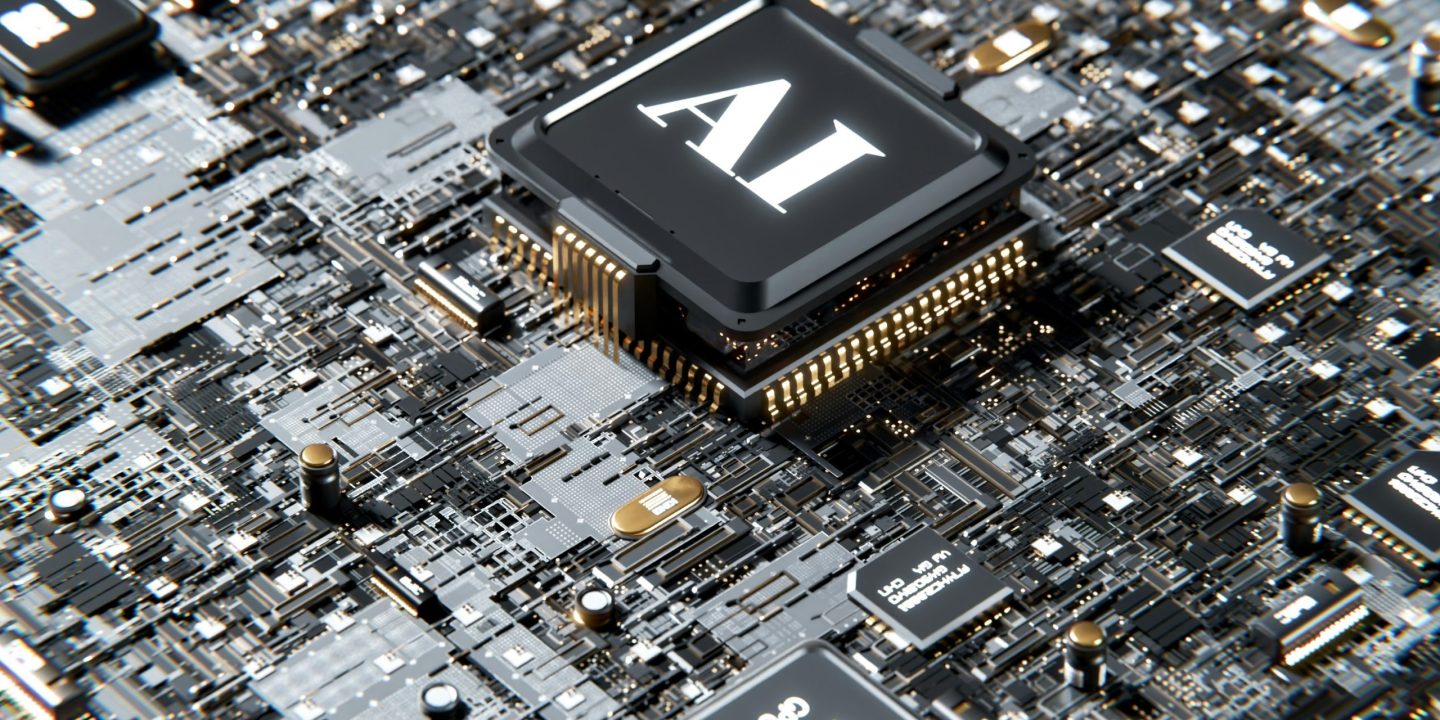
(Photo by Igor Omilaev/Unsplash)
See also: Can the US really enforce a global AI chip ban?

Want to learn more about AI and big data from industry leaders? Check outAI & Big Data Expo taking place in Amsterdam, California, and London. The comprehensive event is part of TechEx and is co-located with other leading technology events, click here for more information.
AI News is powered by TechForge Media. Explore other upcoming enterprise technology events and webinars here.
AI Hardware & Chips,AI Market Trends,Artificial Intelligence,Deep Dives,Features,Inside AI,ai,artificial intelligenceai,artificial intelligence#CTOs #Learned #Hard1767690889