
Iceberg A-23A is looking a little blue these days. In late December 2025, NASA and NOAA’s Terra satellite spotted the massive iceberg covered with blue meltwater. A-23A is one of the largest and longest-lived bergs ever tracked by scientists, but is at risk of completely disintegrating as it drifts through warm Southern Atlantic waters.
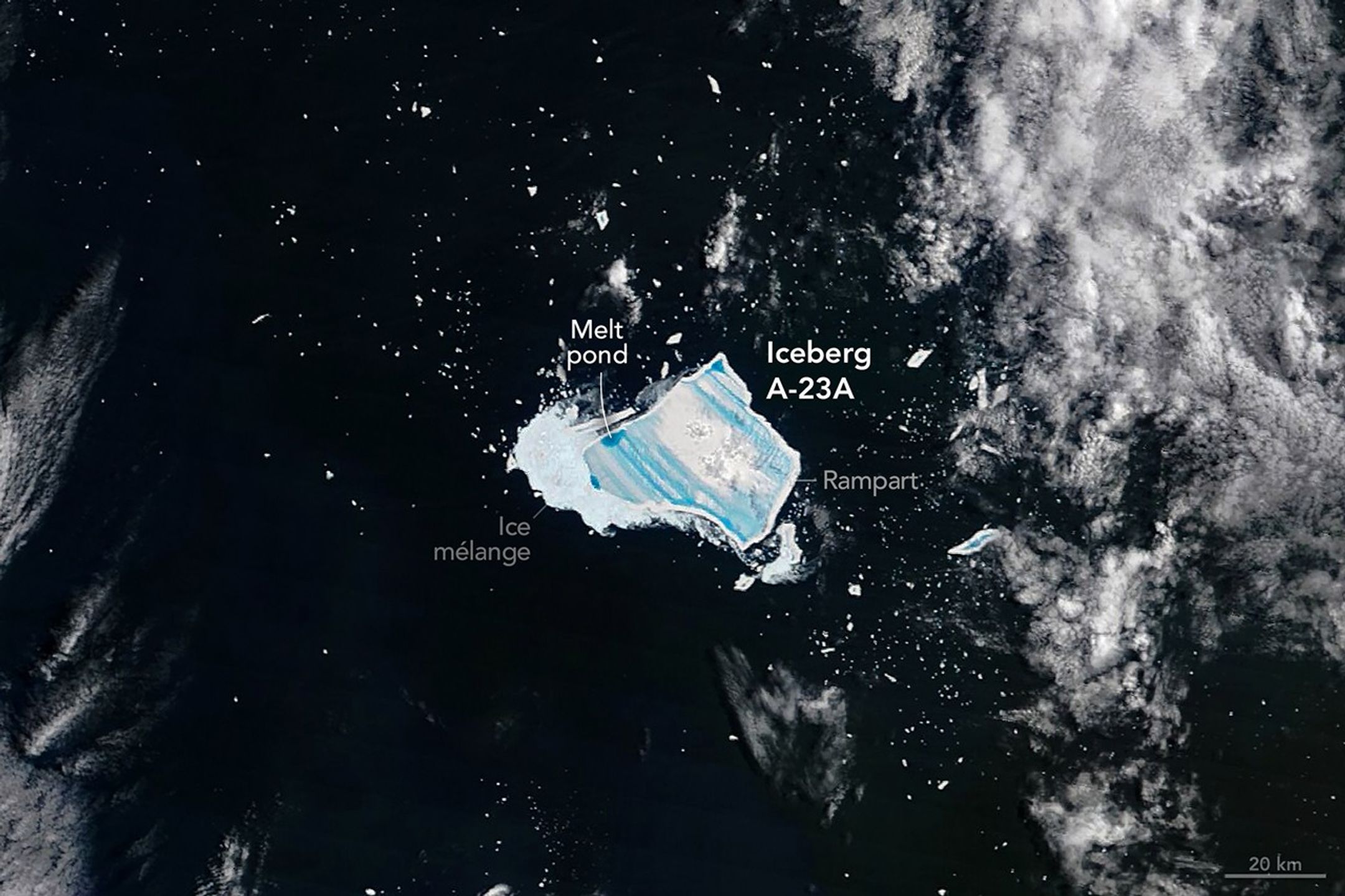
In 1986, the flat-topped iceberg broke away from Antarctica’s Filchner Ice Shelf. Back then, it was over 15,000 square miles—almost twice the size of the state of Rhode Island. Today, the United States National Ice Center estimates the iceberg’s area is around 456 square miles. While that is much smaller than its original size, it still makes it bigger than New York City. In July, August, and September of 2025 iceberg A-23A saw some sizable breakups as it moved into the Southern Hemisphere’s relatively warm summer conditions by December.
The MODIS (Moderate Resolution Imaging Spectroradiometer) on the Terra satellite captured this image of what remained on December 26, 2025. An astronaut aboard the International Space Station (ISS) then captured a photograph showing a closer view of the iceberg one day later, with an even bigger melt pool.
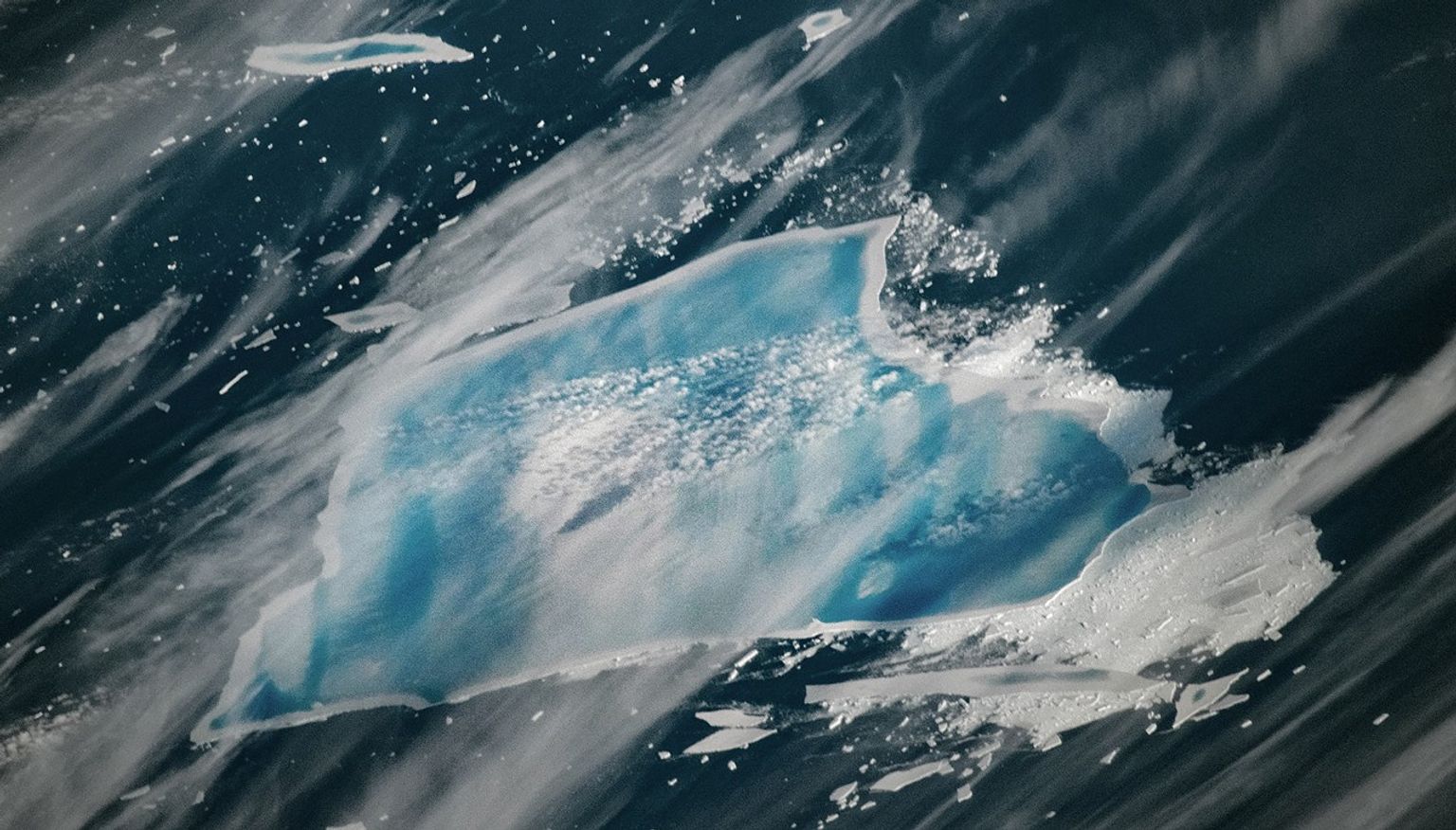
The extensive pools of “blue mush” on the iceberg’s surface are likely the result of ongoing disintegration events.
“You have the weight of the water sitting inside cracks in the ice and forcing them open,” he said. “Note also the thin white line around the outer edge of the iceberg seemingly holding in blue meltwater—a ‘rampart-moat’ pattern caused by an upward bending of the iceberg plate as its edges melt at the waterline,” University of Colorado Boulder senior research scientist Ted Scambos explained in a statement.
The blue and white striped patterns are likely due to striations that were put into the ice hundreds of years ago, when the ice was dragged across Antarctic bedrock.
“It’s impressive that these striations still show up after so much time has passed, massive amounts of snow have fallen, and a great deal of melting has occurred from below,” added retired University of Maryland Baltimore County scientist Chris Shuman.
The ailing iceberg may have also sprung a leak. The white area to its left could be the result of what Shuman described as a “blowout.” This occurs when the weight of the water pooling at the top of the iceberg creates enough pressure at the edges to punch through.
These signs indicate that the iceberg could be just days or weeks from disintegrating completely.
“I certainly don’t expect A-23A to last through the austral summer,” said Shuman.
The clearer skies and warmer air and water temperatures during summer in the Southern Hemisphere accelerate the disintegration process in an area known among ice experts as a “graveyard” for icebergs. Climate change is only speeding up this process, as air and water temperatures continue to smash records.
Even as A-23A fades, more enormous icebergs are parked or drifting along the Antarctic shoreline. A-81, B22A, and D15A, are each larger than 500 square miles and could also begin their journey north.

2025 PopSci Outdoor Gift Guide
Environment,Climate Change,Global Warming,NASA,Science,Spacegeology,Glaciers,News#infamous #iceberg #turning #blue1767907979