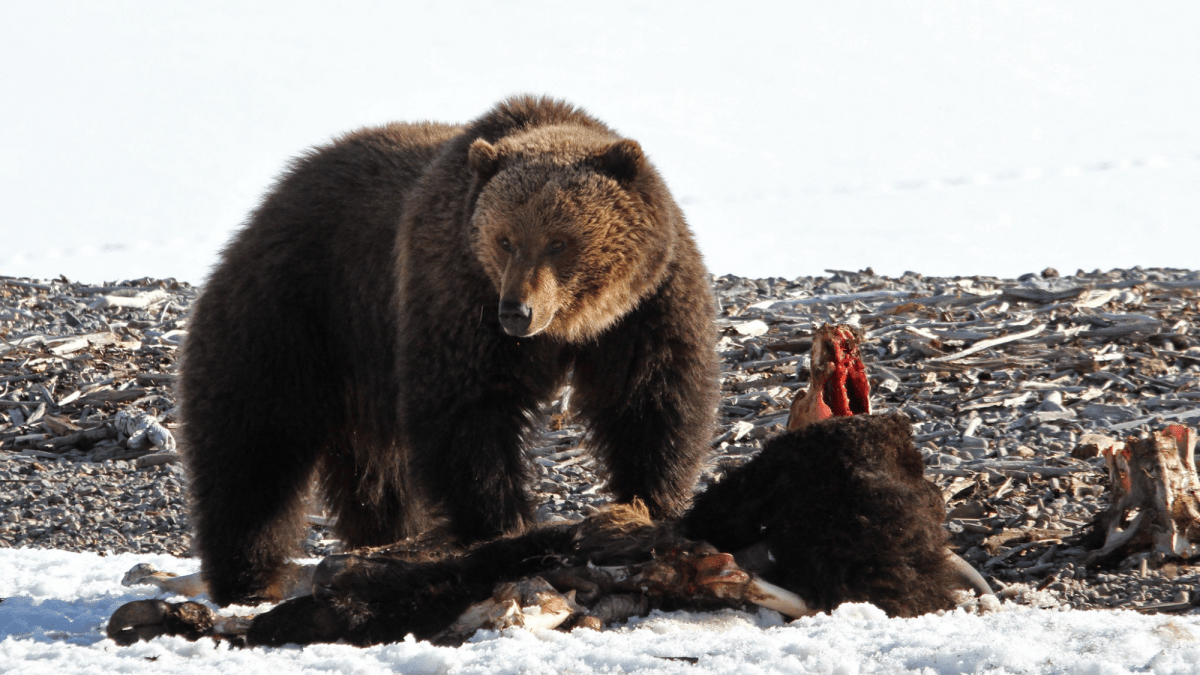
This week, a sure sign of spring arrived in Yellowstone National Park. Biologists working in the northern part of the park reported their first grizzly bear sighting of the season on March 9.
The bear was observed scavenging on a bull bison carcass in the park’s back country. As bears begin to emerge from their dens, they will scour the area for food. They will frequently feed on the carcasses of elk and bison that died over the winter. Bears will be aggressive when feeding on carcasses, so as with any bear encounter, it is wise to keep your distance.
Yellowstone is home to two bear species: grizzly bears (Ursus arctos horribilis) and black bears (Ursus americanus). The Greater Yellowstone Ecosystem is actually one of only a few areas south of Canada where both bear species coexist.
Bears will wait out the winter in their dens in a state called torpor. Torpor is involuntary and largely triggered by lack of food. Some true deep hibernators like rodents store food for the winter, but bears only use stored fat reserves for energy during torpor. They will spend the summer building up their fat stores and it can comprise up to 30 percent of the bear’s body weight. Every fall, Katmai National Park in Alaska even celebrates this critical winter preparation with Fat Bear Week.
Related National Park Stories
Male grizzlies emerge from their dens in early March, so this sighting is right on time. In 2025, the first reported sighting was on March 14, while 2024’s first bear was spotted on March 3. Females with cubs will emerge in April and early May.
For visitors to Yellowstone, it’s important to remember that the entire park is considered grizzly and black bear country. Whether you’re watching Old Faithful or the world’s largest acidic geyser, exercising common sense safety is key.
- Stay alert
- Prepare for a bear encounter by carrying bear spray, knowing how to use it and making sure it’s easily accessible.
- Hike or ski in groups of three or more. Be sure to stay on maintained trails and make noise.
- Avoid hiking at dusk, dawn or at night.
- DO NOT RUN if you encounter a bear.
- Stay 100 yards away from black and grizzly bears. Instead, use binoculars, a telescope, or telephoto lens to get a closer look.
- Store food, garbage, barbecue grills, and other food items known to attract bears in cars or bear-proof food storage boxes.
- Immediately report bear sightings and encounters to a park ranger.

2025 PopSci Best of What’s New
Environment,Animals,Bears,Biology,Science,Wildlifenational parks,News#Yellowstones #grizzly #bear #emerges #den1773240470

Recent Post



Gallery






Featured Videos